Sunday, May 31, 2026
Home Blog Page 70

Heritage Insurance Kenya launches first telematics motor insurance in Kenya

0

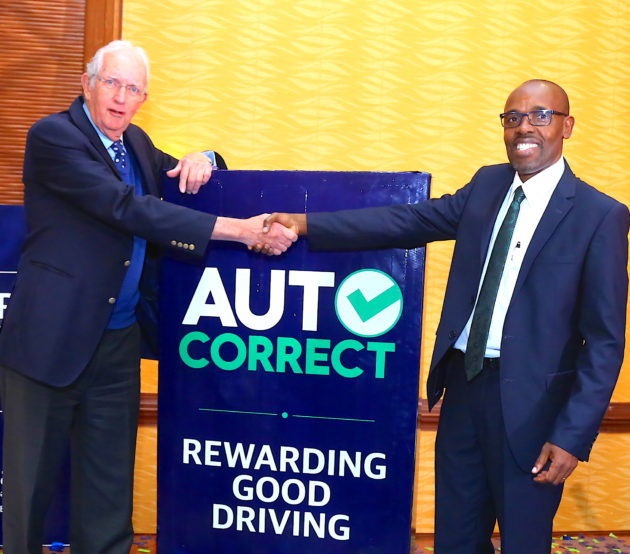
Heritage Insurance Kenya has launched the country’s first telematics motor insurance, dubbed Auto Correct motor insurance. According to the Insurance company, the service makes use of telematics capabilities together with data and analytics to promote safety and enhance customer engagement.

With the anticipated reduction in the overall claims to the company, the customer is expected to benefit through reduced cost of insurance achieved through premium cashback to the customer at the end of each policy year, based on the customers’ overall driving scores.

According to the company’s Managing Director Godfrey Kioi, the new service targets to enhance service delivery and significantly speed up claims payment.

“Heritage’s Auto Correct promises a blend of intelligent black-box technology, driver feedback and attractive rewards aimed at improving driver behaviour, potentially reducing both accident frequency and the cost of insurance,” said Kioi.

According to the company, all private motor vehicle owners are eligible for Auto Correct and may potentially get up to 15% cash back on annual paid premiums at the end of their policy period, if they drive safely.

They will also accumulate loyalty points, which can be redeemed from time to time at selected service providers.

Auto Correct comes with a smart phone app, that provides, among other things, driving feedback, weekly, monthly and annual scores as well as the accumulation and management of loyalty points.  The app also provides information on where and how to redeem the loyalty points.

“Telematics is not limited to the pricing of motor insurance or driver behaviour. Our philosophy is cementing customer-centrism in the industry by engaging the customer and generating rewarding and memorable experiences,” he added.

Kioi hailed technology’s timely entry into the insurance market with digital technology being at the cusp of disruption across industry sectors, raising customer expectations and forcing insurance firms to rethink their service delivery.

“Our usage-based insurance (UBI) product, Auto Correct, is a feasible answer to the ever-changing customer journey and industry, which has seen the emergence of innovative customer channels and millennial adoption of new technologies. Usage-based insurance (UBI) and acceptance of telematics capability in modern vehicles is expected to outpace traditional insurance,” added Kioi.

To enable ease of uptake, Heritage Insurance has provided an Insurance Premium Financing (IPF) payment solution, available on the mobile phone. “This value-added service is aimed at reducing the perennial premium collection problem in the insurance industry.”

Consumer opinion suggests that such innovation could help repair the existing mistrust and resultant high customer turnover in the insurance industry. This is due to the low confidence in insurance claims processes, which has affected long-term value optimization. Overall, the industry must adopt such innovation to redirect focus back to the end-customer experience.

The country’s insurance penetration rate, the contribution of insurance premiums to GDP, has been relatively low compared to the world’s average of 6.1% and 3% for Africa.

The internet and mobile phone revolution are expected to widen access to a diverse range of insurance products. In 2018, the number of active mobile subscriptions and internet users stood at 49.5 million and 43 million respectively. This presents a connectivity opportunity, touted to have a bottom-line impact on ease of enrolling and paying for insurance products.

With Auto Correct, Kenya, through Heritage Insurance Kenya, becomes the first country in East Africa and second in Africa, after South Africa, to launch a telematics motor insurance solution to the market, that also comes with a premium financing option.
Ford tells U.S. dealers to repair Focus, Fiesta transmissions for free

0

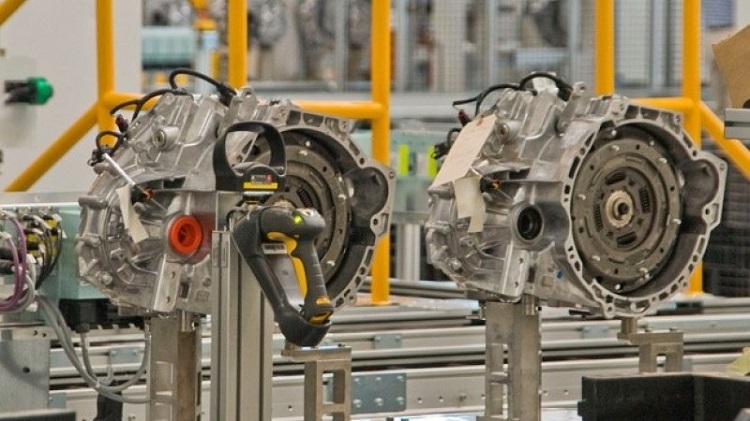
Ford has told its U.S. dealers to give free repairs to any Focus and Fiesta owners who complain about problems with the cars’ PowerShift dual-clutch transmission. The offer, made after Ford knowingly launched the cars with faulty transmissions.

In the July 12 memo, Ford says dealerships should “arrange to diagnose the vehicle and repair as necessary.” The fixes can be applied to 2011-17 models, many of which are out of warranty. Previous class-action lawsuits have covered 2011-16 models with transmissions that customers complained would shudder, jerk and hesitate.

The memo, first reported by the Detroit Free Press, followed a July 11 report by the newspaper that said Ford knew about the transmission defects yet sold them anyway. The automaker responded, saying the report made “conclusions that are not based in fact.”

Former Ford CEO Mark Fields has been called to testify in ongoing litigation surrounding the troublesome gearboxes, which have haunted the automaker for years.

Ford reached a settlement in 2017 in a class-action lawsuit covering 1.9 million owners, but the deal is being challenged in California federal court on the grounds that not enough owners would be compensated. A separate mass-tort case involving thousands of customers is pending in Michigan.

Major components of a diesel generator


Diesel generators – you may not see them, but they are everywhere. These workhorses of industry provide either continuous or standby power to homes, hospitals, schools, churches and factories to name but a few. They can be small enough to carry comfortably or so large they wouldn’t fit inside your house. There is a range of units to suit everyone. Diesel generators consume diesel and turn the energy in the fuel into electrical energy to provide power to the things you need. The items that need power are called the load.

Major parts of a diesel generator

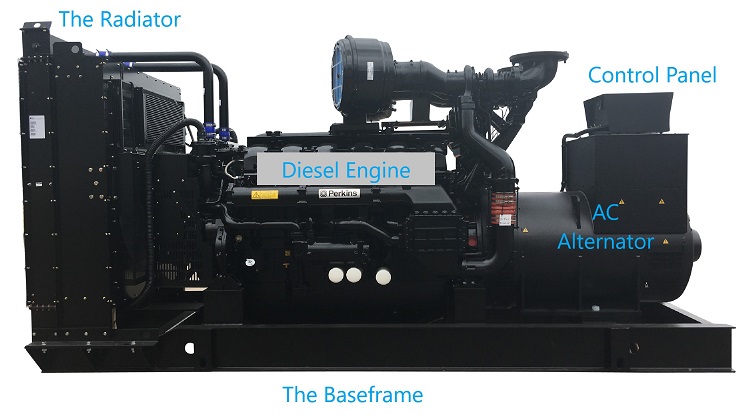
The main components of a diesel generator are:

The diesel engine (how the diesel engine works) provides power to spin the AC alternator (how the AC alternator works), which in turn generates electricity to power the load. The radiator (how the radiator works) also cools the engine to prevent it from overheating. Each of these components parts is made up of a series of ever smaller and more complicated elements, each performing a specific function. For example, the alternator is made up of the alternator main stator, the alternator main rotor and the alternators excitation system. The excitation system is made up of yet smaller parts – the alternators exciter stator, the alternators exciter rotor, an AVR and some diodes. All these smaller parts perform essential functions to maintain the power output of the generator.

Welland Power Diesel Generators

Voltage produced

A generator can produce almost any voltage – as long as it is ordered to produce the voltage required. It can be impossible to change between some voltages without changing some of the components parts, so its important to make sure you buy what you need. For example generators are often available in three and single phase variants. Single phase is usually used for domestic and small commercial premises, whereas 3 phase is used for larger buildings.

Power generation

That depends….. different sized generators will give different amounts of output. The bigger the generator, the more power you can typically get, but this also becomes more expensive.

Inverter generator

An inverter generator is a special kind of machine. Rather than the alternator feeding the load directly, the power is rectified and then an inverter is used to produce really good quality AC power. Read more about inverter generators.

Silent generator

A silent diesel generator is a generator that has a steel or plastic surround to reduce the noise. See silent generators.

Best international generator brands

The best known brands are probably Caterpillar (USA), Welland UK Power  and Cummins (USA).

Volkswagen picks Turkey for new factory

0

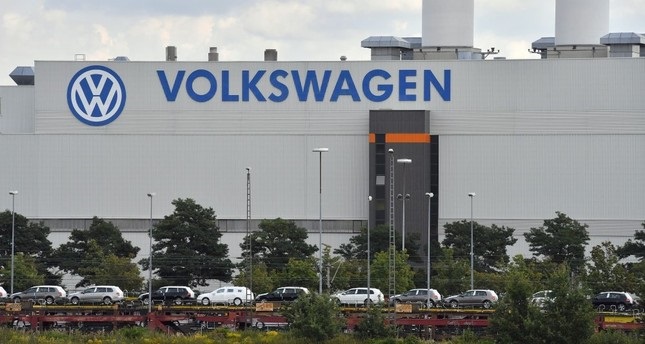
Volkswagen Group has plans to build a multi-brand plant in Turkey. VW’s supervisory board has picked a site for the factory near the western coastal city of Izmir over a location in Bulgaria.

The plant will build cars for VW, Skoda and Seat. It will ease capacity constraints at Skoda’s factories in the Czech Republic. The state of Qatar, which has a 17 percent stake in VW, pushed for the factory to be built in Turkey at the board meeting.

A spokesman for Volkswagen’s supervisory board told Reuters the plans for a new site were being firmed up but had not yet been finalized.

Previous reports have said the factory will open in 2022/2023 with an annual capacity of up to 350,000 units. Production will include the Skoda Karoq and Seat Ateca compact SUVs, reports said. Skoda CEO Bernhard Maier said in March that the brand could have sold 100,000 more cars last year if the capacity to build them had been available.

Nissan gives Japan version of Infiniti Q50 self-driving upgrade


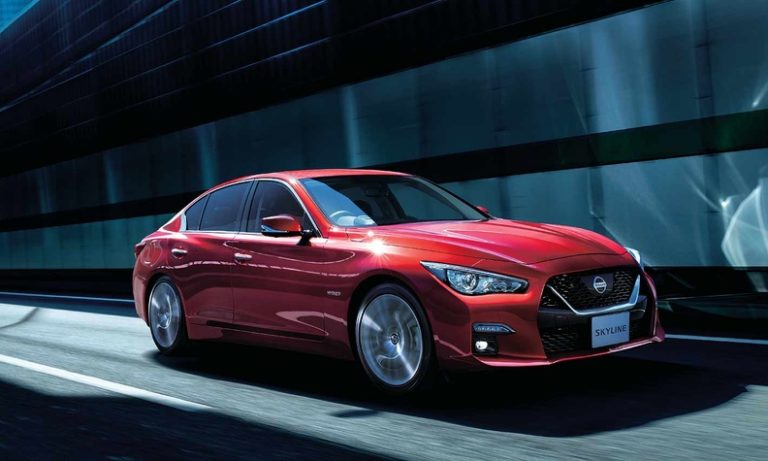
Nissan is giving the sporty Skyline sedan a high-tech, midcycle update with a new semi-autonomous system that allows for truly hands-free, auto-navigating highway driving.

The refreshed sedan goes on sale this fall in Japan and signals what might be in store for the upcoming Infiniti Q50, the name the vehicle is sold under in Europe and the U.S.

The minor model change, unveiled at Nissan’s headquarters here south of Tokyo, also gets a top-tier 400R grade in Japan that is the most powerful factory-built Skyline ever. Its 3.0-liter V-6 twin-turbo engine generates 400hp, over the base model’s 300 hp.

The engine was already deployed in the U.S.-market Infiniti Q50 but now makes its way to Japan, replacing a Daimler-supplied 2.0-liter inline four-cylinder turbocharged engine.

A new Intelligent Dynamic Suspension feature also offers more precise control of suspension damping that correspondents to the driving situation to reduce vibration and improve comfort.

Styling tweaks, for the Japan version at least, include the return of the Skyline’s traditional four-circle rear combination lamps with full LED illumination. And for the domestic market, where the automaker does not market the Infiniti premium brand, the Skyline gets Nissan’s V-Motion grille.

The prominent Nissan branding — with the return of Nissan logos — reverses an earlier attempt to position the current model simply as “Skyline,” stripped of any corporate badging. That move was seen by some as testing the waters for a possible introduction of the Infiniti brand to Japan.

“By delivering these new products before anyone else, we have been unlocking the future of mobility,” Executive Vice President Asako Hoshino said at the launch.

“This is the first product that enables hands-off driving in certain circumstances in assisting the driver on multilane highways. This is a technology only Nissan can develop,” she said.

The new ProPilot 2.0 system makes several advances over the first generation ProPilot technology, which has been sold in 350,000 vehicles worldwide since hitting the market in 2016. Chief among the improvements is delivering pure hands-off highway driving from on-ramp to off-ramp. The system will switch lanes, pass other cars and help with lane exiting.

The current system does not allow lane changing or take orders from the navigation system to drive itself to a chosen destination. Indeed, in the U.S., a circumspect Nissan tacks on the word “Assist” to ProPilot so as not to engender a false sense of security in its limited abilities.

Nissan said in a statement that ProPilot 2.0 delivers “the world’s first driver assistance system to combine navigated highway driving with hands-off single-lane driving capabilities.”

The new system fulfills Nissan’s promise to launch an auto-navigating, self-driving system for highways by the end of the decade. ProPilot 2.0 joining together seven cameras, five radar sensors and 12 sonar sensors, combined with a 3D high-definition mapping navigation system.

The technology can pinpoint the car’s location to within 5 centimeters, said Kunio Nakaguro, executive vice president for r&d and product development. The system allows hands-off driving only when the car is traveling in the same lane. When the car switches lanes, Japanese regulations require drivers to have their hands on the wheel. ProPilot 2.0 still changes the lanes by itself, but the law requires human hand-holding, just in case.

New styling tweaks, for the Japan Q50 version at least, include the return of the Skyline’s traditional four-circle rear combination lamps with full LED illumination The system works only on highways that have been mapped in three-dimensional high-definition. It is this advanced digital mapping that allows the new ProPilot system to position the car on a road with an ultra-precise margin of error of only a matter of centimeters.

Nissan said in May the 2.0 system will be available only in Japan for the time being. Nissan plans to eventually introduce it worldwide, but the timing of the global rollout is still under discussion.

The system uses a driver monitoring system to make sure the driver is paying attention and ready to resume control in an emergency. If the driver becomes disengaged and does not respond to alerts, the car turns on its hazard lights, slowly pulls over to a stop and calls for emergency help.

A key function of the upgrade is the ability to set a destination in the navigation system and have the car drive itself there, at least over certain highway routes where the technology works. Nissan calls that a world’s first when combined with hands-free driving.

Like the Leaf electric car, Nissan’s autonomous driving push is a forward-looking legacy of Carlos Ghosn, the former chairman who was arrested Nov. 19 and now faces four indictments in Japan on allegations of financial misconduct during his time at Nissan’s helm.

While CEO, Ghosn announced plans in 2013 to have multiple autonomous vehicles on the market by 2020. Nissan later fine-tuned the plan, saying a multi-lane highway system would debut around 2018 and that an urban system that handles intersections would arrive around 2020.

Autonomous driving is now a key pillar of Nissan’s so-called Intelligent Mobility product development strategy, which focuses on electrification, autonomy and connectivity.

Nissan CEO Hiroto Saikawa said in May he wants annual sales of vehicles equipped with ProPilot semi-autonomous driving systems to reach 1 million units in the next four years.

Nissan plans to be selling that technology in 20 nameplates in 20 markets.

Ford plans to sell 600,000 VW-based EVs in Europe

0

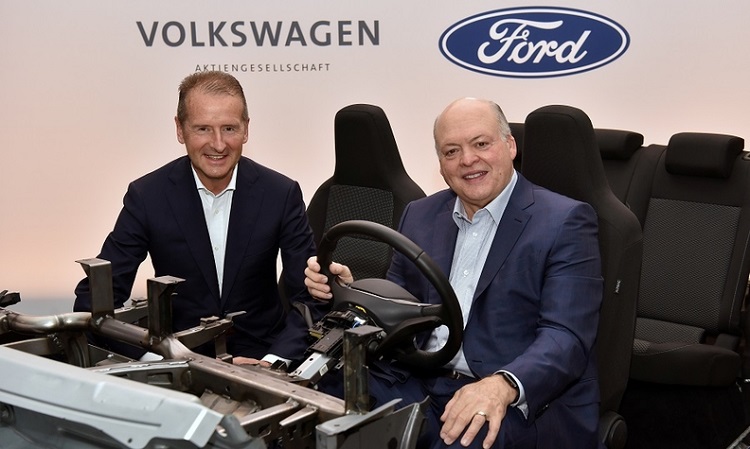
Ford Motor will develop battery-powered cars based on Volkswagen Group’s MEB electric platform in Germany, and VW will invest $2.6 billion in Ford’s Argo AI self-driving unit. The moves are part of an expanded alliance between the two automakers that VW CEO Herbert Diess and Ford CEO Jim Hackett announced.

Under the terms announced

Ford will use VW’s modular electric toolkit, known as MEB, to design a new battery-electric vehicle for its European operations. It will be designed and developed at Ford’s development center in Merkenich, near Cologne, Germany.

Volkswagen will supply MEB parts and components for the EV. It estimates it could realize up to $20 billion in revenue by sharing its MEB architecture with Ford in Europe.

Ford said it expects to deliver over 600,000 MEB-based vehicles in Europe over a six-year period starting in 2023. A second EV for European customers is “under discussion,” Ford said.

Ford Automotive President Joe Hinrichs said it would take four years to design Ford’s electric car around the MEB architecture, and retool a Ford of Europe plant to build the vehicle.

Analysts at Citi said Ford’s licensing of Volkswagen’s MEB platform was a “transformational” step for both companies. “It likely provides VW with an unassailable scale advantage,” Citi analyst Angus Tweedie said in a note published on July 10.

VW has invested $7 billion in its MEB architecture since 2016. It plans to use MEB to underpin about 15 million cars for its VW, Audi, Skoda and Seat brands including hatchbacks, sedans, crossovers and minivans in the next decade, starting with the Golf-sized VW ID3 that will debut at the Frankfurt auto show in September.

With Friday’s announcement, Ford becomes the first global automaker to agree to license VW’s MEB toolkit. VW’s Diess said Ford would pay VW “set by set” for the use of VW’s electric vehicle components. The cooperation with VW on electric vehicles in Europe is part of Ford’s previously disclosed $11.5 billion EV investment worldwide.

Hinrichs said the VW collaboration would not affect Ford’s plans to launch two new electric vehicles in the United States, including a battery-powered version of the F-150 pickup and a new Mustang-inspired crossover vehicle that is expected to be called Mach E.

Suppliers familiar with Ford’s plans say the automaker is developing a broader portfolio of electric vehicles, most of them crossovers that will carry the Ford and Lincoln brands, for North America and China. Many of those models will be built on an updated version of Ford’s C2 global compact platform, they said.

It was not clear if some of those future Ford EVs could migrate to VW’s MEB platform, versions of which the German automaker will build in Europe, China and North America.

Autonomous hub Munich
VW will invest $2.6 billion in Argo AI, with $1 billion in direct funding. VW Group’s Munich-based Autonomous Intelligent Driving (AID) unit, led by Audi and valued at $1.6 billion, will become Argo’s new European headquarters. AID has about 200 employees, with most working on developing self-driving technology for VW Group. The combination will give Argo AI over 700 global employees.

Argo AI is focused on developing a Level 4 self-driving system primarily for ride sharing and goods delivery vehicles in dense urban areas. VW will purchase $500 million in Argo AI shares from Ford over three years. Ford will invest the remaining $600 million of its previously announced $1 billion cash commitment in Argo AI.

Diess said the Argo platform was “the best solution for Volkswagen” to speed self-driving vehicles to market, and that Ford and VW together intend to make that platform “a global industry standard.”

Together, the transactions will make Ford and VW equal partners in Argo AI, placing a value on the Pittsburgh-based tech company at $7 billion. The two automakers will hold the vast majority of Argo AI’s shares, with the remainder to be used as an incentive pool for Argo AI’s employees.

Hackett and Diess emphasized the benefits and synergies the additional scale of working together on expensive EV and AV technologies can bring.

Hackett said that while VW and Ford remain independent and “fiercely competitive in the marketplace, teaming up and working with Argo AI on this important technology allows us to deliver unmatched capability, scale and geographic reach. Unlocking the synergies across a range of areas allows us to showcase the power of our global alliance in this era of smart vehicles for a smart world.”

Diess said that adding Ford to its ambitious global EV plans will drive down development costs further, and make EVs more affordable.

Ford and VW agreed in January during the Detroit auto show to work together on development of midsize pickups and commercial vans for use outside North America. At the time, both Diess and Hackett said further collaborations were under discussion.

The automakers’ collaborations in midsize pickups and commercial vans will proceed apace, with Ford agreeing to source and build a midsize pickup to replace the aging Volkwagen Amarok in Europe, Africa, the Middle East, South America and Asia beginning in 2022. Of nearly 350 models across its many brands around the world, the Amarok is the only light-duty, body-on-frame vehicle Volkswagen builds.

Regarding commercial vans, Ford will design and build a large commercial van for both companies, beginning in 2022, for European customers, while Volkswagen will do the same for a city van for Europe and “other select global markets.”

Autoexpo Kenya to open tomorrow at KICC in Nairobi


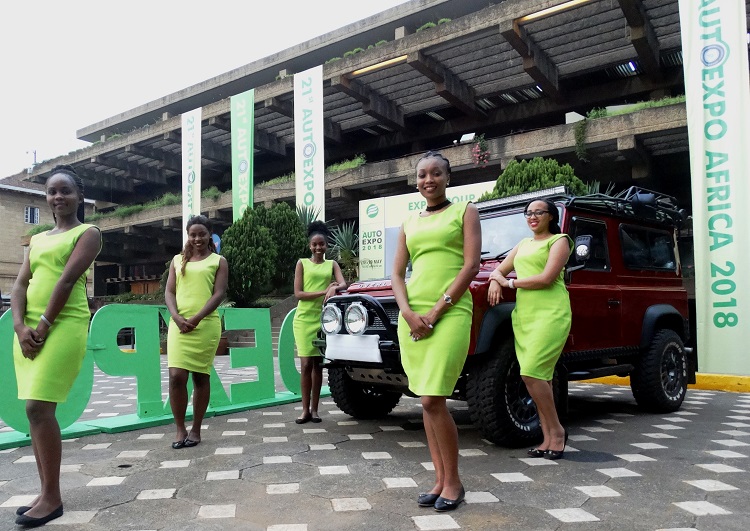
The 22nd Autoexpo Africa is being held in Kenya at the KICC Nairobi, from the 18th to the 20th of July 2019. East Africa’s premier Automotive Spareparts Accessories and Equipment fair features exhibitors from over 30 countries who are the leaders in the automotive industry will be showcasing their products, services and equipment. Celebrating its 22nd anniversary, the leading trade exhibition for automobile, truck and bus parts, equipments, components, accessories, tools, and services continues to bring world leading manufacturers, suppliers, and service providers in touch with one of the most important markets in the world.

The event is expected to host various dignitaries including ambassadors, high commissioners and trade representatives who have confirmed their attendance. Among them would be, Mr. Thanit Ngansampantrit (Embassy of Thailand), Mr. Syed Ahmed Maroof (The High Commission Of Pakistan), Mr. Meles Alem Tikea and Mr. Siraj Jundi (Embassy of Ethiopia), Ms. Marta Eugenia Juarez Ruiz (Embassy of Costa Rica), Mr. Andrii Pravednyk (Embassy of Ukraine), Mr. Dmitry Maksimychev and Mr. Dmitrii Charnetskii (Embassy of Russia),  Mr. Sayem Ahmed (High Commission Of Bangladesh), Mr. Ahmad Alfar and Mr. Mahmut Burak Ersoy (Embassy of Jordan), Mr. Michael Derus (Embassy Of Germany), Mr. Nuku Kamasa-Quashie (The High Commission of Ghana).

Autoexpo Africa is the only show featuring the widest range of the latest products in the automotive sector, bringing together companies from countries around the world to Kenya and the EAC region.  Countries dominant this year are Thailand, China, India, Pakistan, Spain, Greece and United Kingdom with several leading international brands looking to build a solid foundation in the East African market. Advance Auto Supply (Thailand), Panther Tyres and Osaka Batteries (Pakistan), Gameroil (Spain), Asteriya and Yenmak Engine Parts (Turkey), S & S Ltd – Recor Batteries (Greece), Boston Garage Equipment and GT Exhausts Ltd (United Kingdom), Amara Raja Batteries Ltd, Garima Global Pvt Ltd and Jitendra New EV Tech Pvt Ltd (India), Dr Greiche (Egypt), Champion Lubricant Oil (United Arab Emirates) are some of the market leaders in their respective industries who will be at the exhibition.

Visit: 22nd Autoexpo Kenya 2019

The event is sponsored by major companies from Kenya that include key players such as Mobikey Truck and Bus Co., Ltd showcasing MAN Trucks and Buses, CMC Motors Group Limited representing Eicher, Robert Bosch East Africa Ltd, Multi-Line Motors (K) Ltd, Real Auto Spares Ltd, CHEKI – Timam Cars, 3 Continents Limited and more.

The event showcases a wide range of products and equipment for the automotive industry. The event generates access to about 14.3 million business prospects during three-days, The rapid industrialization and modernization currently sweeping through many African countries has resulted in an increased demand for capital goods such as machinery, lubricants, spare parts, ball bearings and other automotive mechanical goods and accessories. The market for automobile spare parts, in particular, has been an attractive sector for global exporters, as Africa has witnessed a remarkable increase in imports by 30%. Last year’s event witnessed international pavilion participation from India, Turkey, China, Italy, Malaysia and Germany. Over the years, Autoexpo has grown to cater to the demands of not just the Kenyan market, but of the whole region of East Africa.

Kenya is certainly one of the biggest markets in Africa, but Autoexpo also lays strong emphasis on attracting traders and importers from neighboring countries. Kenya is a model location for a specialized trade fair such as Autoexpo Africa which presents a comprehensive spectrum of products and solutions in the automotive industry. This will be a crucial and positive approach for the domestic producers looking to upgrade their technology, pushing  them to remain competitive in the industry, as well as provide a one-stop platform for international companies looking to invest and enlarge their footprint in Kenya and the region.

Visit: http://autoexpo.expogr.com/ for more information

Lexus confirms LC convertible


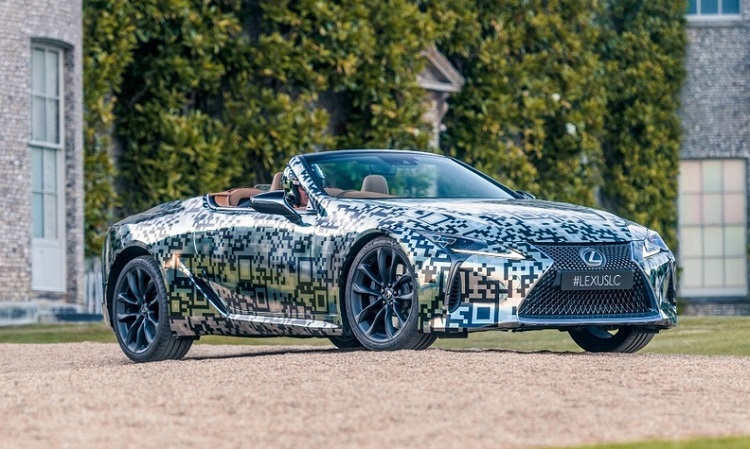
Lexus is returning to the convertible. Toyota’s premium brand confirmed this month that a convertible version of its flagship LC sports coupe will go into production “in the near future.”

The company showed a prototype of the car, in a silver-and-black digital camouflage motif, at Britain’s Goodwood Festival of Speed.

“Long, low and lean, the LC convertible will share the coupe’s athletic proportions but project its own, distinct identity,” Lexus said in a release, adding that the comeback convertible will give “a sense of completeness to the brand’s flagship models.”

Also Read: Lexus partners with Streetwear Designer to create Bespoke Tyres

Lexus described the LC convertible prototype as “long, low and lean”

The convertible expands the convertible model lineup and it will be the first droptop offered by Lexus since the IS C ended production in mid-2015. Before that, Lexus sold the now-discontinued SC convertible. Lexus has been teasing a new convertible for years.

Also Read: Finalists for LEXUS DESIGN AWARD 2020 announced

“The LC convertible will share the coupe’s athletic proportions but project its own, distinct identity,” said the company. At the Detroit auto show in January, it previewed the upcoming car with the LC Convertible Concept. It showed the LF-C2 concept in 2014, playing with the idea of a convertible RC coupe. In 2008, it dangled the LF-AR, which conceptualized an open-air LFA. Lexus offered scant details about the latest convertible, saying launch and markets would be announced later.

Loan guarantees for Jaguar Land Rover after EV pledge

0

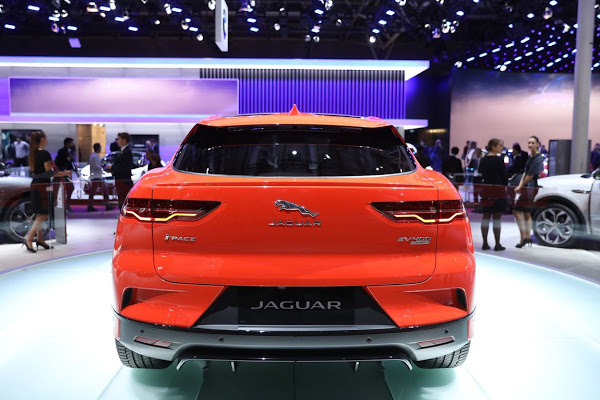
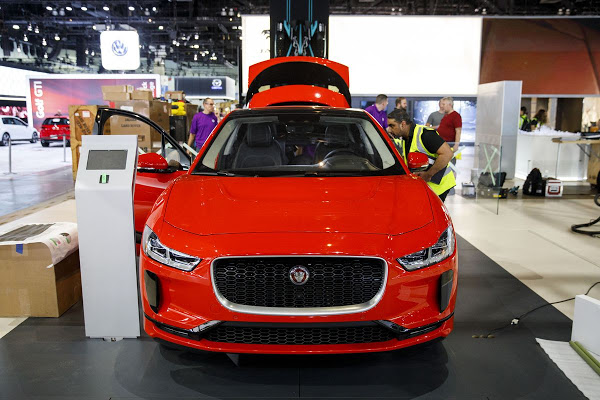
Jaguar Land Rover bags $626 million loan guarantee from the UK government, just over a week after announcing a new range of electrified cars will be made at a plant in central England.

The loan to JLR by the UK Export Finance agency was granted to support the design, manufacture and export of electric cars, Prime Minister Theresa May said after a round-table meeting of auto industry representatives in Downing Street on Monday.

JLR will invest hundreds of millions of pounds transforming its Castle Bromwich site near Birmingham after previously committing to electrified options of all new models from 2020. The first electric vehicle off the production line will be the ninth generation of Jaguar’s flagship XJ sedan.

The news on Castle Bromwich, which safeguards thousands of workers, provided a much-needed boost for a British automotive industry that’s been rocked by job cuts and plant closures. Brexit, a slowdown in China and flagging demand for diesel-powered vehicles have taken a toll on JLR, which said in January it would slash 4,500 positions worldwide to conserve cash.

May met senior auto industry figures including representatives from Ford, BMW, Nissan and PSA Group’s Vauxhall arm.

TOTAL and CITROËN celebrate a 50-Year partnership

0

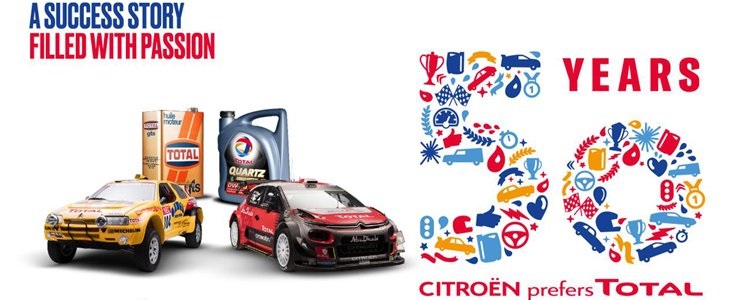
Total and Citroën have put in many miles together since 1968. Their success story, built on innovation and passion for motorsports, has taken the two brands all the way to the top of podiums. We look back at 50 years of a partnership studded with business and racing successes that helped build both companies’ international standing.

Since the partnership’s began in 1968, Total has helped drive Citroën’s industrial growth worldwide by supplying a wide range of automobile lubricants. Over the decades, the two companies have jointly developed lubricants specifically for Citroën engines, to make them ever more fuel efficient and environmentally friendly.

The environment is a core concern for Citroën and Total. The pair has pledged to drastically curtail their environmental impact, notably by reducing carbon emissions. Their R&D teams co-develop specific solutions that fit the bill. Today their efforts have culminated in the new TOTAL QUARTZ INEO FIRST 0W-20, a synthetic oil for pollution control systems that improves fuel economy by as much as 4%*.

Another cornerstone of the Citroën-Total partnership is dedication to excellence and competitive spirit. From meticulous oil analyses to trackside checks and from individual rally races to the World Rally Championship, tests and racing events have enabled Total to experiment with lubricants under extreme conditions and make sure that Citroën’s racing and mass-produced cars deliver the best performance.

The strength of the Citroën-Total motorsports partnership was obvious as far back as the Morocco Rally in 1969. Citroën began racking up wins with the Citroën DS 21, and continued its rally racing saga, stringing together 36 victories and five constructors’ titles in the FIA World Touring Car Cup. An incredible run of successes followed between 2003 and 2012, including eight constructors’ titles and nine drivers’ titles in the World Rally Championship (WRC).

In 2014, Citroën and Total decided to race in the WTCC championship, notching up three constructors’ titles, three drivers’ titles and 50 wins. In 2017, the two brands made a fresh start in the WRC with the C3 WRC, a two-time winner, in Mexico and Catalonia.

Mathieu Soulas, Total Lubrifiants’ Chief Executive Officer, comments: “We are both are preparing to meet the environmental, technological and motorsports-related challenges of the futureThe road we’ve already traveled together allowed us to share our dedication to excellence and customer-focused innovation. During those productive years, Total and Citroën have always been able to come up with sustainable solutions.”

Linda Jackson, Chief Executive Officer, Citroën Brand, notes that: “After 50 years of working together, we can be proud of our engaged teams and their tremendous contribution to this great success story.”

Citroën and Total celebrate the 50th anniversary of their partnership with a video reflecting their dedication to excellence and expertise, available on social media.

ABOUT CITROËN

An international automotive brand at the heart of the mainstream market, Citroën has cultivated boldness and creativity since 1919. Standing apart through their design and ensuring well-being through comfort and technology, Citroën cars like the New C3 and the New C3 Aircross Compact SUV, bring a breath of fresh air to the automotive world. The brand is popular in its noblest sense: its main source of inspiration is people and their lifestyles. This spirit is captured in its signature: “Inspired by You”. It also finds expression through a unique customer experience with its city store concept ‘La Maison Citroën’, its online opinion site ‘Citroën Advisor’ and mobility solutions such as Citroën Rent & Smile and Citroën Earn & Drive. With 10,000 sales and after-sales points in nearly 80 countries, Citroën sold 1.1 million vehicles in 2017. The Brand has also amassed eight Manufacturers’ titles in the World Rally Championship and won three consecutive Manufacturers’ title in the FIA World Touring Car Championship

ABOUT TOTAL LUBRIFIANTS

Total Lubrifiants is a leading global manufacturer and marketer of engine oils and lubricants. It has 41 production plants worldwide and more than 5,800 employees in 150 countries. Total Lubrifiants offers innovative, efficient and environmentally responsible products and services developed by more than 130 researchers at its R&D center. Total Lubrifiants is a partner of choice for the automotive, industrial and marine markets.

lubricants.total.com 

elf.com

ABOUT TOTAL

Total is a global integrated energy producer and provider, a leading international oil and gas company, and a major player in low-carbon energies. Our 98,000 employees are committed to better energy that is safer, cleaner, more efficient, more innovative and accessible to as many people as possible. As a responsible corporate citizen, we focus on ensuring that our operations in more than 130 countries worldwide consistently deliver economic, social and environmental benefits.

- Advertisement -