Sunday, May 31, 2026
Home Blog Page 68

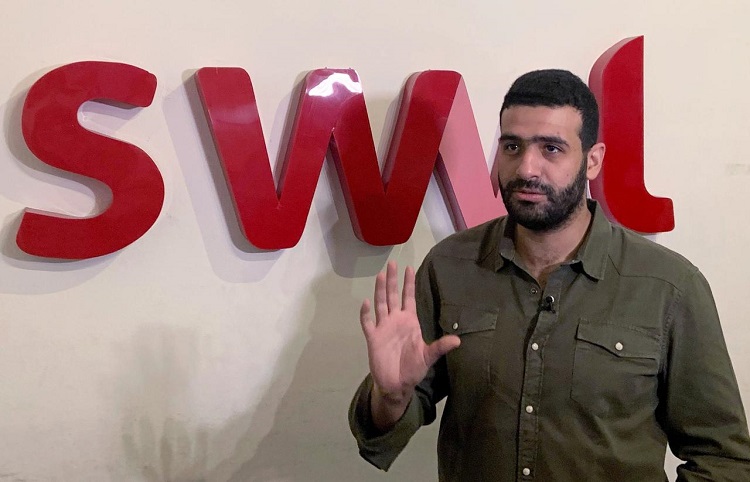
Egyptian transport start-up Swvl targets expansion in Africa, Asia

0

Egyptian transport technology start-up Swvl will expand into two cities in Pakistan in the next two weeks and begin operations in Nigeria’s commercial capital Lagos before the end of the year, its chief executive told Reuters.

The firm, which operates buses along fixed routes and allows customers to reserve and pay for them using an app, will also expand into Manila in the first half of next year, its co-founder and CEO Mostafa Kandil told Reuters.

“We will enter Lagos before the end of the year, and our eyes are on Dar es Salaam and Abidjan,” he said. The firm is also planning to launch in other South East Asian markets, he added.

Kandil said the company is seeking to raise more than $100 million in a financing round in the first half of next year, and is targeting a $1 billion valuation in the next five years. Since its launch in April 2017 Swvl has secured the biggest round of funding for a tech start-up in Egypt.

“We were a company worth about $2 million two years ago and our paid-up capital is now $80 million,” he said.

Kandil said he hoped Swvl would eventually go public, but did not say on which stock exchange. He said he would in the longer term also consider a buyout offer from the likes of ride-hailing giant Uber.

Kandil, 25, said the company has been losing money, but expects to turn a profit in two to three years.

“This year we have entered about seven new cities and next year we are targeting another 10 to 20 new big cities,” Kandil said.

The Cairo-based firm, which is due to move its headquarters to Dubai in November, launched in Nairobi about six months ago and began operations in Lahore in July.

“We aim to reach one million trips a day in Egypt over the next five years,” said Kandil.

He and two other young Egyptian co-founders, Mahmoud Nouh and Ahmed Sabbah, own more than 30% of the company, he said.

The rest is held by 17 investment funds, including U.S.-based Autotech Ventures, Sweden’s Vostok New Ventures, Oman’s sovereign wealth fund, the UAE’s BECO Capital and China’s MSA Capital.

The Swvl app, which has fixed bus routes, uses the passenger’s location and destination to determine the shortest possible trip time based on the nearest bus stop.

Uber and regional competitor Careem began operating their own bus services in Egypt in late 2018, competing directly with Swvl.

Hyundai enters Somaliland car market

0

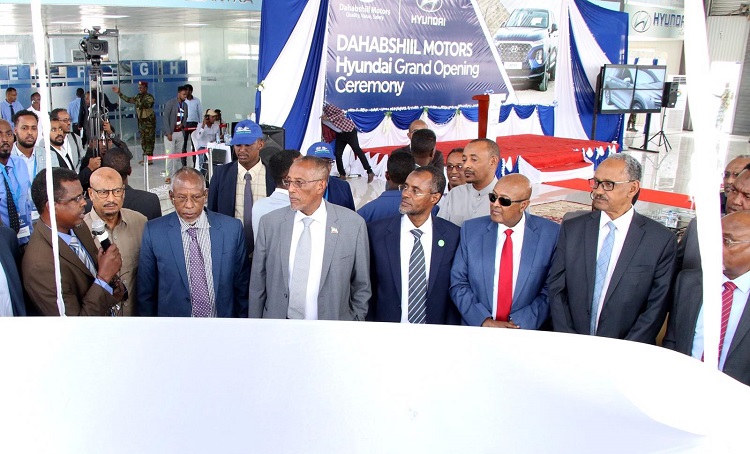
South Korea car manufacturer Hyundai has entered into the Somaliland market. Hyundai is the latest multinational company to venture into the Horn of Africa via Somaliland. Hyundai has launched a series of models in Somaliland capital Hargeisa after partnering with Dahabshiil Motors to introduce the brand new vehicles in the Horn of Africa country.

By venturing into Somaliland, Hyundai joins Coca-Cola in the country that is seeking international recognition but boasts of a huge potential for international investments.

HORN OF AFRICA

The South Korean car manufacturer has partnered Dahabshiil group of companies to introduce Hyundai model of cars to the horn of Africa region.

“Hyundai automotive business is not going to be limited to Somaliland, but aims at Horn region as a whole,” said Dahabshiil Motors Chief Executive Officer Engineer Awil Sharif.

He said they have introduced eight Hyundai models in the country. The models include Grand Santa Fe, Santa Fe, Tuscon, Creta, Elantra, Grand i10, a 14 seater commercial bus, and light track.

“Most countries in Africa import four or five models. We started with eight models and will bring more models in future depending on customers’ demand,” Mr Sharif added.

SIX MONTHS

The entry of Hyundai in Somaliland comes just six months after the company opened a 10,000-a-year vehicle capacity assembly plant in the Ethiopian capital Addis Ababa.

The Hyundai company operates the largest integrated automobile manufacturing facility in Ulsan, South Korea with an annual production capacity of 1.6 million units.
The company employs about 75,000 people worldwide. Hyundai vehicles are sold in 193 countries through some 5,000 dealerships and showrooms.

Dahabshiil Motors, who are the sole distributors of Hyundai vehicles in Somaliland and Somali regions are offering direct purchase and bank financing.

“Dahabshiil Motors’ Hyundai can be purchased through Murabaha (the Islamic financing bank system). We are part of the Dahabshiil Group, so, our customers can buy our cars on finance,” stated the CEO

SAFETY

In terms of the automotive business, the company measured safety-related matters, environmental pollution problems and user comfortability before importing brand new Left Hand Drive quality vehicles to replace Right Hand Drive vehicles,” stated Mr Sharif.

The entry of Hyundai in the Somaliland comes at a time when the country’s Ministry of Transportation announced it will ban imported Right-Hand Drive vehicles by 2020. Somaliland is also taking drastic steps to ensure safety on the country’s roads and reduce the effects of vehicle emissions created by unroadworthy cars.

NIC Bank, Toyotsu Auto Mart Kenya ink a financial deal for used vehicles

0

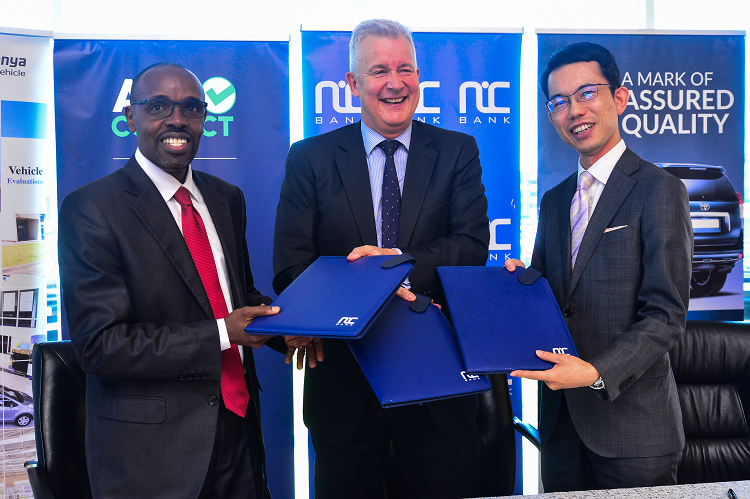
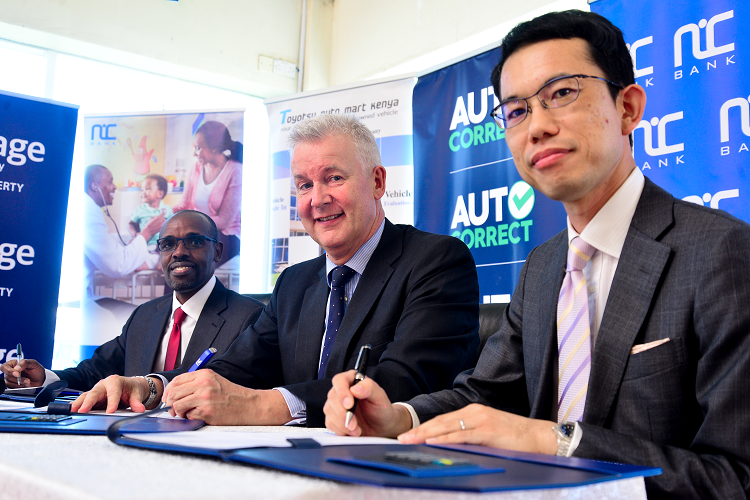
NIC bank have signed a partnership with Toyotsu Auto Kenya Limited – one of the largest used Japanese cars dealer in Kenya – to finance and enable Kenyans to purchase second-hand vehicles from Japan.

The partnership will guarantee Toyotsu customers up to 90% financing, 60 months repayment period and two months warranty for vehicles that meet the warranty criteria with an option to extend to one year at a small fee.

Speaking at the signing ceremony of the financial deal, NIC Bank Executive Director Alan Dodd stated that majority of Kenyans depends on import of second-hand vehicles and therefore the partnership was timely and signed to help customers purchase quality
second-hand vehicles at affordable prices through a secure and transparent agent.

From left, Godfrey Kioi Managing Director Heritage Insurance, Alan Dodd, NIC Bank Executive Director, Yoichi Hashimoto Managing Director Toyotsu Automart Kenya Limited singing the financial partnership at the Toyotsu Automart Kenya Ltd Headquaters, Nairobi, Kenya

“Many people in this market depend on the second-hand vehicle market to own a car. With this Partnership, we seek to actualize the dreams of many Kenyans wishing to own a vehicle either for personal use or business activities at an affordable arrangement. In addition, this presents yet another opportunity for us to cement our position as the leading bank in asset finance in the country.” he stated.

Dodd further added that the financing deal is open to both NIC Bank customers and non-
customers wishing to import vehicles and looking to be financed by the bank.

On his part, Toyotsu Auto Mart Kenya Limited Managing Director, Mr. Yoichi Hashimoto
said that he was excited to be partnering with NIC bank and that the partnership will go a long way in easing the financial load on their customers.

“Our partnership with NIC Bank is indeed another seal of approval for Toyotsu Auto Mart
strength within this trade to meet the local market’s needs on used vehicles. Through this partnership, we can assure all our customers of efficiency and reliability in handling all the complex stages of purchasing a pre-owned vehicle through a transparent process and assured aftersales support” he stated.

The Toyotsu partnership comes hot on the heels of NIC Group (Bank and Insurance) and
Heritage Insurance agreement to offer their customers a first of its kind telematics motor policy that rewards good drivers. The strategic partnership between NIC bank through their subsidiary NIC Insurance Agents is poised to avail customers a raft of benefits including; Discounts on insurance premium, rewards for safe driving, simplified claims processing premium cashback for safe drivers hence reduced insurance cost based on feedback on the customers driving behavior through a Mobile App, Loyalty program with discounts at various outlets among others.

On NIC, Toyotsu partnership, the vehicle purchase will be handled wholly by Toyotsu Auto Mart Kenya who have approximately 400 vehicles in stock at any given time and upon request facilitates importation on behalf of clients with special specifications.

Zufall Logistics consolidates tyre logistics services

0

Zufall Logistics Group has set up a subsidiary to consolidate its tyre logistics services in Germany. Zufall Tire Logistics will take over the services previously handled by Zufall Logistics’ sister company Müller + Partner. Amongst the customers Zufall Tire Logistics will now serve are Korean suppliers Hankook Reifen Deutschland and Kumho Tire Europe.

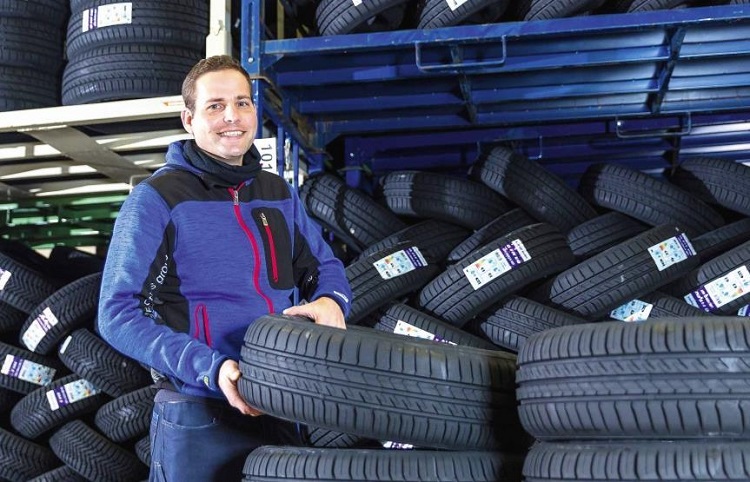
Zufall Tire Logistics is managing more than 1m passenger car and 40,000 truck tyres in a facility in Michelsrombach, central Germany. The facility covers more than 60,000 sq.m and a total of over 1,450 different items are stored there in dedicated tyre racks. The facility sees an annual throughput of around 7m tyres and peak daily handling reaches 60,000 tyres.

The company has invested in more than 23,000 tyre racks, fire protection technology, material handling equipment and a telescopic conveyor belt system at the facility.

Zufall said its services extend beyond the facility and it is handling the entire European part of the supply chain for Hankook from the arrival of tyres at the port of Rotterdam.

“We take care of customs clearance, unload the shipping containers, transport the tyres to the central warehouse and store them there,” explained Matthias Schnarr, head of logistics at Zufall. “When an order is placed in our system, we then deliver to their final destination.”

Zufall Tire Logistics is also handling returns and claims. Alongside its Michelsrombach facility, Zufall manages a warehouse in Schlüchtern, with an average stock of around 20,000 truck tyres for German and Scandinavian truck and bus manufacturers.


Cuxport on a roll with 2m BMW exports


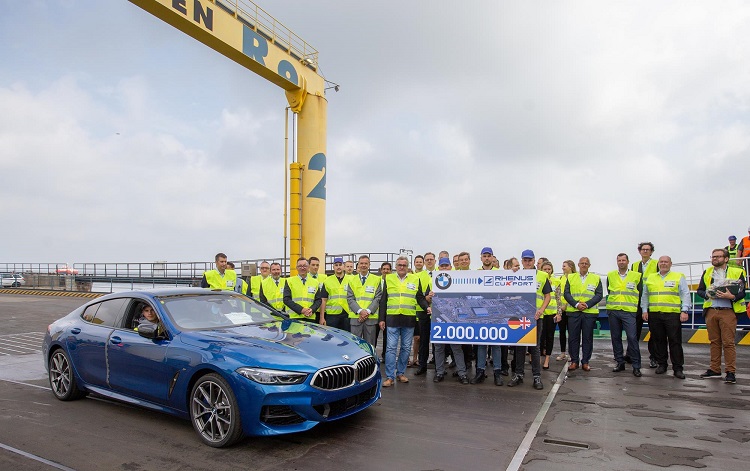
German port services provider Cuxport, a joint venture between Rhenus Group and HHLA Container Terminals, exported its two millionth BMW to the UK last week. The company is looking ahead to build on that and other intercontinental trade, and while Brexit uncertainty is a challenge, Rhenus’ management believes that Cuxhaven port is well placed to grow volumes.

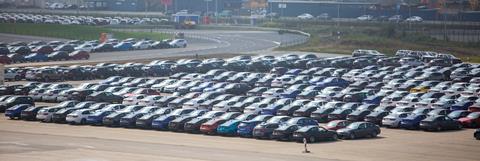
The exported vehicle – a BMW 8-Series Gran Coupe – was delivered by rail to the German port at Cuxhaven from the carmaker’s Dingolfing plant in Bavaria. The car was then loaded onboard the ro-ro vessel Jutlandia Seaways, operated by DFDS for onward shortsea transport to the port of Immingham in north-east England.

Cuxport has been processing BMWs for delivery to the UK for 15 years and also handles vehicles to Sweden, Iceland, Denmark, Estonia and Finland. DFDS transports the cars to Immingham up to six times a week, while United European Car Carriers (UECC) sails to Southampton port twice weekly. The Scandinavian volumes are handled by K Line.

“Today, we’re not celebrating the transhipment of one car but the customer relationship with BMW,” said Hans-Peter Zint, managing director of Rhenus Cuxport, who was present at an export ceremony in Cuxhaven, held on Thursday (August 29). “It started in 2004 with Cuxport, BMW, DFDS and the rail company ATG [now DB Cargo].Based on a significantly shorter lead time, we were able to convince BMW to switch shipments from Zeebrugge to Cuxhaven and showed them that they can trust us.”

Oliver Fuhljahn, Rhenus Cuxport’s head of automotive logistics, said the port’s location on the North Sea provides customers with short handling times (helped by lock-free access) and adequate storage capacity for shipping the vehicles. Vehicles are stored for an average of four days and 2,000 can be shipped per vessel.

“We have been able to massively increase the transhipment of vehicles and the number of our automobile customers during the past few years – partly by providing an improved railway link and also by making major investments at the site,” said Fuhljahn. Those investments included the addition of a third berth at Cuxport last year.

In 2018, Cuxport handled approximately 200,000 automotive exports and 80,000 imports. Exports were mainly BMW, Kia, Daimler and GM vehicles, while imports were mostly from JLR, GM and Toyota.

Silver linings
Despite the strong figures, Zint said that since the UK voted to leave the EU in June 2016, Cuxport had seen a general reduction in UK-related imports and exports. That was mainly attributable to the prevailing political uncertainties and a related devaluation of the pound against the euro. He predicted that if there is a no-deal Brexit, “trade volumes might go down further depending on eventual customs tariffs”.

“Many ports, in particular along the Channel coast, are physically not prepared to deal with customs controls, which brings uncertainty and risks for the supply chain,” continued Zint. “But, we have conducted joint tri-lateral talks with our clients and with customs and are ready for this challenge in all aspects,” he said.

While Brexit may be “looming like a dark cloud”, the port location of Cuxhaven is “thoroughly prepared for any scenario,” according to Enak Ferleman, parliamentary state secretary at the Federal Transport Ministry.
2019_09_02_Cuxport_2M_BMW_5

“When the UK exits the EU, the classic accompanied trailer transport routes will quickly be blocked due to necessary customs controls, but Cuxhaven still has capacity, because its handling speed prevents delays and most of the sea transport of trailers will be driverless,” he said.

Fuhljahn suggested that the challenge of a no-deal Brexit could also provide an opportunity. “It cannot be taken for granted but we could have a chance to gain more business out of the UK into Cuxhaven if there is a no-deal Brexit,” he said. “For Cuxhaven, which up until now mainly handled cargo within the European internal market, the ability to smoothly manage export and import customs procedures could open up additional business opportunities, be it UK traffic or even trade with the US, Mexico or China,” added Fuhljahn.

He also said that Cuxhaven was a viable alternative to other more congested ports for customers looking to ship intercontinental volumes into the EU.

“We have balanced traffic due to the constant flow back and forth,” he said. “Many vehicles are going via Cuxhaven; you could say it’s the place to be.”

That point was backed up by Ferleman at the Federal Transport Ministry, who said it was one of the ports in Europe with the best growth perspectives.

Cuxport has authorised economic operator (AEO) status and provides an electronic data interchange (EDI) connection into the automated German customs tariff and clearance system (Atlas), which all exporters and importer must use. It has also provided 30 employees with advanced training for custom’s procedures.

“We have 90 days where we can keep the cars without having a customs fee put on the vehicle. From 90 days onwards, everything needs to be customs cleared,” explained Fuhljahn.

Watch this space
Cuxhaven also provides easy access to road and rail links. Vehicles are moved in and out either by the adjacent A27 motorway or by the rail connection between Cuxhaven and Stade. That rail route is currently operated with diesel trains but there are plans in place for electrification.

“BMW heavily uses the rail connection in Cuxhaven, since the cars arrive largely via train,” said Zint. “This is why the electrification of the rail connection between Cuxhaven and Stade has to be achieved. This the next step for Cuxhaven and it is part of the federal government’s infrastructure improvement plan,” he said.

Port capacity at Cuxhaven is also being expanded. Port operator Niedersachsen Ports is preparing plans to close the gaps between berth no. 4 and 8 with berths no. 5 and 7. The overall length of the planned berths is 1,257 metres. Once the gap is closed, the overall length of the quay wall from berth no. 1 to berth no. 9, will measure 3.6 kilometres.

According to Niedersachsen Ports, the extension of berths 5-7 will mean 30 hectares of storage and terminal space. If planning approval is granted, it would double the capacity of the current Cuxport terminal. The company expects a decision by the beginning of next year.

Looking further into the future, there is also the option of using hydrogen-powered equipment to help process vehicles at the port, with Zint revealing the company would explore the possibility.

Nippon Express expands footprint in Morocco

0

Logistics provider Nippon Express France has opened a second operation in Morocco, a logistics centre in the port of Tangiers. The expansion follows several global automotive companies, including component manufacturers, setting up production facilities in the Tangier Free Zone next to the port.

“There are several customers, tier 1 and tier 2, which are currently delivering automotive parts from Asian or other foreign countries to Morocco and other North African countries passing through Europe, and for these customers it is useful to use Tangier port directly,” a Nippon Express spokesman.

The tier manufacturers are able to gain lead time and save costs, and this tendency is likely to increase as new suppliers are seeking business in Morocco and North African countries, taking advantage of Tangier’s high handling capacity, he added.

Services offered by Nippon Express France, a subsidiary of Japan’s Nippon Express, at its new Tanger Med Logistics Centre include arranging customs documents, transferring containers from the port to its warehouse, storing goods and preparing them for dispatch, delivery and re-exporting goods to other countries, especially in North Africa.

Nippon Express France is thinking of expanding operations at its Tanger Med Logistics Centre as there are many connections from the port to other countries. Also, some companies use it as a hub to distribute products or parts to elsewhere in Africa, the spokesman said.

“We would like to start by studying logistics demand, such as warehousing and transportation to especially North and West Africa, in order to provide enough logistics service using our Tanger Med logistics warehouse,” he added.

Nippon Express France opened a Moroccan branch in Casablanca in December 2017 for air and ocean cargo forwarding operations.

Tangiers port is linked to 186 ports in 77 countries, while the adjacent free trade zone has around 800 tenant companies. The Moroccan government’s policies include enhancing the country’s status as a logistics hub for North and West Africa, with Tangier port serving as a key gateway.

SA car industry could get R60bn boost in next 5 years

0

As much as R60 billion could be invested in the South African vehicle and component manufacturing industries in the next five years, according to Andrew Kirby, CEO of Toyota South Africa and president of National Association of Automobile Manufacturers of South Africa (NAAMSA).

In a recent speech at the annual NAAMSA Conference in Kyalami, Kirby said the seven largest vehicle manufacturers are considering  R40 billion in direct investments, with an additional R20 billion earmarked for component making. The industry wants to increase the use of locally-produced components in vehicles.

“We expect local procurement to grow by R12.6 billion in the next five years together with a 14% increase in direct employment, which equates to creating another 16 000 jobs, mainly in the component manufacturing sector as local content grows from 39% to at least 42%.”

The component sector needed to urgently develop smaller  suppliers, Kirby added, and the industry wants to help establish 500 smaller suppliers with 130 of them black owned. The industry also welcomes an initiative by the local steel industry to investigate the production of automotive-grade steel in SA.

He stressed the importance of being globally competitive in terms of cost, quality, and reliability of supply as several other countries were eyeing South Africa’s automotive export markets.

“Growing production volumes, increasing localisation significantly and using the latest technologies in all aspects of the business are vital to transform the South African automotive industry and to this end the aim was increase output from the 610 000 vehicles made in 2018 to 800 000 in 2023,”  Kirby said.

July’s trade data showed a 22% monthly increase in exports of vehicles and transport equipment, to the value of R3 billion. Some 407 000 people are employed in the vehicle industry.

Toyota, Ivory Coast sign vehicle assembly plant deal

0

Ivory Coast’s government signed an agreement with Toyota to build a vehicle assembly plant in the West African nation, the office of Ivorian Prime Minister Amadou Gon Coulibaly said in a statement.

Faced with stagnant sales in developed economies, automakers including Toyota, Volkswagen, BMW, and Nissan are seeking to break into Africa, considered one of the world’s last untapped markets for new cars.

The agreement was signed at a Japan-Africa development conference in Yokohama, Japan, by Gon Coulibaly and Ichiro Kashitani, CEO of Toyota Tsusho, a unit of the automotive and industrial group.

The statement did not give details on the number or type of vehicles Toyota will produce in Ivory Coast, but it said the process for establishing the plant would be launched before the end of the year.

As part of its push into the continent, Toyota Tsusho acquired French automobile retailer CFAO, which operates in 35 countries in Africa, in 2016. Toyota already produces cars in South Africa, which has a well-developed auto industry.

VW and Nissan have also set up operations in Nigeria, Kenya and Ghana or have pledged to do so. Honda and Peugeot have launched assembly plants in Nigeria and Peugeot has done the same in Kenya.

Kenya Power inks Sh379m cars deal

0

Kenya Power, the electricity distribution monopoly, has inked a deal with four auto dealers to supply a fleet of vehicles at Sh379 million. The partly State-owned firm, which is eyeing an improvement of its financial position revealed the cost in a tender notice.

Kenya Power acting Chief Executive Jared Othieno did not respond to queries on whether the vehicles deal was a purchase or a leasing plan.

It was also not immediately clear how many vehicles will be provided under the deal and whether they will be used by staff or set aside for electricity connection. Some departments like the police have turned to vehicle leasing in what has become a boon for leasing firms, financiers and auto dealers.

In the Kenya Power deal, Toyota Kenya will supply vehicles for Sh241.54 million while Simba Corporation has signed for Sh34.4 million worth of cars.

Simba Caetano Formula will provide vehicles worth Sh52.66 million while Isuzu East Africa will provide vehicles worth Sh51.26 million. Kenya Power says it approved the deal in July.

The listed firm has been left in a financial tight spot after it breached the terms attached to Sh59.6 billion worth of its loans.

Consequently, it has been seeking to secure fresh short-term loans to refinance similar debts on a longer tenor.

Early this year, mega electricity generation projects valued at billions of shillings were left in limbo after Kenya Power froze the signing of new power purchase agreements (PPAs) indefinitely, citing financial constraints and excess capacity.

The firm posted a 63.7% decline in net profit to Sh1.92 billion in the year ended June 2018 on higher costs.

Despite revenue rising by 4.23% to Sh125.8 billion on increased customer base, increased power purchase and higher finance costs depressed its bottom-line. Power purchase costs, excluding fuel and foreign exchange, increased by Sh2.59 billion to Sh52.79 billion in the period.

Kenya Power said last November that it had opened talks with its creditors to extend the payment period for segments of its loan obligations maturing in the current financial year.

“We are beginning to renegotiate part of the loans and convert them into long-term debt to bridge the negative liquidity gap,” acting chief executive Jared Othieno said.

Child-detection safety technology may get mandate

0

The U.S. lawmakers and European safety regulators are considering rules that could mandate “child presence detection” systems aimed at avoiding hot-car deaths of unattended children. That has suppliers scrambling to develop new systems for automakers, according to interviews with several high-tech suppliers at a recent industry conference here.

“Everybody is looking at this,” said Raviv Melamed, CEO of the Israeli firm Vayyar Imaging. “The moment you have regulation, things are going to move fast,” Melamed told Automotive News. “The timelines are very, very close.”

Vayyar is one of several vehicle technology suppliers working on child presence systems, as well as other forms of driver and occupant monitoring.

Such features already were attracting interest from consumers as vehicles take on more automatic safety tasks. But the prospect of new regulation for the technology is speeding up detection system development, according to interviews with suppliers here.

The closest deadline comes from the European New Car Assessment Program, popularly known as Euro NCAP, which issues crash-test ratings of up to five stars. Euro NCAP announced that starting in 2022, it will begin awarding rating points for child presence detection, “which can detect a child left alone in a car and alert the owner and/or the emergency services, to avoid heatstroke fatalities.”

‘Starting to see demand’

That plan is motivating automakers to seek solutions for the hot-car problem, said Liat Rostock, marketing vice president of Eyesight Technologies, based in Herzliya, Israel. “We are starting to see demand” from automakers, Rostock confirmed.

There is also legislation for the technology currently before the U.S. Congress. The most recent is a bipartisan bill filed July 1 in the U.S. House by Representative Jan Schakowsky, a Democrat from Illinois, Representative Tim Ryan, a Democrat from Ohio, and Representative Peter King, a Republican from New York, called the Helping Overcome Trauma for Children Alone in Rear Seats Act, or HOTCARS. A U.S. Senate version was filed in May.

The GM system is triggered when a rear door is opened and shut close to the time the car is started or while the car is running. The next time the car is shut off, the system sounds a chime and displays a message in the driver information center that reads “Rear Seat Reminder / Look in Rear Seat.”

Nissan North America added what it calls Rear Door Alert in 2017, starting with the 2018 Nissan Pathfinder. It plans to roll out the technology to all of its four-door models by the 2022 model year.

Nissan’s version also is activated by use of the back door. Besides a message in the instrument panel, Rear Door Alert honks the horn.

Sensors detect occupant

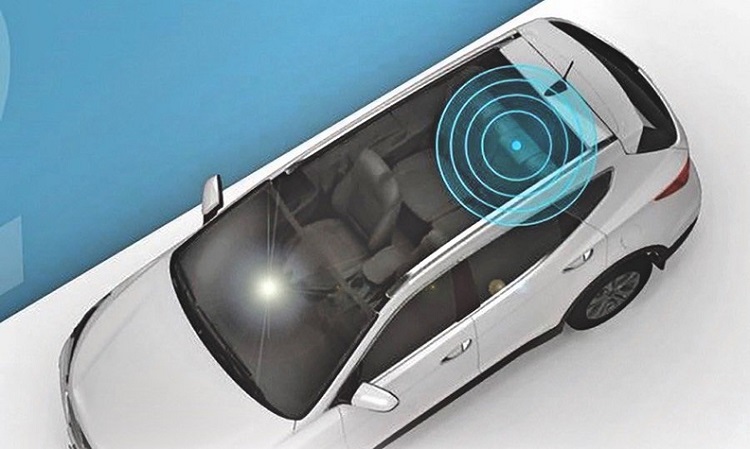
Hyundai Motor America offers an optional feature it calls Rear Occupant Alert, starting on its 2019 model year Santa Fe and 2020 Palisade. It uses “door logic” like GM and Nissan, but adds ultrasonic sensors in the vehicle’s headliner to detect movement in the rear seats. It also sends the driver a text message if there is no response to visual or audio alerts.

In the mushrooming Israeli auto technology sector, where some companies have roots in national defense and advanced security industries, still-more sophisticated systems are now in development. Instead of relying on door sensors, newer approaches incorporate visual or radar-type sensors in the front-seat headliner that detect the presence of a person in the back seat. The sensors are so precise they can identify an occupant by detecting a heartbeat. That will mean the safety system is aware of a person’s presence even if their face is not visible, for instance when a baby is quietly sleeping in a rear-facing child seat.

According to Ryan the 2019 HOTCARS House bill doesn’t tell automakers what technology to use, but its language has been updated to reflect the newer technologies.

The bill specifically calls for a system “to detect the presence of an occupant,” as opposed to an alert that would simply direct the driver to check the back seat.

Tel Aviv-based Guardian Optical Technologies was founded in 2015 specifically to tackle hot-car deaths, said CEO Gil Dotan. The prospect of regulatory mandate is helping Guardian reach potential customers. Its technology uses an optical sensor that detects tiny movements — as small as one-millionth of a meter — and which are sensitive enough to pick up an infant’s heartbeat.

In the company’s earlier days, Dotan said, it was a “the naive young team” who assumed automakers would automatically embrace the technology.

“Nowadays that’s changed,” he said of automaker interest. “Many out there understand this is a problem and they are interested in doing something about it.”

- Advertisement -