Peugeot Automobile Nigeria Limited (PAN), Nigeria’s foremost multi-brand automobile manufacturer, has launched a virtual auto showroom. The automaker said the virtual showroom was introduced to help customers gain insight into the company’s newest products, the Higer H5C 16-seater bus, Higer H6C 19-seater bus, and the Higer Ambulance, from the comfort of their homes.
According to PAN management, the platform will provide an opportunity for customers to discover the unique features of the Higer bus range while remaining safe in their homes in these COVID-19 times. Explaining that the virtual showroom can be accessed by simply visiting www.pannigeria.com through smartphones, tablets laptops, and desktop computers. Taiwo Oluleye, the Acting Managing Director of PAN, added that customers can explore the design, features, capabilities, and technical details of each variant of the Higer bus.
“Through the virtual showroom, we are bringing the experience of a real PAN showroom by way of virtual reality to our customers,” said Oluleye. “That way, they can explore all the unique features, capabilities and technical details of all the Higer buses without stepping out of their homes,” she added.
She explained that the Higer buses and Higer Ambulance can be optimally used for mass transit and ambulance services. In addition to having spacious legs and headroom, the buses are equipped with USB charging ports for all passengers/occupants. All the vehicles also have a park-assist feature, rear camera, and DVD/15′ LCD Display. Additionally, the Higer Ambulance is fitted with state-of-the-art medical equipment such as suction catheters, stretcher belts and anatomical mattress, silicone resuscitators with mask, pulse oximeter, digital thermometer, 2kg fire extinguisher, automatic loading stretcher, scoop stretcher, AC/DC electronic suction machine, oxygen regulator, and other features.
PAN Nigeria is a multi-brand manufacturing company, assembling a diversified range of vehicles, ranging from family sedans, SUVs, to utility Pick-ups and Light Commercial Vehicles, including the Higer buses.
LSI Chemical, manufacturer of additives and lubricants for the fuel, oil and lubricant industries, has announced a new international distributor – NanoTech Petroleum. LSI Chemical’s mission is to bring cutting-edge technologies, including nano technology, to the world by working with an exceptional team of customers and partners. Located in South Africa, NanoTech Petroleum is now authorized to distribute the entire line of LSI Chemical fuel and oil additives and the full line of Hot Shot’s Secret consumer products in South Africa.
LSI President, Todd Cawley, commented, “Our goal is to become the premier international leader of fuel and oil additives in the world. Our use of cutting-edge nano technology for all lubricants and innovative fuel additive technology significantly makes lubricants and fuels better and this will now be available for not only South Africa, but for the entire continent.”
NanoTech Petroleum will now market and sell the LSI Chemical line of products as well as the entire line of Hot Shot’s Secret products – more than 35 performance additives and specialty oils.
NanoTech Petroleum Founders, Managing Director Gerard “Gerry” Mohamed and Executive Director Hylton Keshwar have many decades of experience working in the oil and gas industry across the full value chain of product development and formulation from technical support, training and product development. Mohamed, a certified marine engineer has presented papers on additive technology at the prestigious ICIS Africa Lubes and Base Oils Conference. Keshwar has more than 30 years of experience in sales, marketing and business development, and has received a Top 10 Award in Global Sales. Primary industries served in South Africa and the Sub-Saharan area are automotive, marine, power industry, industrial, mining and fuels.
Mohamed said, “We believe that the fuels and lubricants market in South Africa is yearning for effective solutions and enhanced overall efficiencies beyond current traditional offerings. It is our sincere conviction that the LSI Chemical additives can provide those packaged solutions based on its nanotechnology as a distinct differentiator, with proven benefits of friction reduction, excellent detergency, better fuel economy and extended component life.”
Cawley added, “Our unique processes with nano technology opened this door and we look forward to a long and mutually productive relationship. This is an exceptional opportunity for both LSI Chemical and Hot Shot’s Secret to build a foothold in South Africa to improve fuel and oil quality both at the refinery level and retail.”
The German Association of the Automotive Industry (VDA) has joined hands with the African Association of Automotive Manufacturers (AAAM) as part of the ‘PartnerAfrica’ project of the German Federal Ministry for Economic Cooperation and Development.
AAAM is an automotive association with a pan-African development approach, established in 2015 by global original equipment manufacturers (OEMs, or vehicle manufacturers).
The partnership-based cooperation between VDA and AAAM promises to be mutually beneficial, says the AAAM in a statement. It should help the automotive industry to improve access to sometimes difficult markets, while, at the same time, it is also in the interest of German development policy to improve Africa’s local prospects by pulling in the private sector, and to create sustainable jobs and sustainable mobility in partner countries.
The VDA-AAAM partnership sees itself as an engine for dynamic growth, high innovation speed and state-of-the-art jobs, says the AAAM.
For the VDA, cooperation with Africa focuses on expanding the sustainability agenda beyond products and production to include energy sources, such as e-fuels (fuels from renewable energy) and digital mobility solutions; increasing trade volume and investment; and further opening market access for manufacturers and suppliers.
Equally important is supporting the development of local supply and value chains, notes the AAAM. Promoting training and employment are also on the programme agenda.
“We highly appreciate our partnership with AAAM as the VDA intends to increase its involvement in Africa,” says VDA president Hildegard Müller.
“With the joint project, VDA and AAAM are pursuing the goal of creating improved conditions for a flourishing automotive industry on the African continent, in order to increase economic growth and welfare in Africa and enable German, as well as African member companies, to participate in market growth and foster win-win trade and investments between Europe and Africa.
“This commitment of the VDA and AAAM is a significant contribution to growth and prosperity in Africa, supported by the investments of car manufacturers and suppliers on this emerging continent.”
An in-house cluster for the association partnership at VDA’s headquarters in Berlin, and two project offices in South Africa and Ghana, have been made responsible for project implementation and supporting direct local contacts for members and partners.
The AAAM notes that the motorisation rate in Africa is 45 vehicles per 1 000 inhabitants, which is significantly below the global average of 203 vehicles per 1 000 people.
In 2019, the total volume of new vehicles sold in the African market (passenger cars) reached 869 000 vehicles.
The untapped demand from Africa is coupled with a steady rise in consumer spending, which has risen over the past few years at a yearly rate of 10%, says the AAAM.
The estimated sales forecast of new light vehicles in Africa is 1.8-million units in 2027.
This is a doubling compared with the 2019 volume.
“Our experts estimate that the African new-vehicle market can initially grow to three-million [units] by 2035, with the potential for five-million [units] through the implementation of effective automotive policies and ecosystems,” says AAAM CEO Dave Coffey.
“We are excited about our partnership with the VDA as it will provide expertise, resources and a strong network that will facilitate the development of the automotive industry in Africa.”
The AAAM adds Africa has “great potential” as a market and production location for the German automotive industry, in particular.
In 2019, 62 000 passenger cars were exported from Germany to Africa. Forty-nine percent of these went to South Africa.
In 2019, 355 000 passenger cars were sold in South Africa, with German OEMs accounting for 34%, or 119 000 cars, of this number.
German OEMs have also steadily expanded their production in South Africa in recent years.
Compared with 2010, their production has increased by 44%, to 317 000 passenger cars in 2019. This means that German manufacturers are responsible for 91% of passenger car production in South Africa.
Arwa Oeljeklaus will be in charge of the North Africa region at ŠKODA AUTO from 1 January 2021. Oeljeklaus has more than 20 years of experience in the automotive industry and is currently in the role of ŠKODA AUTO’s Head of Business Development & Customer Relationship Management for the Czech Republic.
ŠKODA AUTO has recently created the role of Head of North Africa Operations in response to the Czech carmaker taking on responsibility for this area as well as other growing regions. The North Africa region currently includes Egypt, Tunisia, Morocco and Algeria, and just as in India and Russia, ŠKODA AUTO is responsible for all Volkswagen Group activities there. Developing new markets that have growth potential for ŠKODA AUTO is one of three top priorities for the company as part of its future program ‘NEXT LEVEL ŠKODA’. The aim is to achieve profitable growth in the volume segments in these countries. Heading the INDIA 2.0 project, the Czech car manufacturer has the right expertise for this task.
Arwa Oeljeklaus brings more than 20 years of experience in the automotive industry to this role. After graduating in business studies in Paris, she went on to complete degree programmes in international trade and business development. Arwa began her career in the automotive industry in 2000 with the PSA Group, where she was in charge of product management for Peugeot’s A-SUV and MPV models. In 2011, she joined ŠKODA AUTO to run product management for the brand’s A-SUV range. This role also included responsibility for international coordination of an important SUV model in Europe, China, India and Russia.
In 2014, she took over as ŠKODA AUTO’s Head of Business Development & Customer Relationship Management (CRM) for the Czech Republic. In this management role, she has been working on the strategic development of the Czech importer organisation and set up systems and processes for building and managing customer relations.
In addition to speaking her mother tongue, Oeljeklaus is fluent in English, Arabic and German and, on a conversational level, also speaks Czech.
AAAM, the only African body focusing on the expansion and deepening of the automotive industry across the continent, would like to thank all their stakeholders for their support and contribution in 2020 despite the challenges of the COVID Pandemic. Some good progress was made on several fronts including the recruitment of several new members from across Africa.
However, the most notable being the implementation of Ghana’s Automotive Development Policy which saw Volkswagen commencing its assembly operation, with both Toyota and Nissan committing to do the same with more announcements to follow in early 2021. First steps were also taken to develop a component supplier industry which will be followed up with a visit to Ghana by a delegation of first tier suppliers in early 2021.
The other being the partnership announced between the German Association of the Automotive Industry (VDA) and the AAAM as part of the “PartnerAfrica” project of the German Federal Ministry for Economic Cooperation and Development (BMZ). As a result of this partnership two project offices have been opened and resourced, one in Accra Ghana and the other in Johannesburg in South Africa; they will support the implementation of the
PartnerAfrica project to industrialise and grow the automotive sector in Africa.
“Unfortunately, the pandemic is not going away quickly and 2020 has taught us how to continue working towards our objectives in new ways and I am confident that the groundwork we laid this year will begin to show tangible results not only in Ghana, as we begin to assist in developing a supplier industry, but also in East and North Africa as progressive auto policies and ecosystems are developed in support of regional market
integration” said David Coffey, CEO of AAAM.
”It is exciting to experience the strong interest in our Pan African Vision from within and outside of Africa; we will be announcing another significant partnership in the first quarter of 2021. I wish you, your families and your organisations all the very best for 2021. Please take care and stay healthy” concluded Coffey
Amazon Web Services (AWS) and BlackBerry have joined forces in a multi-year, global agreement to develop and market BlackBerry’s Intelligent Vehicle Data Platform, IVY.
BlackBerry IVY is a scalable, cloud-connected software platform that is expected to allow automakers to provide a consistent and secure way to read vehicle sensor data, normalize it, and create actionable insights from that data both locally in the vehicle and in the cloud. Automakers can use this information to create responsive in-vehicle services that enhance driver and passenger experiences.
“Data and connectivity are opening new avenues for innovation in the automotive industry, and BlackBerry and AWS share a common vision to provide automakers and developers with better insights so that they can deliver new services to consumers,” says John Chen, Executive Chairman and CEO of BlackBerry.
“This software platform promises to bring an era of invention to the in-vehicle experience and help create new applications, services, and opportunities without compromising safety, security, or customer privacy. We are pleased to expand our relationship with AWS to execute this vision and deliver BlackBerry IVY.”
“AWS and BlackBerry are making it possible for any automaker to continuously reinvent the customer experience and transform vehicles from fixed pieces of technology into systems that can grow and adapt with a user’s needs and preferences,” says Andy Jassy, CEO of AWS Inc.
“Through this joint effort with BlackBerry, we will provide automakers with the insights, capabilities, agility, and speed they need to thrive in an increasingly connected world. As automakers seek to race ahead in their digital transformations, BlackBerry IVY empowers them to build their brands and set the standard for connected vehicle services across the automotive industry.”
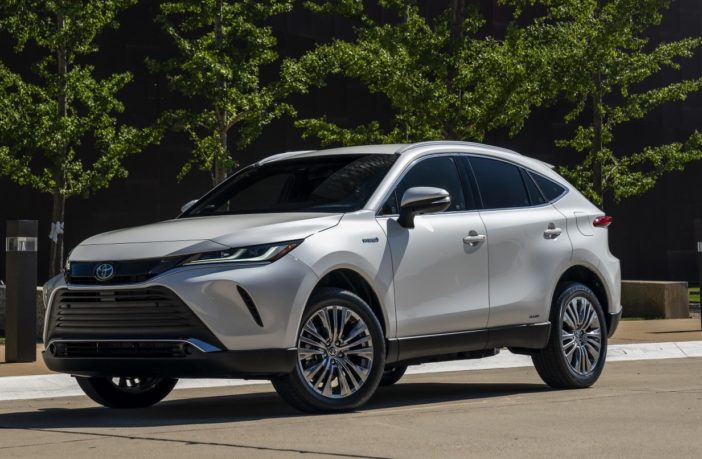
The name maybe familiar, but everything else about the uniquely styled 2021 Toyota Venza mid-size sport utility/crossover vehicle (SUV/CUV) is new. All three variants of the Venza range share the Toyota Hybrid System II powertrain, all-wheel drive (AWD), a comprehensive suite of advanced driver-assist (ADAS) systems and convenience features, including available a 12.3-inch color touch screen for the infotainment system.
Our ride was a very-well equipped coastal gray metallic XLE (middle of the range) which was a joy to drive in all types of traffic on all types of roads, as well as being very accommodating for some early holiday shopping and numerous grocery bags during a run to the discount food chain (the remote power hatch really comes in handy for dealing with these errands).
All-wheel drive powertrain delivers power and economy
The new-generation Toyota Hybrid System II in the Venza combines a high-efficiency 2.5-liter double-overhead-camshaft four-cylinder engine with three electric motors in a compact system. The gas engine employs variable valve timing-intelligent system by electric motor (VVT-iE) on the intake camshaft, and VVT-i on the exhaust camshaft. A variable cooling system (electric water pump, electric thermostat) and a fully variable oil pump further help improve engine efficiency.
This technology delivers 219 total system horsepower and a federal Environmental Protection Agency combined 39 miles per gallon in XLE trim. Our experience was just a shade more than that at 40 mpg.
Performance was up to any task during our experience with the Venza, whether accelerating onto a highway or to overtake another vehicle at speed. Toyota explains the “responsiveness is heightened by the way the electric motor boosts low-speed torque. The hybrid system optimizes the level of electric motor assistance and gas engine RPM without the engine running at high revs.”
The electronically controlled variable automatic transmission puts the power to the road through either the front or all four wheels as dictated by road and driving conditions.
Regenerative braking is baked into the electronically controlled brake system (ECB) to both aid in slowing the vehicle when the driver’s foot lifts from the accelerator pedal as well as recharging the battery (as the electric motors are turned into generators).
The brake system includes 12-inch ventilated rotors in the front and 11.1-inch solid ones in the rear and works in conjunction with vehicle computers to be part of the standard enhanced vehicle stability control (VSC), traction control (TRAC), electronic brake-force distribution (EBD), brake assist (BA) and anti-lock system (ABS).
Toyota Safety Sense 2.0 provides modern ADAS
Standard across the Venza range is the latest suite of ADAS from the Japanese automaker. Toyota Safety Sense 2.0 brings the following systems to this SUV:
– pre-collision warning with pedestrian detection
– full-speed, dynamic radar cruise control
– lane departure alert with steering assist
– lane tracing assist
– automatic high-beams
– road-sign assist
Additional ADAS include rearview camera with dynamic gridlines; blind-spot monitor with front and rear parking assist with AEB and rear cross-traffic alert.
A full complement of interior comfort and convenience features
The Venza XLE comes standard with an eight-inch color touch screen controlling the infotainment system, but our evaluation SUV had the optional Premium Audio system with the 12.-3-inch screen and JBL audio system with nine speakers, subwoofer and amplifier.
The panoramic screen allows control of the navigation program (part of the optional package), infotainment features (AM/FM/satellite radio/streaming audio/Apple CarPlay/Android Audio) and some other vehicle systems (like fine-tuning the climate operations).
Supplementing the on-screen controls for these systems are backlit tough buttons on the dash and remote controls, including intuitive voice activation, on the steering wheel.
The steering-wheel’s electric adjustment, as well as the eight-position driver’s seat and outside rearview mirrors can be stored in the two-person memory, while, as part of the optional SofTex Package, the front passenger’s seat, also has electric adjustment. Both front seats, as part of this package, are heated and ventilated and the steering wheel is heated, as well.
The automatic climate control system has dual zones allowing driver and front passenger to tailor the environment to their individual preferences.
Magically Reading the Road for Maximum MPG
The navigation system provides more than a means of getting you from point A to point B thanks to the Venza’s Predictive Efficient Drive (PED) technology. PED analyzes driving habits and memorize road and traffic conditions to help optimize hybrid battery charging.
When the driver selects PED, the system learns repeating routes and is designed to predict when and where the vehicle is likely to slow down or stop. Then, through optimum accelerator pedal release timing guidance, it can help reduce energy consumption.
PED can help optimize battery charging and discharge ahead of hills or traffic congestion. When approaching a downhill section, for example, the system is designed to apply additional engine braking force to charge the hybrid battery more efficiently after the accelerator pedal is released.
I’m not sure how to measure the effectiveness of PED without extensive driving over repeated routes (not really possible in a week of test driving), but the potential for overall operating efficiency is intriguing and, considering the computer capabilities of today’s vehicles, a logical step in their evolution.
Priced to compete
Toyota offers three different offerings in the mid-size SUV/CUV segment: the rugged, body-on-frame 4Runner; front or AWD two- or three-row, gasoline or hybrid powertrain traditionally styled Highlander, or the Venza. Virtually anything a mid-size SUV shopper could desire can be found inside a Toyota dealership.
The Venza XLE like we drove carries a MSRP of $39,735 including delivery processing and handling fee ($36,000 base price) while the LE carries a $32,470 MSRP and the top-of-the-range Limited starts at $39,800.
Add in Toyota’s reputation for quality and reliability, as well as standard ToyotaCare (a complimentary plan covering normal factory-scheduled maintenance, for two years or 25,000 miles, whichever comes first, and two years of Roadside Assistance, regardless of mileage) and there is a lot of value in the Venza.
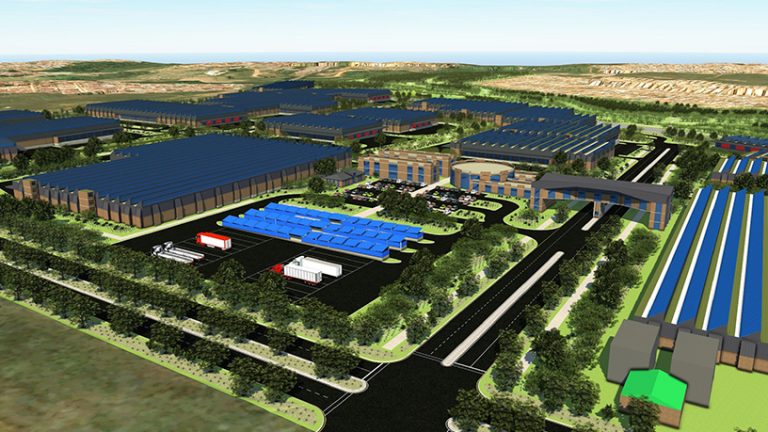
The newly established Tshwane Automotive Special Economic Zone (TASEZ) has created hundreds of jobs through the initial R4.3 billion investment from suppliers and partners.
The Tshwane, Silverton-based automotive hub, which was first announced in November 2019 by president Cyril Ramaphosa and Gauteng premier David Makhura, is billed as Africa’s first automotive city.
Developed through a joint partnership with Ford Motor Company, the Department of Trade, industry and Competition (DTIC), Gauteng Provincial Government and City of Tshwane, the hub is designed to help SA’s automotive sector better respond to the demands of the fourth industrial revolution and compete with global players.
According to the Gauteng Department of Economic Development (GDED), the first phase of the TASEZ project, which started ground works in August, has so far created hundreds of jobs out of the estimated 8 700 job opportunities that the project is expected to create during the construction. Another 2 100 permanent jobs will be created from the operations of the project.
In a recent Twitter update, the GDED said: “Tremendous progress is being made at the Tshwane Automotive SEZ. The initial R4 billion investment has injected the much-needed jobs and business activity in Mamelodi, Tshwane and Gauteng. Another significant investment will be announced by Ford South Africa next year.”
During his site visit in September, Gauteng premier David Makhura emphasised the need to build an economy that creates more small businesses owned by black people and women, and giving young people opportunities through providing training and entrepreneurial skills so they can set up their own businesses.
“This is the first SEZ that will have 47% SMME participation. These are real businesses and SMMEs from the local townships that will add real value in the construction of this project, and we need to allow them to graduate into the broader industry, including manufacturing and operations.”
The TASEZ also follows a new model for special economic zones in South Africa, as it is the first SEZ in the country to have numerous investors already lined up – the facilities are built to specification for these companies that are already enlisted, and are ready to move in as soon as the construction is completed, Makhura added.
According to Ford, national government had invested R3.4 billion in earthworks and implementation of bulk infrastructure. The recent R4.3 billion additional investment has been made by 12 Ford suppliers and related services companies that have committed to establishing operations and job creation.
“Thousands of additional jobs will be added as the TASEZ evolves into a multi-faceted hub designed to bolster the manufacturing capacity and global competitiveness of the South African automotive industry, while contributing to job creation, skills development and the economic upliftment of local communities,” says Ford.
The TASEZ was established as part of the 2035 Automotive Master Development Plan, as set out by the DTIC, with the aim to help the automotive sector become a globally competitive and transformed industry.
It was launched after five years of engagement between Ford Motor Company and government, as the automaker strengthens its futuristic technologies strategy, to help speed vehicle manufacturing and innovation to develop high-performance and fuel economy-focused vehicles.
While the unexpected COVID-19 lockdown delayed the project by several months, and also impacted the disbursement of the initial funds for clearing of the site, Ford says by the first half of 2021, the project will be up and running.
“Ford is confident that most of its suppliers will be able to take occupation of their facilities as planned during the first half of 2021, owing to the commitment of the appointed contractors,” says the automaker.
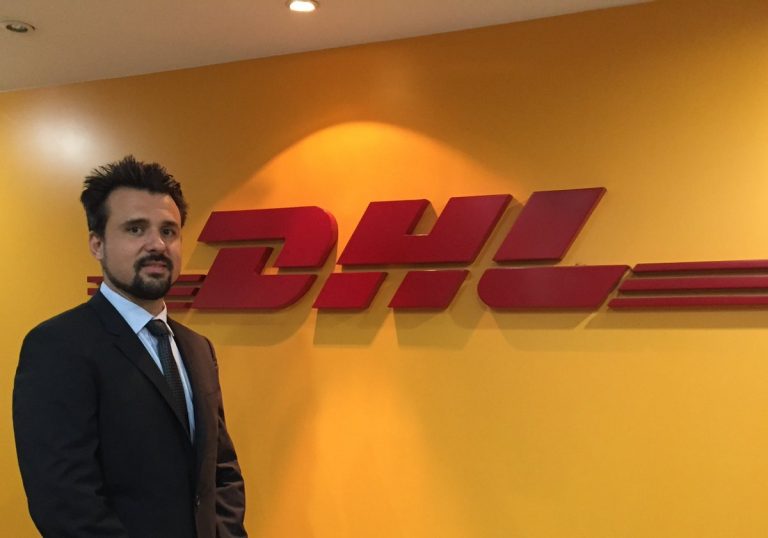
DHL Global Forwarding, the leading international provider of air, ocean and road freight services has appointed DHL veteran, Clement Blanc as Managing Director for its business in South Africa, one of the key markets for the logistics giant in the fast-growing region. Blanc reports to Amadou Diallo, CEO, DHL Global Forwarding, Middle East and Africa.
With more than two decades of experience in the industry, Blanc spent more than 18 years of that with DHL Global Forwarding – largely based in Asia Pacific where he took on a range of roles including business management, account servicing as well as key trade lane management.
Prior to joining the team in South Africa, Blanc was the Managing Director for Vietnam, Cambodia and Laos, a role he held from 2011 to 2019 where he led the business to achieve a triple-digit growth in revenue. He first joined the team in Vietnam in 2009 as Head of Commercial, and in 2011, was promoted to Managing Director given his instrumental role in clinching key business wins.
Amadou Diallo, CEO, DHL Global Forwarding, Middle East and Africa said, “Clement is a great colleague whom I have had the wonderful pleasure to work with and it gives me great assurance knowing that he will steer our business toward continued growth. Whilst the world’s economy has somewhat faltered in 2020, signs of recovery are popping up with production restarting in several countries on the African continent. I’m confident that our South African business is in good hands led by a veteran like Clement.”
Blanc’s career in DHL started in Shanghai, China back in 2001, where he was trade lane manager for the Middle East and Southeast Asia. He was subsequently promoted to take on the role of branch manager in Wuhan and Beijing respectively, and in 2009, he held a brief stint in the regional office in Singapore, as intra-Asia trade lane director
Clement Blanc, Managing Director, DHL Global Forwarding South Africa said, “South Africa is still reeling from the impact of the pandemic, but DHL has maintained a strong position globally as well as in the country thanks to our strategic focus (https://bit.ly/37Ko1Uy) on digitalization and our core service offerings. I’m proud to lead a team of dedicated professionals here, and I’m convinced that we are in the best position to continue supporting our customers.”
As part of its endeavor to cater to market demands, DHL recently launched a first-of-its-kind Automotive Competence Center (ACC) in the key automotive hub of Port Elizabeth where the entire automotive value chain is based. The ACC provides a comprehensive suite of reliant and compliant end-to-end logistics solutions (https://bit.ly/3lNApbl) such as air, ocean and multimodal options, origin freight consolidation, destination freight management, waste management, reverse logistics, inbound-to-manufacturing service for component manufacturers, customs clearance, in-plant logistics, sequencing and just-in-time delivery.
Over the years, DHL has also invested in a series of digitalization solutions and earlier this year, it launched myDHLi (https://bit.ly/39NKG5h) – a fully-integrated platform which gives customers full visibility and control over all shipping and transport modes, 24 hours a day, seven days a week. The company also remains committed to its zero logistics-related carbon emissions goal, and most recently announced that it will neutralize (https://bit.ly/2LdJxJY) the carbon emissions of all less-than-container load (LCL) ocean freight shipments from January 1, 2021.
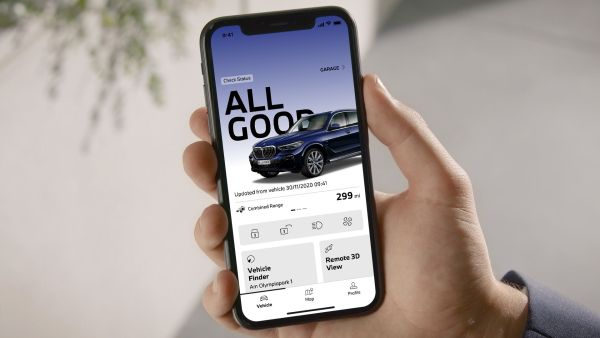
Ever since the introduction of the BMW i Remote app in 2013, BMW has offered its customers the option of effortless connectivity between their smartphone and vehicles. A new-generation app is now available to customers featuring a new-look design, intuitive and simplified user experience, and new features to support electromobility.
“With the new app generation, we are taking a further step in extending the digital customer experience around our vehicles and thus meeting the increased customer demand for digital services and functions,” said Peter Henrich, Senior Vice President BMW Group Connected Company Customer. “With the My BMW App and the MINI App, we seamlessly integrate our vehicles into the digital lifestyle of our customers. Both apps offer a host of features, both for the daily use of the vehicle and in the personal interaction with us as a brand, which we are continuously expanding”.
Stephan Durach, Senior Vice President BMW Group Connected Company Development, Technical Operations, adds: “My BMW and the MINI App set the standard for usability, safety and reliability. User feedback and information on the behaviour of users of the previous generation of the app were critical to the development process. The two apps include popular and frequently used functions, and the new platform allows us to continuously add new functionality, adapted to our customers’ needs.”
Summary of highlights
• The My BMW App is the new universal interface to the vehicle. It displays information on the status of the vehicle and, depending on the equipment, allows functions to be activated remotely (e.g. to locate the vehicle, lock and unlock the doors, or monitor the vehicle surroundings (Remote 3D View)).
• Destinations can be sent directly from the app to the vehicle’s navigation system, where maps shows the current traffic situation, filling stations and charging stations, as well as parking options.
• Customers are notified of available Remote Software Upgrades via the My BMW App and can easily download these upgrades at home, before transferring them to and installing them in the vehicle. With Remote Software Upgrades, the BMW Group offers customers with BMW Operating System 7 new and improved digital features on a regular basis and the ability to ensure that their vehicle software is always up to date.
• The BMW Digital Key, which turns an iPhone into a vehicle key, offers convenient set-up via the My BMW App in just a few steps. The BMW can then be used without a physical key, and this access can be shared with up to five other people. If preferred, you can restrict rights such as a reduced maximum speed or radio volume when sending a key – perfect for novice drivers.
• With My BMW, Amazon Alexa can be used* in vehicles with BMW Operating System 7 – offered on UK vehicles produced from November 2020. Once the customer has linked their Amazon account in the app, they can use the voice assistant by saying the activation word “Alexa” or at the touch of a button. Customers can use this voice control to play music, access news, control compatible smart home devices and access thousands of skills.
• The app offers additional features for electrified BMW vehicles, including an improved overview of the electric range, charging status and charging history. Customers can use the charge and climate timer to optimise the charging process by defining specific time slots for charging and set departure times. Preconditioning is also possible, allowing drivers to heat the vehicle in winter or cool it in summer for enhanced comfort.
• Once linked with a personal BMW ID*, individual preferences can be set in any current BMW vehicle quickly and automatically. Thanks to the My BMW App, logging in is now even easier – customers can simply scan a QR code to securely transfer their user settings between vehicles.
• The My BMW App can be used to contact BMW Retailers directly, allowing customers to keep an eye on their vehicle’s service requirements. Service appointments can be made directly from the app if needed and BMW Roadside Assistance can also be contacted in the event of problems. If consent is given, service personnel will see the location and status of the vehicle so that immediate over-the-air assistance can be provided. The app also offers easy access to the BMW ConnectedDrive Store and the BMW Online Shop.
The new-generation app can be downloaded free of charge from the Google Play Store and the Apple App Store.
*Full App functionality specification and vehicle software level dependant. Future app and remote software updates will release full potential on more vehicles.






 According to the Gauteng Department of Economic Development (GDED), the first phase of the TASEZ project, which started ground works in August, has so far created hundreds of jobs out of the estimated 8 700 job opportunities that the project is expected to create during the construction. Another 2 100 permanent jobs will be created from the operations of the project.