

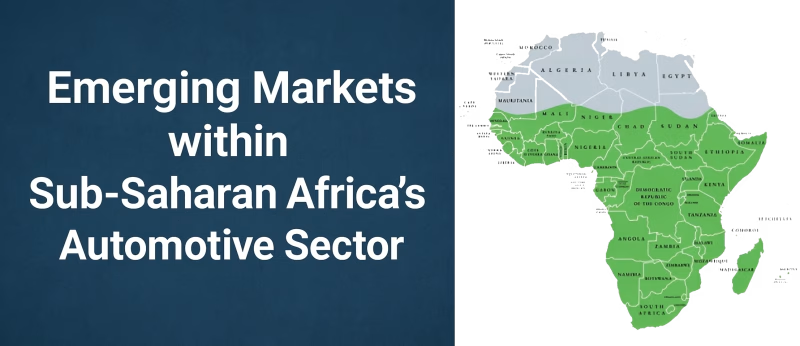
Sub-Saharan Africa’s Automotive Sector is fast becoming one of the most promising frontiers for automotive growth and investment. Global markets are now maturing and competition tightens. Attention is shifting toward regions with untapped potential. Africa, with its expanding population, urbanization, and rising middle class, stands out as a major growth hub.
Today, the region is witnessing a quiet but powerful transformation in mobility, driven by a blend of demographic trends, technological adaptation and policy shifts. Countries like Kenya, Nigeria, Ghana and Ethiopia, new markets are emerging, reshaping the landscape of the African automotive industry.
-
Africa’s Auto Potential: The Momentum is Real
For decades, Sub-Saharan Africa’s automotive market remained largely underdeveloped, characterized by the dominance of used vehicle imports and fragmented aftersales networks. But the narrative is rapidly changing. A mix of policy reforms, industrialization efforts, and a growing consumer demand is positioning the region as the “next big growth destination” for the global auto industry.
According to data from the African Association of Automotive Manufacturers (AAAM), Africa currently produces less than 1% of the world’s vehicles. Yet, the continent’s population, now over 1.4 billion, represents one of the largest potential consumer bases on earth. Urbanization, projected to reach 60% by 2050, continues to fuel the demand for mobility, logistics, and public transport solutions.
What’s different today is that governments, investors, and OEMs (Original Equipment Manufacturers) are beginning to work in alignment. They are building assembly plants, establishing local supply chains, and developing the skills needed to sustain a modern automotive system.
Also Read: Africa: The new hub for automotive manufacturing
-
Key Emerging Automotive Markets in Sub-Saharan Africa
While South Africa remains the region’s most mature automotive hub, other countries are quickly gaining momentum. Let’s look at some of the rising stars transforming the regional landscape.
-
Kenya: East Africa’s Innovation Engine
Kenya has positioned itself as East Africa’s automotive nerve center. The country’s strategic location, growing infrastructure, and policy push for local assembly make it a key player in the region. With the government’s Automotive Policy promoting the assembly of vehicles locally and curbing used car imports, Kenya is attracting international brands such as Isuzu, Peugeot, and Volkswagen.
Beyond manufacturing, Kenya’s robust tech ecosystem, often referred to as “Silicon Savannah,” is fueling innovation in electric mobility (e-mobility). Startups like Roam (formerly Opibus) and BasiGo are pioneering electric buses and motorcycles designed for African conditions. This signals a future driven by clean and sustainable transport.
-
Nigeria: The Sleeping Giant Awakens
Nigeria, with its population exceeding 230 million, represents the largest automotive consumer base in Sub-Saharan Africa. The market’s sheer size makes it impossible to ignore. Recent government initiatives under the National Automotive Industry Development Plan (NAIDP) aim to revive local manufacturing and reduce dependence on imported vehicles.
Brands like Innoson Vehicle Manufacturing (IVM), the first indigenous carmaker in Nigeria, are leading this resurgence. They are producing vehicles tailored to local terrain and usage patterns. Additionally, MAX and Moove Africa are transforming vehicle financing and fleet management. Meanwhile, the rising popularity of ride-hailing platforms and commercial transport is creating massive demand for durable, affordable, and fuel-efficient vehicles.
Despite infrastructure and policy challenges, Nigeria’s long-term outlook remains strong. A growing urban population and increasing private investment in transport networks are paving the way for sustained automotive growth.
-
Ghana: The Gateway of West Africa
Ghana’s automotive journey has gained remarkable traction in recent years. Its Automotive Development Policy, introduced in 2019, has successfully attracted several global automakers including Volkswagen, Toyota, Nissan, and Suzuki to set up assembly plants.
Accra’s stable political environment, improving logistics networks, and investor-friendly climate have made Ghana a preferred entry point into West Africa for vehicle manufacturers.
Furthermore, the government’s focus on creating an integrated supply chain, from component production to aftersales, is turning Ghana into a model for structured, sustainable automotive growth in the region.
-
Ethiopia: The Manufacturing Powerhouse in the Horn
Ethiopia’s industrialization agenda has placed it among Africa’s most promising emerging markets. Its growing network of industrial parks, competitive labor costs, and access to renewable energy have made it a natural fit for automotive assembly and parts manufacturing.
Local firms like Mesfin Industrial Engineering and international players such as Lifan Motors and Hyundai are expanding operations in the country, supported by government incentives and trade corridors connecting East Africa.
As Ethiopia continues to urbanize and strengthen its transport infrastructure, the potential for both passenger and commercial vehicle markets is immense.
-
Rwanda and Uganda: The Smart Movers
Rwanda and Uganda are positioning themselves as leaders in Africa’s electric mobility landscape. Rwanda’s e-mobility roadmap, supported by partnerships with Volkswagen and local startup Ampersand, has made Kigali a hub for electric motorcycle adoption and charging infrastructure. Uganda, through Kiira Motors Corporation (KMC), stands as Africa’s first local manufacturer of electric and hybrid vehicles, with ongoing investments in assembly capacity and regional supply chains. Both nations exemplify how strategic policy, innovation, and local enterprise can accelerate Africa’s transition toward sustainable mobility.
Also Read: Ghana maintains 5th position as most attractive automobile market in Sub-Saharan Africa
-
Driving Forces Behind the Emerging Markets
Several factors are converging to propel Sub-Saharan Africa’s automotive markets forward. This includes:
-
Urbanization and Middle-Class Expansion
Africa’s middle class is expected to reach over 300 million people by 2030. With increased purchasing power and aspirations for mobility, demand for personal vehicles, public transport solutions, and logistics fleets continues to rise.
-
Policy and Regulatory Support
Governments are increasingly introducing automotive development policies that prioritize local assembly, reduce import duties on CKD (Completely Knocked Down) kits, and support skill development. These policies not only attract foreign investment but also stimulate local innovation and job creation.
-
Technological Transformation
Digitalization, connectivity and e-mobility are reshaping Africa’s transport future. From electric motorcycles in Nairobi to telematics solutions in Lagos, technology is bridging gaps in affordability, accessibility and efficiency.
-
Regional Integration and Trade
The African Continental Free Trade Area (AfCFTA) is another game-changer. By eliminating tariffs and streamlining cross-border trade, AfCFTA enables manufacturers to serve multiple markets efficiently. It encourages regional specialization and supply chain development.
-
Challenges to Overcome
Despite the optimism, significant challenges persist. Infrastructure gaps, such as inadequate roads, ports, and energy supply, continue to constrain logistics and manufacturing operations. Policy inconsistency and bureaucratic hurdles sometimes discourage long-term investment.
Moreover, the dominance of used car imports remains a major barrier. While they provide affordable mobility in the short term, they also suppress the development of local assembly plants and inflate environmental and safety concerns.
Another critical area is skills development. As vehicle technology evolves, Africa must invest heavily in technical training, vocational education, and R&D to ensure its workforce is ready for a modern automotive sector.
-
Opportunities on the Horizon
The silver lining is that each challenge presents an opportunity. Local assembly, for instance, creates demand for component manufacturing, logistics, and aftersales services. All of which contribute to job creation and economic growth.
There’s also tremendous potential in electric mobility, where Africa can bypass legacy systems and adopt cleaner, more efficient technologies from the outset. In countries with abundant renewable energy sources, such as Kenya, Ethiopia, and South Africa, e-mobility represents not just an environmental imperative but a strategic economic opportunity.
Furthermore, collaboration between government, academia, and industry will be key to shaping the next generation of auto engineers, technicians, and entrepreneurs.
-
A Shared Vision for Growth
The emerging automotive markets in Sub-Saharan Africa are not just about cars, they’re about mobility, empowerment, and transformation. They represent the continent’s determination to build sustainable industries that create value locally and compete globally.
The next decade will be pivotal. The success of Africa’s automotive transformation will depend on continued collaboration, between nations, policymakers, private investors and communities.
As more assembly plants are now rising, more charging stations are appearing, and more young Africans are gaining automotive skills, the dream of a thriving, self-reliant auto industry is moving closer to reality.
Africa is not just catching up. It’s shifting gears toward a future defined by innovation, inclusivity, and homegrown excellence. The engines of progress are running, and Sub-Saharan Africa’s automotive journey has only just begun.

