

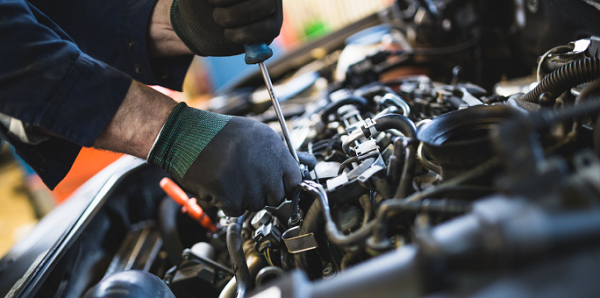
We have grown so accustomed to using cellphones, TVs, computers, and home appliances that need no regular maintenance and are simply replaced when they stop working that we often assume our vehicles are just as maintenance-free and reliable. Because we stay so busy every day, we often overlook the care our cars truly need.
But modern vehicles aren’t electronics. Rather, they’re incredibly complex machines—mechanical devices made of thousands of parts, many of which move up, down, or around. And of course, they roll on inflatable rubber tyres. Some of these components need occasional attention to keep them operating properly, and others eventually require replacement.
The Value of Regular Maintenance
There are many reasons to take care of your daily wheels. Regular maintenance is quick, easy, and cheap, while major repairs are expensive. It’s also comforting to know that your car, SUV, or truck is in good shape regardless of its age or mileage, with no need to worry about delays or breakdowns on long trips or your commute. Well-maintained vehicles last longer and hold more of their resale and trade-in value than neglected ones. In other words, take care of your car and it will take care of you.
The good news is that you don’t have to be a car enthusiast or even marginally mechanically inclined to keep your car in top shape. And it takes hardly any time. Here’s a list of six easy things to check that have the potential to prevent costly problems and keep your vehicle humming happily for many years. We’ve provided illustrations to help you find the components under the hood that need to be examined. But it’s always a good idea to read your owner’s manual to locate these items on your particular vehicle and to know the manufacturer’s service recommendations for them.
Building a Routine That Works
We suggest you start by inspecting everything on this list the first time through to make sure your car is ready to go. Beyond that, it’s all about periodic checks and maintenance—such as oil changes—as dictated by the owner’s manual and common sense.
Also Read: Oil Maintenance and Monitoring of Commercial Bus Fleet
How’s the Oil Level?
-
Make sure the engine is off.
Open the hood. The release is usually found under the driver’s-side dash; the safety catch is under the lip of the hood.
-
Find the (usually well-labeled) engine-oil dipstick, and pull it out.
(It’s often yellow, for easy spotting.) Wipe the end with a clean cloth, replace the dipstick fully back into its sheath, and pull it out again.
-
Now look at the tip; the markings indicate a range from full to one-quart low.
You will see a light coating of oil on the end of the dipstick. If it’s between the minimum and maximum lines, you’re good. If it’s at or below minimum, add a quart of your vehicle’s recommended oil. (You’ll find that listed in the owner’s manual.)
-
You add oil by twisting off the cap marked with the oil-can symbol
(which often also has the word “oil” on it) that sits in plain view atop the engine and pouring in a quart of oil.
-
Be sure to wipe any drips off the engine; oil can smoke when it gets hot.
Your engine doesn’t just need enough oil, it needs clean oil. So be sure to get the oil and oil filter changed at the mileage intervals recommended in the owner’s manual.
Also Read: How Often Should I Change Engine Coolant
Make Sure You Have Windshield-Washer Fluid
- The windshield-washer reservoir is located under the hood.
- Washer tanks often use translucent plastic, allowing you to check the level visually. However, many sit tucked out of sight, so you can’t tell how full they are unless you fill them to the brim.
- Pop the reservoir cap. It’s marked with the icon of windshield-wiper spray. Fill the reservoir with washer fluid.
- Do not use pure water; freezing temperatures will cause the water in the reservoir to turn to ice, rendering your wipers useless. Commercial washer fluid has alcohol in it that keeps it from turning solid in all but Alaskan-winter temperatures.
Check the Tyres’ Air Pressure
Newer cars have a tyre-pressure warning light to let you know that your tires are low on air, but older cars do not. In any case, it’s best to purchase a tire-pressure gauge at an auto-parts store for a few dollars and check your tyre pressures to make sure they’re set correctly. Here’s what you need to know:
- A sticker on the driver’s door pillar lists the proper inflation pressure for when the tyres are cold (meaning that you haven’t yet driven on them that day).
- If you set the pressures after driving for more than a few miles, raise them by three pounds per square inch because tyres warm up and their pressures increase during driving.
- Check your tire pressures once a month for a couple of months. If the pressures remain steady, you can check them quarterly, as you know the tires are holding air.
Also Read: How Can I Tell My Radiator is Leaking
Is the Radiator Full?
- Find the coolant reservoir under the hood. It’s made of translucent plastic, marked with “min” and “max” lines, and is, in all likelihood, holding a green fluid.
- When the engine is cool, the coolant level should reside between the lines.
- If it’s low, buy some antifreeze and top it off.
- Never attempt to refill the cooling system through the radiator cap! If the engine is warm, loosening the radiator cap—the black cap located atop the radiator as shown in the illustration above—can cause it to spit back scalding water. Always refill through the reservoir, which is not under pressure.
- If the coolant is low during your initial check, recheck it monthly. If it keeps disappearing, you have a problem and need to bring the car to a dealer or repair shop.
- If the coolant level remains in the zone, you’re good to go for a long time. Coolant lasts for years, but not indefinitely. Replacing it is a job for a repair facility. Check your owner’s manual to see how often the manufacturer suggests it be replaced.
Also Read: What to Do If You Suspect a Leak in Your Vehicle’s Fluid System
Brake-Fluid Check
When you push on the brake pedal, you are pumping brake fluid through the system to the brakes. For most cars, the brake-fluid reservoir is translucent plastic, so you can see if it’s full. And like most other systems, today’s brake systems are well sealed and almost never leak. Here’s how to check the brake-fluid level:
- If the brake reservoir is full when you check it, your brake system has integrity.
- If fluid is low, purchase brake fluid and refill the reservoir.
- Check it weekly. If the fluid level continues to go down, however slowly, take the car to a repair facility. You have a problem that can make driving dangerous.
- Like coolant, brake fluid ages over time and requires replacement at regular long-term intervals. Check your owner’s manual to determine the recommended mileage for replacement, and have a qualified shop perform the service.
The other brake items that wear out are the brake pads. Pads can last for 20,000 miles or more—sometimes much more—depending on your car and driving conditions. However, checking this at home isn’t easy. When a car is under warranty, technicians usually inspect the brake pads as part of routine scheduled maintenance.
Checking Brake Pad Condition
If you drive an older car, you’ll need a shop (or a mechanically inclined friend who knows brakes) to establish how much meat there is on the pads. It’s valuable to know the remaining pad life because you want to anticipate when you’ll need to replace them. If you wait too long, the pad linings can wear through to the metal backing plates and do big damage to the car’s brake rotors. So get a handle on remaining brake-pad life.
Need Tyres?
Tires are the all-important connection between your car and the road. You don’t want to let them wear until they’re bald. At that point, the tires act like water skis on wet roads and ride on a thin film of water, making it much easier for the driver to lose control. Tread should be visible across the tyre. Better still, use a penny to check if the depth of the tread is adequate. Here’s how:
-
Insert the edge of the penny into the tread
Making sure Lincoln’s head is upside down (the top of the president’s head should be touching the tread), with the head facing so you can see it.
-
If you can see all of Lincoln’s head
The tread grooves are too shallow (about 2/32 of an inch or less) to drive in wet weather; those grooves channel rainwater away and keep the tyre in contact with the road. Replace your tyres!
-
If you’re unsure about whether the tyres are due for replacement
See a tyre dealer. It’s also a good idea to rotate your tyres front to rear annually to even out the wear. And if you live in the cold-weather states, it’s smart to invest in a set of winter tyres.
That’s the easy stuff, and if all you do is occasionally check these six areas, you’ll be fine a long way down the road—literally and figuratively. Leave the rest to the experts.

