

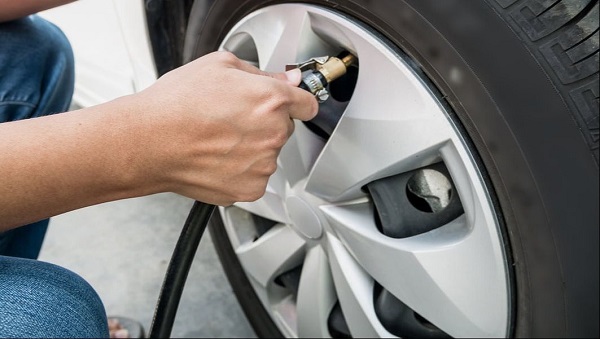
The recommended inflation pressures for tyres are specified in pounds per square inch (psi) or kilopascals (kPa). These values are indicated on the vehicle tyre placard, certification label or in the owner’s manual.
Never set tyre inflation pressures below the recommended inflation pressure found on the vehicle tyre placard, certification label or owner’s manual. Underinflation causes excessive heat build-up and internal structural damage that may lead to a tyre failure, including tread/belt separation, even at a later date. Moreover, do not exceed the maximum inflation pressure shown on the tyre sidewall. Over inflated tyres (over the maximum molded on the tyre sidewall) are more likely to be cut, punctured or damaged. This often results from sudden impact with an obstacle, such as a pothole.
Proper Inflation is Critical
Inflation pressure enables a tyre to support the load and to control the vehicle. Therefore, proper inflation is critical. With the right amount of inflation pressure, the vehicle and the tyres will achieve their optimum performance. Besides tyre safety, this means your tyres will wear longer and improve vehicle fuel consumption. Note that some vehicles may have different cold inflation pressures for tyres on the front and rear axles.
Operating a vehicle with just one tyre under inflated by 8 psi (56 kPa) can reduce the life of the tyre by 9,000 miles and can increase the vehicle’s fuel consumption by 4%.
Driving even a short distance on underinflated tyres can cause irreversible damage. Running a tyre underinflated is like running an engine without enough oil or coolant. The vehicle may seem to operate normally for a while, but serious, permanent damage occurs. Adding oil or coolant does not repair engine damage, and inflating a tyre after underinflation does not undo the harm. The tyre remains weakened and can still fail, even after you correct the pressure.
You cannot determine proper inflation in radial tyres by sight alone. Always use a tyre gauge to check the pressure accurately. Motorists should keep a personal tyre gauge in their vehicle. Furthermore, they should check tyre pressure regularly to ensure safety and prevent premature tyre failure.
Checking Tyre Pressure
Check your tyre inflation pressures, including the spare, at least once a month and before going on a long trip. Tyre pressure should be measured when tires are cold – that is, they have not been driven on. Otherwise, your tyres may have heated up. This increases the inflation pressure inside them by several pounds. This is normal. Never “bleed” or reduce the inflation pressure in a hot tyre.
Remember that tyres lose pressure when the air temperature gets colder (about 1 psi or 7kPa for every 10°F drop in temperature). Furthermore, tyres may also lose a certain amount of pressure due to their permeability (about 2 psi or 14 kPa per month).
Failure to maintain correct inflation pressure may result in rapid wear and uneven tread wear, improper vehicle handling and excessive heat buildup, which may result in tyre failure. (Evidence of a continuous leak or repeated underinflation requires tyre removal and expert inspection.)
Tyre Pressure Monitoring Systems (TPMS)
Check tyre inflation pressure at least once a month, even on vehicles equipped with a TPMS. Tyre pressure monitoring systems provide accurate and useful readings. However, do not rely solely on a TPMS for maintaining proper inflation. This is because some systems have limitations, such as:
- Lack of warning of low inflation pressure until one or more tyres are as much as 25% below the vehicle manufacturer recommendations.
- May only detect inflation pressure differences between tyres (in other words, if all tyres are losing inflation pressure at the same rate, it is possible that the TPMS will not adequately warn of inflation pressure loss).
- May not warn of rapid inflation pressure loss in a single tyre.
Underinflation (prior to a TPMS warning) is increasingly dangerous at high speeds, heavy vehicle loads, extended distances and at high ambient temperatures.
Tyre Inflation with Nitrogen
One of the most important factors in tyre care is maintaining proper inflation pressure, regardless of the inflation gas. Nitrogen is an inert (non-flammable) gas. Basically, it is nothing more than dry air with the oxygen removed (air contains about 78% nitrogen). Nitrogen inflation does not harm tyres nor does it affect the warranty.
Proper tyre inflation, whether nitrogen or normal air, helps tyres wear longer, saves fuel, and helps prevent accidents. Under inflation, regardless of the inflation gas, can make it harder to steer and stop your vehicle. It can also result in loss of vehicle control, cause sudden tyre destruction, and lead to serious injury or death. Nitrogen and air can be mixed in any and all proportions. Nitrogen filled tyres can and should have air added whenever nitrogen is not readily available. This helps maintain proper inflation as specified by the vehicle manufacturer.
Read More:
African Tyre Market: 5 Trends Driving Growth
How to Choose the Right Tyres for the Africa’s Driving Conditions
Regularly Check Your Tyre Pressure and Inspect Your Tyre Tread and Sidewalls
How Automatic Tyre Pressure Systems Support Sustainability in Fleet Management

