
Driven by the need to keep Africa’s growing and ageing vehicle fleet on the road, the automotive aftermarket is evolving into a dynamic industry shaped by digital technology, changing consumer expectations, sustainability, and rapid urbanization. But where is the African automotive aftermarket heading? The answer lies in its transformation from a traditional maintenance-driven sector into an innovation-led ecosystem. While replacement parts and routine servicing remain at its core, the aftermarket is increasingly creating new opportunities for manufacturers, distributors, workshops, fleet operators, and technology providers through smarter technologies, digital solutions, and more efficient service models.
The continent’s roads still carry millions of used imported vehicles alongside a growing number of locally assembled models. At the same time, rising incomes, expanding transport networks, and increased investment in industrial development are accelerating demand for professional maintenance services. This also increases the demand for quality automotive components.
The question is no longer whether the African automotive aftermarket will grow. Rather, the focus has shifted to how businesses can position themselves for the next phase of its evolution.
A Growing Vehicle Population Is Expanding Demand
Africa’s vehicle population continues to increase as economic activity expands across both urban and rural regions. Commercial transport remains the backbone of trade. Meanwhile, private vehicle ownership continues to rise in many markets. Every additional vehicle entering the road network creates ongoing demand for maintenance, lubricants, filters, tyres, batteries, suspension components, brake systems, and diagnostic services.
Unlike vehicle sales, which fluctuate with economic cycles, the aftermarket benefits from recurring demand. Vehicles require servicing regardless of age, making the industry one of the most resilient segments of the automotive value chain. This growing vehicle population presents enormous opportunities for businesses capable of delivering reliable products and professional service.
Customers Are Demanding Higher Standards
African consumers are becoming more informed and selective. Easy access to online information allows vehicle owners to compare products, read reviews, and research manufacturers before making purchasing decisions. Price remains important, but value has become equally influential.
Customers increasingly expect:
- Genuine or certified replacement parts
- High-quality lubricants
- Professional diagnostics
- Transparent pricing
- Digital service records
- Faster turnaround times
- Reliable warranties
As a result, workshops and parts distributors must compete on expertise, customer experience, and product quality rather than price alone.
Digital Transformation Is Reshaping the Industry
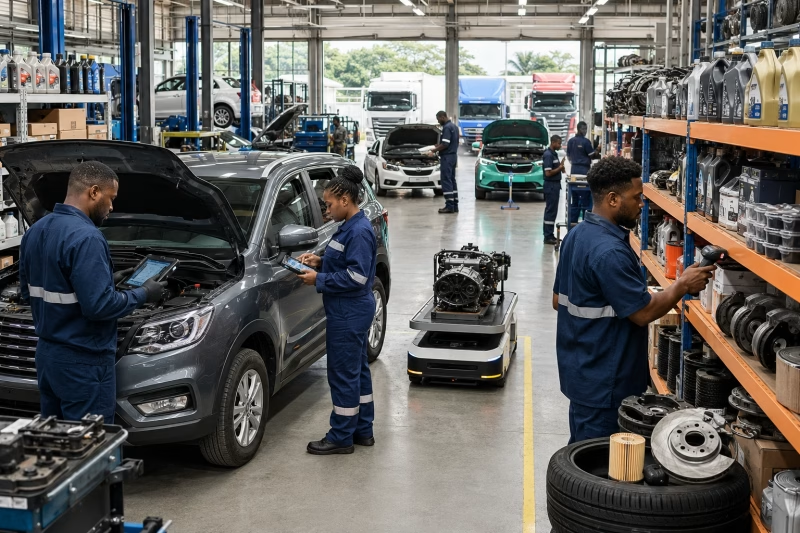
Technology is rapidly changing how aftermarket businesses operate. Inventory management systems, cloud-based enterprise software, electronic catalogues, mobile payment platforms, and online ordering have significantly improved efficiency across the supply chain. Moreover, independent workshops are also investing in advanced diagnostic equipment capable of servicing today’s electronically controlled vehicles.
AI-powered diagnostics, automated inventory forecasting, and predictive analytics are enabling aftermarket businesses to make faster, more accurate decisions while improving customer service. These technologies help workshops reduce diagnostic errors, optimize inventory levels, minimize vehicle downtime, and deliver more personalized maintenance solutions.
Meanwhile, predictive maintenance technologies, telematics, and connected fleet management systems allow businesses to identify mechanical issues before they become costly failures. Artificial intelligence is also beginning to influence maintenance planning. It does this by analysing vehicle performance data and recommending proactive servicing schedules. Clearly, companies that embrace digital transformation are likely to enjoy improved operational efficiency. They will also build stronger customer relationships.
Fleet Management Is Driving Market Growth
Commercial fleets represent one of the fastest-growing opportunities within Africa’s automotive aftermarket. Logistics companies, mining operations, construction companies, agricultural businesses, public transport operators, and delivery services depend heavily on vehicle uptime. Unexpected breakdowns translate directly into lost productivity and higher operating costs.
Consequently, fleet operators are increasingly seeking partners who can provide comprehensive maintenance programs, oil analysis, predictive diagnostics, quality replacement parts, and dependable technical support. Rather than purchasing individual products, many fleet customers now prefer integrated maintenance solutions that improve reliability. In addition, these solutions lower total operating costs.
Sustainability Is Becoming a Competitive Advantage
Environmental responsibility is steadily influencing purchasing decisions throughout the automotive sector. Many lubricant manufacturers now produce formulations that improve fuel efficiency, extend drain intervals, and reduce waste oil generation. Likewise, remanufactured components, recycled materials, and environmentally responsible packaging are becoming more common across the aftermarket.
Workshops are also adopting better waste management practices by collecting used oil responsibly, recycling filters, and reducing hazardous waste. These initiatives not only support environmental goals but also strengthen customer trust and enhance corporate reputation. As sustainability expectations continue to grow, environmentally responsible businesses will enjoy a clear competitive advantage.
Local Manufacturing Is Creating New Opportunities
Governments across Africa are recognizing the economic importance of developing domestic automotive industries. Local assembly plants, component manufacturers, and regional distribution hubs are expanding in several countries, helping reduce dependence on imported products while creating employment opportunities.
As local manufacturing capacity grows, aftermarket suppliers will benefit from shorter supply chains. They will also see improved product availability and stronger technical support from regional manufacturers. Greater collaboration between vehicle manufacturers and independent aftermarket businesses is also expected to improve access to genuine replacement components. It will also improve access to technical training.
Skills Development Will Shape Future Success
Modern vehicles are becoming increasingly sophisticated. Electronic control systems, advanced driver assistance technologies, hybrid powertrains, and connected vehicle platforms require technicians with specialized knowledge. Continuous professional training is therefore becoming essential.
Workshops that invest in technician certification, diagnostic expertise, and modern repair equipment will be better positioned to service increasingly complex vehicles. Industry associations, vocational institutions, and manufacturers all have an important role to play in strengthening Africa’s automotive skills base. The businesses that prioritise learning today will remain competitive tomorrow.
Electrification Is Beginning to Influence the Aftermarket
Although internal combustion engine vehicles will dominate African roads for many years, electric mobility is gradually entering several markets. Governments, private investors, and vehicle manufacturers are introducing electric buses, passenger vehicles, and charging infrastructure in selected cities. This transition is gradually reshaping the aftermarket.
While electric vehicles require fewer conventional engine components, they create demand for specialized batteries, thermal management systems, power electronics, charging equipment, software diagnostics, and high-voltage safety expertise. Forward-looking businesses are already preparing for this emerging market. At the same time, they continue to support conventional vehicles.
Collaboration Will Accelerate Industry Growth
The African automotive aftermarket cannot grow in isolation. Manufacturers, distributors, repair workshops, training institutions, logistics providers, technology companies, and policymakers must work together to strengthen supply chains and improve service quality. Industry collaboration encourages knowledge sharing, standardization, product quality, and investment in innovation. Additionally, it helps combat counterfeit parts, which remain a significant challenge in several markets.
Positioning for the Next Era of Growth
The African automotive aftermarket stands at a pivotal moment. It is evolving from a largely reactive maintenance industry into a technology-enabled, customer-focused, and increasingly sustainable ecosystem. Businesses that embrace digital innovation, invest in technical skills, deliver consistent product quality, and adapt to changing vehicle technologies will lead the next chapter of growth. At the same time, customers will continue rewarding companies that provide transparency, expertise, and dependable service.
The future of the African automotive aftermarket will not be defined by one technology or one product category. Instead, it will be shaped by businesses that anticipate change, respond to customer needs, and continuously innovate. As Africa’s economies expand and mobility continues to evolve, the aftermarket remains an indispensable pillar of the automotive industry. Those who invest in capability, partnerships, and forward-thinking solutions today will help define the continent’s automotive success story for decades to come.
Read More:
Navigating Africa’s Evolving Aftermarket Needs
Africa’s Future is on the Move and the Aftermarket is Leading the Way
Why Bus and Truck Aftermarkets Are the Hidden Giants of African Mobility
Automotive Power is Shifting East and the Aftermarket Must Follow

