

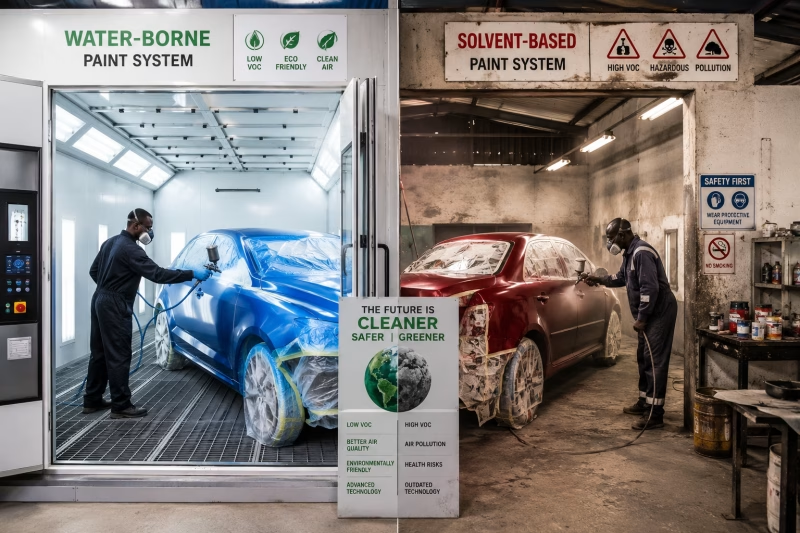
Across the global automotive industry, a major transformation is taking place inside paint booths, refinishing workshops, and vehicle assembly plants. For decades, solvent-based paint systems dominated automotive manufacturing and collision repair because of their durability, fast drying times, and familiar application processes. However, today, the industry is steadily shifting toward water-based paint systems as environmental regulations tighten. In addition, sustainability expectations are rising, and technology continues to improve.
The transition is already well advanced in Europe, North America, and parts of Asia. Increasingly, the same conversation is now gaining momentum across African automotive markets. Body shops, paint suppliers, vehicle assemblers, and regulators are beginning to reassess the future of automotive coatings.
Understand the Difference
The difference between water-based and solvent-based paint systems lies primarily in the liquid used to carry pigments and resins.
Solvent-based paints rely heavily on chemical solvents known as volatile organic compounds (VOCs). These solvents evaporate into the air during the drying process, releasing emissions that contribute to air pollution and health risks. Solvent paints have been popular because they dry quickly, perform well in different climates, and require less specialized environmental control.
Water-based paints, by contrast, use water as the primary carrier instead of high solvent concentrations. As a result, they release significantly fewer VOC emissions and create a safer working environment for painters and technicians. Over the past decade, improvements in paint chemistry and application technology have dramatically improved the durability, finish quality, and efficiency of waterborne coatings.
Consequently, many global vehicle manufacturers and refinishing companies now view water-based systems as the future of automotive coatings. At the center of this shift lies one important question: can Africa modernize its automotive refinishing sector while balancing cost, performance, environmental responsibility, and operational realities?
Why the Global Industry Is Moving Away from Solvents
Environmental regulation remains the biggest force driving the global transition toward water-based automotive paints.
Governments across Europe, North America, and Asia have introduced stricter VOC emission laws aimed at reducing air pollution and improving workplace safety. These regulations are forcing automotive manufacturers and refinishing workshops to adopt cleaner technologies. In Europe, for example, strict VOC directives have accelerated the widespread adoption of water-based systems across OEM production lines and collision repair centers.
At the same time, consumer expectations are changing. Sustainability is no longer limited to electric vehicles or fuel efficiency. Automakers are now under pressure to reduce environmental impact throughout the entire manufacturing process, including paint operations.
This matters because paint shops are among the largest sources of VOC emissions inside vehicle manufacturing plants. According to industry research, automotive paint operations contribute a significant share of industrial emissions generated during vehicle production. As a result, major automotive brands such as Toyota, BMW, and Tesla continue investing heavily in water-based coating systems to align with sustainability goals. They also want to meet future regulations.
Africa’s Automotive Refinish Industry Faces a Turning Point
Although Africa still relies heavily on solvent-based coatings, signs of transition are beginning to emerge. Across countries such as South Africa, Kenya, Nigeria, and Egypt, demand for modern automotive refinishing solutions is growing steadily. This is due to increasing vehicle ownership, expanding collision repair markets, and rising customer expectations for higher-quality finishes.
At the same time, global paint manufacturers operating in Africa are introducing newer low-VOC coating technologies into local markets. Industry analysts also note growing demand for water-based coatings in African automotive refinishing because of their lower toxicity and environmental advantages.
However, Africa’s transition is unfolding more slowly compared to developed markets. One major reason is infrastructure. Water-based paint systems often require controlled spray booth temperatures, humidity management, improved airflow systems, and specialized spray equipment to achieve optimal performance. Many African body shops still operate with limited infrastructure and older technologies. This is particularly true for small and medium-sized workshops.
In addition, solvent-based paints remain cheaper upfront and easier to apply in challenging workshop conditions where electricity supply, ventilation, and climate control may be unreliable.
Cost vs Sustainability: The Industry Debate
The debate between water-based and solvent-based systems is not just technical. It has become an economic and strategic discussion for African workshops and fleet operators.
Supporters of solvent-based systems argue that they remain practical for many African operating environments. Solvent paints generally dry faster in humid conditions, require less investment in equipment upgrades, and remain widely available across the continent. On the other hand, advocates for water-based systems point to long-term benefits that extend beyond emissions reduction.
Water-based paints improve workplace safety by reducing exposure to harmful chemicals. They also help businesses align with evolving international environmental standards, which is becoming increasingly important for globally connected automotive industries.
Furthermore, advances in waterborne technology have significantly improved color accuracy, finish quality, and durability. Modern water-based coatings now deliver performance levels that closely match solvent-based alternatives in many applications.
For African workshops seeking to attract insurance partnerships, dealership contracts, and premium customers, adopting modern refinishing technologies may increasingly become a competitive advantage.
Skills and Training Will Define the Transition
Technology alone will not determine the future of automotive paints in Africa. Skills development will play an equally critical role. Water-based systems require different application techniques, drying processes, and environmental controls compared to solvent paints. Technicians often need retraining to avoid common problems such as uneven drying, moisture trapping, or inconsistent finishes.
Unfortunately, many African collision repair centers still face skills shortages and limited access to modern refinishing training programs. Industry experts warn that without investment in technical education and equipment modernization, many workshops could struggle to compete as global coating technologies continue evolving. This creates a major opportunity for vocational institutions, paint manufacturers, automotive training centers, and industry associations to strengthen technical capacity across the continent.
What the Future Could Look Like
Africa’s automotive coatings market is unlikely to abandon solvent-based systems overnight. Realistically, both technologies will coexist for years as markets transition gradually based on infrastructure, regulations, and economic conditions.
However, the long-term direction is becoming increasingly clear. Global environmental regulations, vehicle manufacturer standards, and sustainability targets are steadily pushing the industry toward lower-emission coating technologies.
As African automotive markets modernize, pressure for cleaner, safer, and more efficient refinishing systems will continue to grow. Governments may eventually introduce stricter environmental standards for automotive paint emissions. This is especially likely in rapidly urbanizing cities facing worsening air quality challenges.
Meanwhile, international automakers and refinishing brands operating in Africa are expected to accelerate the introduction of water-based technologies. They aim to align regional operations with global standards.
According to SEMA Garage Industry Insights, advancements in waterborne coating technology continue making the transition easier and more practical for automotive repair businesses worldwide.
A Defining Moment for Africa’s Refinish Industry
The shift from solvent-based to water-based paint systems represents more than an environmental trend. It reflects the broader transformation taking place across the global automotive industry. In this new era, sustainability, efficiency, worker safety, and technological innovation are becoming central to competitiveness.
For Africa, the challenge lies in balancing modernization with operational realities. Many workshops still require affordable and practical solutions that fit local economic conditions. Yet at the same time, the continent cannot ignore the direction the global industry is heading.
Ultimately, the future of Africa’s automotive refinishing sector will depend on how quickly businesses, regulators, and training institutions adapt to changing technologies and environmental expectations. The transition may be gradual, but the momentum behind water-based paint systems is becoming impossible to ignore.
More Insights:
Automotive Coatings Market
Refinishing Insights from Auto Expo Africa 2025
Driving Demand for Paints and Coatings in Ghana
4CR: A premier brand in the refinishing market

