

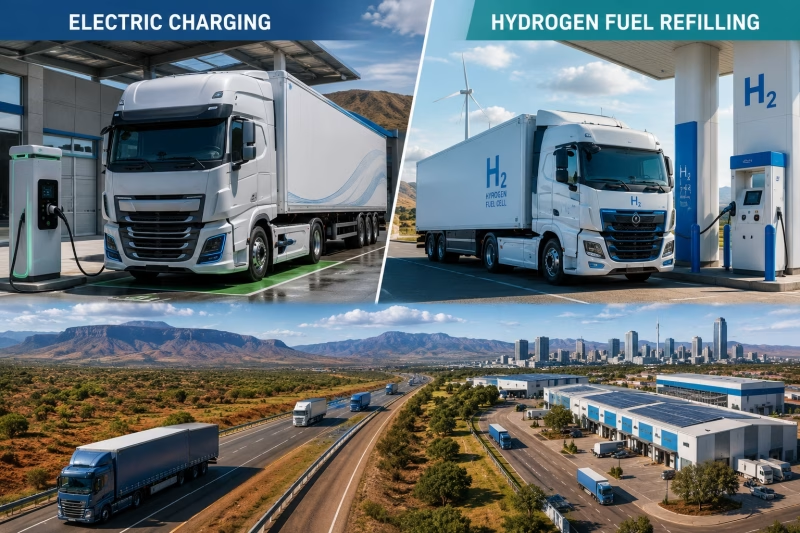
As Africa’s transport sector accelerates toward a lower-carbon future, one question is gaining urgency: should the continent prioritize hydrogen-powered trucks or battery-electric trucks? Around the world, both technologies are gaining momentum as governments and manufacturers work to reduce carbon emissions from heavy-duty transport. However, Africa’s unique geography, energy resources, infrastructure, and freight demands make the answer far more complex than choosing one technology over the other. Rather than asking which technology will ultimately prevail, policymakers, fleet operators, logistics companies, and investors should focus on a more practical question: which solution best meets Africa’s diverse transport needs?
Africa’s Freight Challenge
Road freight remains the backbone of trade across much of Africa, moving food, fuel, construction materials, mining equipment, and consumer goods over thousands of kilometres, often through regions with limited transport infrastructure.
Unlike Europe or North America, many African freight corridors face inconsistent electricity supply, long travel distances, limited charging facilities, and harsh operating environments. Fleet operators prioritize uptime, energy availability, payload capacity, operating costs, and reliability above adopting the latest technology. These realities mean Africa requires zero-emission transport solutions that are practical as well as sustainable.
Why Battery-Electric Trucks Are Leading
Battery-electric trucks (BETs) have emerged as the early leaders in commercial vehicle electrification. Rapid advances in battery technology have extended driving range, shortened charging times, and reduced operating costs. For urban delivery fleets, municipal services, and regional distribution, electric trucks already offer compelling advantages. They produce zero tailpipe emissions, operate quietly, require less routine maintenance than diesel vehicles, and convert energy more efficiently than internal combustion engines.
Many fleet operators also appreciate the lower total cost of ownership over time, particularly when vehicles travel predictable daily routes and can recharge overnight at depot facilities. Manufacturers are introducing increasingly capable battery-electric trucks designed for regional freight operations, while high-power charging technology continues to advance. However, widespread adoption depends on reliable electricity networks and high-capacity charging infrastructure. Without those foundations, even the best electric truck cannot deliver its full potential.
Where Hydrogen Trucks Show Their Strength
Hydrogen fuel-cell trucks take a different approach to zero-emission freight. Instead of storing large amounts of electricity in batteries, they generate electricity onboard using hydrogen fuel cells. This technology offers several operational advantages for long-distance freight. Hydrogen fuel-cell trucks can often refuel in a matter of minutes, making them attractive for high-utilization fleets where minimizing downtime is essential.
Fuel-cell systems require much smaller battery packs, helping preserve payload capacity for long-haul freight operations. For sectors such as mining, cross-border logistics, and long-distance freight corridors, hydrogen could eventually become an attractive option.
However, hydrogen technology faces its own challenges. Producing green hydrogen remains expensive, while refueling infrastructure is still limited globally. Developing hydrogen production facilities, transportation systems, storage networks, and fueling stations requires significant investment. Industry experts continue to emphasize that infrastructure will determine the pace of hydrogen adoption as much as vehicle technology itself.
Africa’s Energy Reality
Africa possesses some of the world’s richest renewable energy resources, including abundant solar, wind, hydroelectric, and geothermal potential. These resources create opportunities for both battery-electric mobility and green hydrogen production.
Countries including South Africa, Namibia, Egypt, Morocco, Kenya, and Mauritania are investing in hydrogen projects to support both domestic industries and future export markets. Meanwhile, electric mobility continues to expand in urban transport through buses, passenger vehicles, and light commercial fleets. Despite this enormous potential, infrastructure remains the biggest obstacle to large-scale adoption.
Many regions still experience unreliable electricity supply, while truck-specific charging and hydrogen refueling networks remain extremely limited. Building either ecosystem will require long-term investment, supportive policies, and close collaboration between governments, utilities, manufacturers, and private investors.
One Continent, Different Transport Needs
Africa’s transport market is too diverse for a one-size-fits-all solution. Battery-electric trucks are well suited to urban deliveries, municipal services, last-mile logistics, regional freight, and depot-based fleets with predictable routes. Hydrogen trucks may eventually prove better suited to long-haul freight, mining operations, cross-border transport, heavy payload applications, and remote routes where rapid refuelling is critical. Rather than competing directly, the two technologies may ultimately complement each other.
Infrastructure Will Decide the Winner
Infrastructure, rather than vehicle technology alone, will ultimately determine Africa’s zero-emission freight future. Ultimately, the real race is to build reliable charging and hydrogen-refuelling infrastructure. Fleet operators will invest where charging or refueling is reliable, affordable, and widely available. Governments must therefore focus on creating enabling environments through supportive regulations, clean energy investments, financing mechanisms, and public-private partnerships.
Vehicle manufacturers are already developing both battery-electric and hydrogen-powered heavy-duty trucks. The greater challenge now is ensuring that supporting infrastructure grows at the same pace. Without charging stations or hydrogen refueling corridors, even the most advanced trucks cannot deliver meaningful environmental or economic benefits.
A Practical Path Forward
Africa does not have to choose between hydrogen and electric trucks today. Instead, it has an opportunity to build a diversified low-carbon freight ecosystem. Urban centers can continue expanding battery-electric fleets where charging infrastructure is practical and daily routes are predictable. Meanwhile, governments and industry can pilot hydrogen-powered freight operations along strategic freight corridors where long-distance operations demand faster refueling and extended range. This balanced strategy reduces investment risk while allowing both technologies to mature and scale where they deliver the greatest value.
The Verdict
The future of African freight is unlikely to be powered by a single technology. Battery-electric trucks will probably dominate urban and regional logistics, while hydrogen could play a growing role in long-haul and heavy-duty applications as infrastructure expands and costs decline. Ultimately, Africa’s success will depend less on choosing between hydrogen and electricity and more on building the energy, transport, and policy ecosystems that allow both technologies to thrive.
The continent’s transport transition should not follow global trends blindly. Instead, it should reflect Africa’s own economic priorities, infrastructure realities, and logistics demands. If Africa invests in the right infrastructure, supportive policies, and clean energy systems, battery-electric and hydrogen trucks can work side by side to build a cleaner, more efficient, and globally competitive freight industry.
More Insights:
Will Hydrogen Fuel Cells Ever Replace Battery-Electric Vehicles?
Hyundai Motor Company and INEOS to Cooperate on Driving Hydrogen Economy Forward
Shifting Gears or Running out of Steam? – The Ever-Changing Landscape of Hydrogen Mobility
Clear Coat vs Base Coat: What Every Car Owner Should Know

