

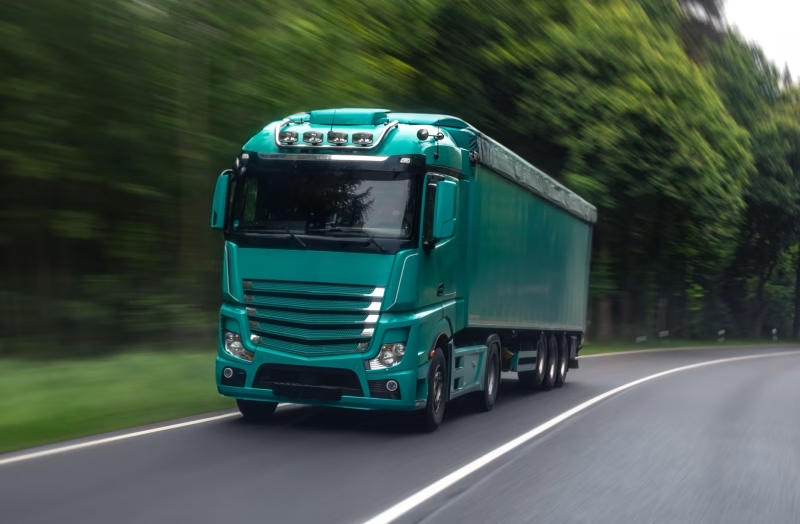
For many African fleets, a heavy truck’s real test track is not a controlled proving ground. It is the highway, construction corridor, mining route or rural road where the vehicle must deliver reliably every day.
Across Africa, trucks operate under demanding combinations of poor road surfaces, extreme temperatures, dust, heavy payloads, steep terrain and long distances between workshops. These conditions place sustained demands on engines, cooling systems, filtration, suspension, chassis components and drivetrains. When a truck is not engineered around its actual duty cycle, the consequences can quickly increase operating costs through breakdowns, maintenance expenses, reduced utilization, premature component wear and lost revenue.
The challenge, therefore, is not simply to build a stronger truck. Manufacturers must develop trucks that are better matched to African operating realities while maintaining the benefits of proven global platforms.
Africa Is Not a Single Operating Environment

Hussein Kamal, General Manager for Ashok Leyland at Simba Corporation Ltd, emphasizes that manufacturers must recognize the significant differences between African markets and even between operating environments within the same region.
“Africa cannot be treated as a single operating environment,” says Kamal. He points to the contrast between well-paved highways around Nairobi, rough construction corridors, high-altitude terrain, extreme heat and dusty conditions, as well as challenging routes in the Democratic Republic of Congo where infrastructure can be extremely limited.

Al-Fayaz Sunderji, Sales and Marketing Director at Wilex GmbH | Wilex E.A Limited, similarly observes that fleets can move between modern highways, broken secondary roads and dusty mining routes while dealing with high temperatures, heavy payloads and long distances between workshops.
These variations can expose weaknesses in trucks whose specifications do not adequately reflect local duty cycles. Kamal notes that the resulting problems can include overheating, filtration issues, suspension and chassis failures, excessive downtime and higher lifecycle costs.
For fleet operators, this makes application-specific engineering more than a technical consideration. It directly affects vehicle availability, operating costs and return on investment.
Cooling Systems Must Handle the Heat
Thermal management is one of the most important considerations for heavy trucks operating in Africa. High ambient temperatures combined with heavy loads, steep gradients and slow-moving traffic can place significant demands on the cooling system.
Manufacturers should therefore consider higher-capacity cooling packages designed for sustained heavy-load operation. Engineers also need to account for airflow, fan performance and heat rejection under conditions where vehicle speed may provide limited natural cooling.
Sunderji identifies higher-capacity cooling systems for slow, heavy-load operation in extreme heat as a key adaptation for African fleets.
Kamal similarly stresses that cooling capacity should be engineered around real-world operating conditions, with specifications aligned to the demands of local duty cycles.
Effective thermal management helps protect engine reliability while reducing the risk of unplanned downtime and expensive repairs.
Filtration Must Match Dust and Fuel Conditions
Dusty roads present another persistent challenge. Trucks operating on unpaved routes can expose air-intake systems, engines and other components to high levels of airborne contaminants. Robust air, fuel and oil filters protect engines from contaminants, especially when trucks run long service intervals and operate far from workshops. Filtration systems should combine effective contamination control with straightforward inspection and replacement procedures.
Sunderji highlights the need for robust air, fuel and oil filtration capable of dealing with dust, variable fuel quality and longer service intervals.
Fuel filtration is also an important part of long-term engine protection, particularly where fuel quality and contamination risks vary between operating environments. For fleets operating far from major service centers, filtration components must also be practical to inspect, maintain and replace.
Chassis and Suspension Need Targeted Durability
Poor roads and heavy payloads create substantial structural and suspension stresses. Potholes, corrugations, uneven surfaces and repeated impacts can accelerate wear or contribute to failures when components are not appropriately specified.
Reinforced chassis sections, robust axles and mounting points can improve durability, while suspension systems should accommodate significant payload variation without unnecessarily increasing tyre wear, fuel consumption or compromising vehicle control.
Sunderji points to reinforced chassis, axles and mounting points as important adaptations for poor road surfaces. He also stresses the need for suspension systems that can manage payload variation without compromising tyre life, fuel efficiency or ride control.
However, simply adding material and weight is not always the solution. Manufacturers need to identify where African duty cycles create the greatest loads and engineer targeted reinforcement without undermining efficiency.
Kamal adds that Africa-ready engineering should also account for ground clearance and payload requirements, ensuring vehicle specifications reflect the conditions in which customers actually operate.
Serviceability Is Part of Truck Engineering
Durability also depends on what happens after a truck enters service. A technologically advanced vehicle still needs accessible diagnostics, trained technicians, readily available parts and clear maintenance procedures. Parts commonality can also simplify inventory management and accelerate repairs, particularly for fleets operating away from major cities.
“Serviceability is as important as hardware durability,” says Sunderji, highlighting accessible diagnostics, trained technicians, parts commonality, clear maintenance procedures and components that can be inspected or replaced outside major cities.
This is particularly important as commercial vehicles become increasingly sophisticated. Advanced electronics can improve efficiency and diagnostics, but their benefits depend on technicians having the skills and equipment to use them effectively.
For fleet operators, better serviceability can reduce repair times, protect vehicle availability and improve lifecycle returns.
Local Validation Can Make the Difference
Manufacturers should involve fleet operators in testing and validation so that engineering decisions reflect real-world payloads, road conditions, temperatures, distances and maintenance practices.
Kamal points to the value of understanding customer applications and conducting local trials to ensure product specifications are suited to actual operating conditions.
According to Kamal, this approach has sometimes meant entering markets later than competitors, but it has helped establish products better suited to local conditions while building customer confidence.
The broader lesson is that engineering does not end when a global platform leaves the factory. Local validation can reveal stresses, operating patterns and service challenges that conventional development programmes may not fully capture.
Global Standards, African-Specific Adaptation
This does not necessarily require an entirely different truck for Africa. Global platforms can provide the foundation through established engine architecture, cab design, safety systems, manufacturing quality and proven technologies.
Sunderji argues that manufacturers should retain these global platform standards while offering “plug-and-play” Africa-specific packages for cooling, filtration, chassis strength, suspension and service access.
This approach can provide the benefits of global engineering while allowing manufacturers to respond to different African duty cycles without developing an entirely separate vehicle architecture. The objective, therefore, is not simply to make trucks stronger. It is to make them appropriately engineered for the work they actually perform.
As Kamal puts it: “For Africa, the road itself must ultimately become part of the engineering process.”
That principle captures the central challenge facing heavy truck manufacturers. Global platforms provide the foundation, but local validation and targeted adaptation determine whether those platforms can consistently perform under the diverse conditions African fleets encounter.
For African fleets, the key question is not simply whether a truck meets global specifications, but whether manufacturers have engineered it to withstand the demands of its intended operating conditions. The road is the ultimate test track and engineering decisions made before a truck reaches it will shape durability, uptime, serviceability and total cost of ownership.
More Insights:
Light Commercial Oil Filters-Key Considerations for Top Performance
Why Modern Vehicles Require Advanced Ride Control Systems
Why Engine Health Directly Impacts Profitability

