Monday, June 1, 2026
Home Blog Page 65

Kenya to promote automotive sector

0

Kenya plans to promote local content of the automotive sector in order to boost the industrial sector. Hezekiah Okeyo, Director of Industries with Ministry of Trade, Industry and Cooperatives said that the vehicle assemblers are currently heavily dependent on imports.

“We will ensure that as much as possible the local automotive sector uses parts domestically produced in order to boost employment opportunities,” Okeyo said during the Enterprise India Expo.

According to the ministry, the country’s three local assemblers produce about 6,000 cars annually which is below the installed capacity.

However, most of the registered cars in Kenya’s are secondhand cars that are imported which are more affordable as compared to locally produced vehicles, Okeyo said.

He noted that the government is developing a new national automotive policy in order to boost local manufacturing.

The new automotive policy will provide incentives to ensure that local vehicles assemblies operate at full capacity by providing preferential treatment to locally produced cars and ensure that used car imports are discouraged.

He revealed that the new policy which will be put in place next year after extensive consultations with all relevant stakeholders, will introduce strict age limits for used imported vehicles.

New Vehicle Market in Decline for November 2019


The National Association of Automobile Manufacturers of South Africa (Naamsa) said that the overall new vehicle market declined further in November 2019. Domestic sales figures, particularly in commercial vehicle sales, had been disappointing. However, passenger cars sales, with strong support provided by the car rental industry, showed a welcome uptick.

Reflecting on the new vehicle sales statistics for the month of November 2019 released today for public consumption via the website of the Department of Trade and Industry, Naamsa confirmed that aggregate domestic new vehicle sales, at 44, 738 units, reflected a decline of 2, 740 units or 5.8% from the 47, 478 vehicles sold in November last year.

Although monthly export sales had registered a marginal decline during the month, a new annual record had been set with still one month to go until year-end.

Also Read: South Africa’s automotive exports set new records

‘Modest but welcome’

Overall, out of the total reported industry sales of 44, 738 vehicles, an estimated 35, 168 units or 78.6% represented dealer sales, an estimated 15.9% represented sales to the vehicle rental industry, 3.1% to industry corporate fleets, and 2.4% to government.

The November 2019 new passenger car market registered a modest but welcomed increase of 392 cars or 1.3% to 31, 444 units compared to the 31, 052 new cars sold in November last year. The car rental industry once again supported domestic volumes, accounting for a substantial 21.9% of new cars sales in November 2019.

Domestic sales of new light commercial vehicles, bakkies and minibuses at 10, 679 units during November 2019 had recorded a decline of 3, 038 units or a fall of 22.1% from the 13, 717 light commercial vehicles sold during the corresponding month last year.

Poor performance

Sales in the low volume medium and heavy truck segments of the industry both performed weaker during the month and at 733 units and 1 882 units, respectively, reflected a decline of 60 vehicles or a fall of 7.6%, in the case of medium commercial vehicles, and, in the case of heavy trucks and buses, a decline of 34 units, or a fall of 1.8% compared to the corresponding month last year.

The November 2019 export sales number at 35, 271 vehicles reflected a marginal decline of 306 units, or 0.9%, compared to the 35, 577 vehicles exported in the same month last year. However, of significance is that vehicle exports, at 374, 215 units for the first eleven months of the year, have now already surpassed the previous annual record of 351, 139 automobiles exported in 2018.

Stallion Motors unveils new Chinese vehicle


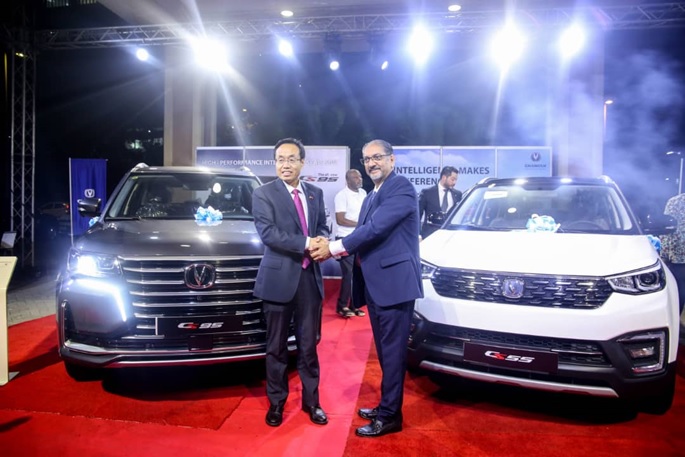
Changan Automobile Corporation, a big car company from China, teamed up with Stallion Motors, their special partner in Ghana, to show off their latest cars: the CS55 and CS95!

They also had other cool models to check out, like the Alsvin and Eado sedans, plus SUVs like the CS15, CS35, and CS75. This gives everyone a chance to see all the different types of cars Changan has to offer!

Bringing Quality to Ghana

This partnership means that people in Ghana can get top-notch cars and services. These vehicles are designed to handle the tough roads in Ghana, making them a great choice for drivers here.

Commitment to Quality

Mahesh Mahtani, the Country Director for Stallion, said that launching these new models shows how dedicated they are to providing high-quality cars that are also affordable for Ghanaians.

Where to Find Changan Cars

Changan has sales and service centers in Accra at three locations: Graphic Road, Tema Motorway, and Spintex. They also have places in Kumasi, Cape Coast, and Tamale, so it’s easy for people to get help with their cars.

They even built a super modern auto parts and service center in Accra to make sure everyone can get genuine parts for their vehicles.

Top-Notch Service

The service centers offer all kinds of help, from regular maintenance to fixing mechanical issues and even bodywork. The staff gets regular training from Changan to make sure they provide the best service possible.

Introducing the CS55 and CS95

The new CS55 and CS95 SUVs are designed with the latest technology and stylish looks. They promise to be efficient, perform well, and keep you comfortable while driving. Changan is all about “Lasting Safety,” and they aim to be one of the top 10 car brands in the world by 2025, selling over 6 million cars each year!

Also Read: Silver Star Auto unveils Mercedes-Benz ambulances in Ghana

Changan’s Global Presence

Changan is one of the leading car brands in China and is becoming super popular around the world. They have a long history of 157 years and have been making passenger cars for 61 years, making them one of the pioneers in the auto industry.

Every day, more than 8,500 people buy a new Changan car, and they are quickly becoming a trusted name in West Africa!

Testing for Quality

Changan cars go through tough tests every year to make sure they can handle extreme conditions like heat, dust, and corrosion. They even won an award for being one of the best in quality and safety in 2017!

Also read: Nissan SA trains technicians for new Ghana plant

Details About the New Models

The CS55 was designed by Changan’s European team and looks inspired by volcanic glass called Obsidian. It has a powerful 1.5L turbocharged engine and a smooth six-speed automatic transmission.

The CS95 is a stunning vehicle with a unique front design and a powerful 2.0L turbo engine. It also features advanced technology for a great driving experience.

Support from Dignitaries

At the launch event, important guests from the Chinese embassy, including Ambassador Shi Ting Wang, were present. They shared that last year, trade between China and Ghana was worth $7.3 billion, making Ghana a key trading partner for China in Africa.

Growing Demand for Cars

Ghanaians love Chinese products, especially textiles and electronics. As Ghana’s economy grows, the need for cars is increasing, and Changan is smart to partner with Stallion Group to meet this demand.

Customer Trust and Feedback

Many loyal Changan customers from banks and government institutions attended the launch. They shared their positive experiences with the brand, showing how much they trust Changan and appreciate their services.

This trust encourages Changan to keep adding new products and solutions for Ghanaians.

Value for Money

Manish Daryanani, the brand manager for Stallion Motors Ghana, said that Changan cars offer great value with their stylish designs, comfort, safety features, and quick after-sales service.

Plus, all Changan models come with a standard 5-year warranty or 100,000 km, so you can feel secure about your purchase!

Hyundai plans to export Venue SUV to Gulf, Africa and Latin America

0

Hyundai Venue, the compact SUV from the South Korean auto manufacturer has received more than 90,000 bookings received already, claims the company in a release. Also, the company is planning to export the SUV to regions like Gulf, Latin America and African markets.

Launched in May 2019, the Hyundai Venue’s introductory price remains unchanged, informs the brand. It further claims that apart from India, the SUV has seen success in overseas markets as well, which include Nepal, Bhutan, Mauritius and Seychelles.

Meanwhile, the car is ready to foray into the South African market on December 2, 2019 with a shipment of 1,400 units to be exported there, from Chennai port.

Commenting on the bookings, S S Kim, Hyundai Motor India Ltd, said, “Hyundai Venue has become customers’ first choice in India and global markets. Launched in May 2019, Hyundai Venue has penned a new success story with registering over 90,000 bookings (May-Nov, 2019) in India.”

He also said, “Bringing the technology wave of First Connected Mobility in SUV segment Venue became the talk of the town since its unveiling last summer. Out of the 60,000 happy customers of Venue, 22,000 opted for Bluelink Connected Technology variant which showcases customers’ trust on Hyundai Technology.”

Kim further added, “Hyundai Promises to continue this momentum in the Year 2020 with new products coupled with new technology.”.

South Africa: CFAO buys Steinhoff’s automotive business


French firm, CFAO has purchased a 74.9% stake in Steinhoff’s automotive division, Unitrans. Steinhoff launched the subsidiary to “simplify” its portfolio after becoming embroiled in a major financial scandal two years ago.

The sale comes after eight months of negotiations between CFAO – which is owned by Toyota Tsusho Tosho Corporation – and Steinhoff. A local investment group, Kapela Holdings will acquire the remaining 25.1% of Unitrans’ capital.

CFAO mainly offers supply and logistics services to the local automotive sector. CFAO’s presence is relatively small compared to Unitrans which has 18 distributed brands, 99 points of sale, 6,000 employees and €1.5 billion in turnover.

Africa’s main automotive market

CFAO will now have access to the largest African market for the sale of new vehicles.

More than 550,000 units were sold in South Africa in 2018, representing 45% of new vehicle sales on the continent, according to CFAO.

“It is time for Unitrans Motors Group to enter a new phase of its development, thus strengthening its strategic position in the automotive distribution sector […] We believe we have many mutual opportunities for our two groups,” according to a joint statement by CFAO CEO Richard Bielle and Unitrans CEO Brynn Stephenson.

Steinhoff is gradually reducing its debt to cope with a financial malpractice scandal worth €6.5 billion. It has been selling off some of its 40 subsidiaries and holdings, in an attempt to restore its finances.

Steinhoff, founded in 1964, was originally a furniture manufacturer and later became a global conglomerate listed on the Johannesburg and Frankfurt stock exchanges. It has a presence in Europe, America, and Australia.

A few weeks ago, Steinhoff also announced that it was selling part of its Australian subsidiary, Greenlights Brand, and 25% of its shares in Pepco, through a public offering scheduled for next year.

Steinhoff CEO Louis du Preez says “the closing of the transaction is another successful step in the further simplification of the group’s portfolio and the reduction of our balance sheet debt”.

The Unitrans brand will soon be replaced by CFAO Motors.

Winpart collaborates with Kwik Delivery for speedy delivery of spare parts to Nigeria


Winpart, an aftermarket spare parts wholesaler, has partnered with Kwik Delivery, an on-demand delivery platform, to ensure smooth, on-demand and flexible last-mile delivery of light auto spare parts to customers in Nigeria.

“The goal of Winpart, a division of CFAO Motors with a spread in several other African countries is to make available to motorists, quality auto parts from the original equipment manufacturers (OEMs) like Denso, Bosch, Valeo, Philips, C-works, Riken, and a host of others,”explained Olivier Buisson, general manager, Winpart.

The heavy circulation of fake automotive spare parts in the Nigerian market has not only accounted for a great number of road accidents but also has led to the loss of lives and resources. “We are changing this narrative. As we commence operation in Nigeria, we need a flexible, reliable and last-mile logistics partner that can adapt to the needs of each customer while delivering in less than two hours upon pick up of parcel. Kwik ticks all the right boxes and we are happy that this partnership will work for our customers, he said.

“In Nigeria as in anywhere else, auto spare parts are fast-moving consumer goods. Thanks to Kwik, Winpart will be able to supply gas filling stations with their orders within 2 hours declared Romain Poirot-Lellig, founder and CEO of Africa Delivery Technologies, who operates the Kwik platform. “The goal is to support Winpart and their customers grow their business while managing their inventory with quasi just-in-time leanness.”

Winpart provides auto spare parts to the Total gas station network in Nigeria, among others.

Faurecia and Michelin aim to create a worldwide leader in hydrogen mobility

0

Michelin, the world leader in tyres and sustainable mobility, and Faurecia, a leading technology company in the automotive industry, have formalized the creation of SYMBIO, A FAURECIA MICHELIN HYDROGEN COMPANY, a joint venture combining all their hydrogen fuel cell dedicated activities, with the aim of becoming a world leader in hydrogen mobility.

Built around a unique ecosystem, this joint venture is tasked with developing, producing and marketing hydrogen fuel cell systems for light vehicles, commercial vehicles and trucks as well as for other areas of electromobility.

A joint venture built around unique know-how
Michelin and Faurecia’s complementarity makes it possible to offer a complete range of hydrogen fuel cell systems covering all types of mobility uses. Faurecia is contributing its technological hydrogen mobility expertise and the results of R&D work carried out with the CEA (the French Atomic Energy Commission). Michelin, for its part, is contributing the know-how of its subsidiary Symbio, an equipment manufacturer supplying hydrogen fuel cell kits as well as a range of services and design and production activities.
A global ambition

Michelin and Faurecia will initially invest €140 million in the joint venture in order to accelerate the development of new-generation fuel cells, launch mass production and increase business in Europe, China and the United States. SYMBIO, A FAURECIA MICHELIN HYDROGEN COMPANY aims to capture 25% market share and achieve a turnover of around 1.5 billion euros by 2030. The joint venture will eventually have three industrial sites supplying the world’s main automotive markets: Europe, Asia and the United States. Electric mobility demand is expected to increase significantly between now and 2030, with hydrogen powered vehicles accounting for 2 million vehicles of which 350,000 trucks. As the only zero emission solution that complements battery-powered electric cars, hydrogen technology is essential in accelerating the deployment of electromobility and addressing its three major challenges: improving air quality, reducing CO2 emissions and the energy transition.

Joint and expert governance

Equally owned by the two Groups, SYMBIO, A FAURECIA MICHELIN HYDROGEN COMPANY will be governed by Michelin, Faurecia and Symbio executives with significant experience in the automotive industry and in managing a fast-growing business. As a result, Fabio Ferrari has been appointed Chief Executive Officer, while Guillaume Salvo, formerly Director of the Light Vehicle Product Line at Faurecia, has been appointed Chief Operating Officer.

Florent Menegaux, Michelin Group President, said: “The development of hydrogen mobility is a perfect illustration of Michelin’s growth ambitions, particularly in the field of high-tech materials. This strategy is itself part of a broader vision of more sustainable mobility made widely accessible. The partnership formalized today with a major player such as Faurecia fully embodies this twofold ambition.”

Patrick Koller, Faurecia Chief Executive Officer, said: “The formal creation of our joint venture with Michelin is another important step in Faurecia’s strategy to become a world leader in hydrogen systems. The complementarity of our expertise and business models brought together in an innovative ecosystem, will be a considerable asset in meeting the growing demand from our customers and consumers to see affordable zero emission technologies brought to market quickly.”

Fabio Ferrari, SYMBIO, A FAURECIA MICHELIN HYDROGEN COMPANY Chief Executive Officer added: “I founded Symbio almost ten years ago to work towards a world where the freedom to move comes with zero emissions. By creating this joint venture, Michelin and Faurecia are demonstrating that they too share this vision. There is no more powerful energy for moving forward.”

SYMBIO, A FAURECIA MICHELIN HYDROGEN COMPANY is also renewing its visual identity with a new logo and a new signature. This change demonstrates the shared desire of its shareholders to maintain the company’s identity and capitalize on a brand that is already widely recognised among hydrogen mobility players.

Kenya Association of Manufacturers: 60 years of adding value to the Automotive Industry

0

Established in 1959 as a private sector body, Kenya Association of Manufacturers (KAM) is the representative organisation for manufacturing value-add industries in Kenya. KAM provides an essential link for co-operation, dialogue and understanding with the Government by representing the views and concerns of its members to the relevant authorities.

Mandate, vision and mission 

In pursuit of its core mandate of policy advocacy, KAM promotes trade and investment, upholds standards, encourages the formulation, enactment and administration of sound policies that facilitate a competitive business environment and reduce the cost of doing business.

Their mission is to promote competitive and sustainable local manufacturing.

Their vision is to be a World-class Business Membership Organization (BMO) that effectively delivers services to its members.

Respect from members and Government 

Through fact-based policy advocacy, KAM has evolved into a dynamic, vibrant, credible and respected business association that unites industrialists and offers a common voice for businesses. 

Service delivery to members 

  • The Association advocates for a conducive business environment for its members. They articulate to government and other stakeholders issues such as high cost of doing business, predictable policies and regulations and budgetary proposals and amendments.
  • They also provide trade information on local, regional and global markets such as EAC, COMESA, Africa Continental Free Trade Area (AfCFTA) and World Trade Organisation among others.
  • KAM continues to advocate for the review of the current payment period to a shorter time and the establishment of a legal framework to curb the culture of late payment.
  • They are keen on uplifting Micro, Small and Medium businesses in value addition through our Manufacturing SME
  • KAM offers subsidized energy services and provides technical advice on matters energy to members.
  • The Association also provides relevant trainings, seminars and workshops through Their Manufacturing Academy and SME Business Growth Services. 

Environmental considerations 

  • KAM continues to run anti-littering and awareness campaigns. The campaigns will help people understand how to recycle and upcycle plastic bottles, and where to recycle. They will also encourage people to reuse and re-purpose plastic bottles as many times as possible, rather than being used once and then thrown away.
  • Through extended producer responsibility and take-back schemes, they have created a comprehensive recycling system and structure that involves consumers, garbage collectors and recyclers and eventually manufacturers in a recycling value chain, guided by circular economy principles.
  • They believe that beyond ensuring a clean environment, they can harness plastic bottles to supporting manufacturing sector, particularly for industrial use. With the recent set up of PETCO, they are confident that the recycling will flourish as the industry matures and the public learns how to recycle properly.
  • To scale the campaign, they have signed a Framework of Cooperation with National Environment Management Authority (NEMA) and Ministry of Environment and Forestry. They will also enter into strategic partnerships with county governments countrywide to help develop more effective recycling systems that meet each community’s unique needs. They aim to make recycling easier and more accessible for everyone.
  • Importantly, they will be working with all stakeholders to help achieve policy changes that support a truly circular economy and a more holistic view of material use, collection, and reuse. 
  • The initiation of innovative eco-friendly strategies and comprehensive recycling schemes will create new avenues of employment for waste collectors and recyclers. They believe that when properly planned and guided, the informal sector such as the one that has created businesses in Dandora can become a sustainable model for other East African nations. Roping in the sector by providing tools and training modules for waste collectors will not only aid in job creation but will also promote responsible and sustainable management of waste trickling down to the consumer level.
  • Recycling represents a systemic shift that builds long-term resilience, generates business and economic opportunities, and provides environmental and societal benefits. In other words, plastics aren’t necessarily bad for the environment; it’s the way they dispose of them that’s the problem. 
  • KAM’s Kenya Plastics Action Plan set to be launched provides an opportunity for the private sector to establish a collective position and propose solutions on plastic pollution. It is an essential strategic avenue that if fully implemented would significantly build Kenya’s plastics recycling sector.
  • KAM in partnership with Nordic Countries also launched a Green Hub to address climate change challenges affecting the country. The Nordic Countries, mainly Denmark, Finland, Norway, and Sweden, will provide technological knowledge and innovations to facilitate a low dependency on carbon-based fuels and demonstrate decoupling economic growth from CO2 emissions. The Green Hub seeks to boost to the Association’s efforts to mitigate energy efficiency by industry. Through the Center for Energy Efficiency and Conservation, KAM has been able to abate more than 180,000 tonnes of carbon dioxide annually through the implementation of both energy efficiency and renewable energy projects. 
  • Clean Energy Conference: KAM and the Ministry of Energy and Petroleum host an annual Clean Energy Conference. This year’s conference, held in April, was themed ‘Sustaining a clean energy market in Kenya’. The Conference provides an opportunity for industry and its stakeholders to discuss initiatives to promote green investments, and mechanisms to improve  the quality of renewable energy and energy efficiency technology, to ultimately reduce the cost of production and increase their competitiveness.

Driving industrial growth of manufacturing sector to GDP

Since the establishment of KAM in 1959, KAM has evolved into a dynamic, vibrant, credible and respected business association that unites industrialists and offers a common voice for businesses.

For these 60 years, KAM has continued to engage the government to promote  the competitiveness of industry and seek new market opportunities. Such initiatives include;

  • Advocating, on behalf of their members, for a conducive business environment. They articulate to the Government and other stakeholders, on the cost of doing business (energy, taxation, illicit trade, counterfeits), Predictable policies and regulations and Budgetary proposals and amendments
  • Providing trade information on Local, Regional, and Global markets. These include East African Community (EAC), Common Market for Eastern and Southern Africa (COMESA), South African Development Community (SADC), African Caribbean Pacific-European Union (ACP-EU), African Continental Free Trade Area, Tripartite Free Trade Area and the World Trade Organization (WTO).
  • Facilitating Exports under Duty Remission Scheme as well as Africa’s Growth Opportunity Act (AGOA)
  • Facilitating the licensing and permits at the National and County levels
  • Promoting Energy and Water efficiency through Energy and water audits, Energy audit trainings and green financing
  • Intervention and engagement of county governments
  • Providing relevant Training, Seminars and Workshops through our Manufacturing Academy and SME & Business growth services
  • Assistance on monitoring and evaluating progress on Global Compact commitments.
  • Access to regulatory and compliance requisites to set up your business

Supporting skills-based job creation agenda and increase manufacturing sector jobs

Industry remains a big contributor to job creation, which is a major driver for economic development and realization of Kenya Vision 2030 and the Government’s Big 4 Agenda.

For this to be a reality, there is an increasing and significant demand for skilled workers in industries in Kenya and also a demand for improved quality of goods and services that meet both local and International standards.

KAM TVET program is aimed at improving access to jobs and economic opportunities for youth in Kenya. This is in line with the strategic pillar of the KAM Business Development Plan (2017-2019) which supports skills-based job creation agenda and increased manufacturing sector jobs.

Through the Manufacturing Priority Agenda 2019, the Association propagates for the development and implementation of industry-led skills policies, to be drawn proactively in conjunction with training institutions, since the future prosperity of the manufacturing sector will depend ultimately on the number of persons in employment and how productive they are.

Skills development stimulates creation of sustainable development process and can make a contribution to transition from the informal to the formal economy. Further, skills are essential to address the opportunities and challenges to meet new demands of changing economies and new technologies in the context of globalization.

 Contribution to the well-being of society

In partnership with Dandora Hiphop City (DHC), KAM launched the Customer Bora – Taka Banks Programme to facilitate sustainable collection of waste for recycling by establishing trial “taka bank” kiosks to serve as collection stations. The online platform dubbed Customer Bora facilitates correspondence between groups in order to encourage uptake and flow of all communication about the program.

  • KAM also engaged representatives from the government, private sector and youth during the High-Level Panel on Waste Management and Circular Economy and Youth Sustainability Conference in September 2019.

The Youth were urged to take advantage of waste management solutions as the new frontier of job and wealth creation and sustainable economic growth.

The Panel was part of KAM Corporate Social Investment (CSI) Week 2019 which focused on waste management and entrepreneurial innovations that foster sustainability. It drew stakeholders from government, academia, industry and development partners.

 Recruiting and retaining membership base

Membership at KAM is structured in two categories:

●       Ordinary Membership which is extended to companies that are directly involved in processing, manufacturing or any other value addition activities.

●       Associate/Consultancy Membership which is extended to firms which have direct interest in the expansion of industries, either through the provision of services or other inputs.

For one to join them as a Member, fill in an application form (available on our website) and send it back to them with the appropriate payment, based on annual turnover as indicated within the form. Attach your certificate of incorporation, PIN certificate and audited statements of accounts and submit it to them.

They retain their Members by offering services to them.

To become a Member, contact them on info@kam.co.ke.

Achievements over the last 60 years

Since the establishment of KAM in 1959, KAM has evolved into a dynamic, vibrant, credible and respected business association that unites industrialists and offers a common voice for businesses.

Additional achievements include:

  • The Association’s human resource has grown from 4 Professional Staff to 70 staff members, building the Association’s capacity for fact based advocacy.
  • They’ve also built a sustainable organisation through the membership growth and their very own building opened on 9th December 2014.
  • They have expanded their regional presence. This has played a key role in enhancing their advocacy work at the county levels
  • Through their advocacy, they have seen business grow and expand. Some of the advocacy issues include
    • Buy Kenya Build Kenya
    • Fight against illicit trade
    • Access to affordable and reliable energy
    • Infrastructural development such as roads and water
George Njao appointed new NTSA boss

0

George Njao has been appointed the new Director General at the National Transport and Safety Authority-NTSA on a three-year term. In a statement, acting chairperson NTSA Board, Dr. Alice Chesire, said Njao was appointed following a rigorous interview process spearheaded by the board after its inauguration in February, this year.

Chesire said Njao has over 15 years of experience in the transport sector specifically in safety management which presents a great opportunity for the Authority. He holds a Master’s degree and a Bachelor of Science degree from Central Missouri State University, USA.

Njao is taking over from Francis Meja who successfully completed his full term contract. At the same time Chesire has further said the board has appointed Badu Katelo the Director, Road Safety.

Christopher Wanjau was appointed Director, Registration and Licensing while  Shalakha Shem was appointed Deputy Director, Supply Chain Management to boost the performance of the Authority.

SWVL suspends services in Kenya to comply with NTSA regulations

0

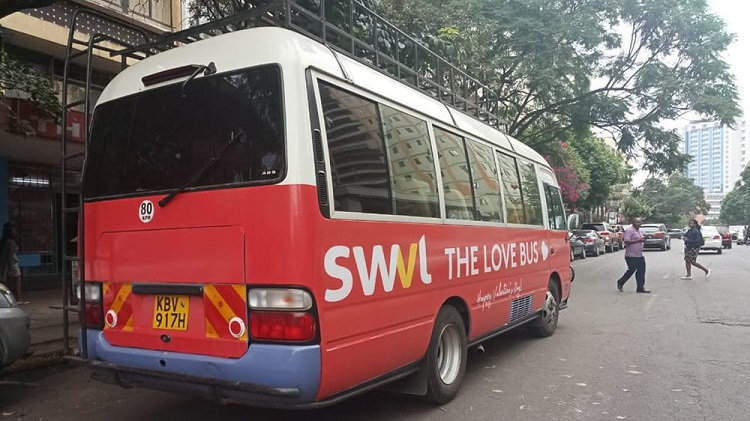
Egyptian bus transportation network, SWVL has today notified is users that they are suspending their services to comply with NTSA regulations.

“We would like to notify our customers that we intend to be fully compliant with NTSA regulations by the end of this month,” the notice said. “However in the meantime, our routes have been affected and we apologize for the inconvenience caused. We are working around the clock with the NTSA to rectify.”

This move follows what we saw back in September where Little shut down their Shuttle service over licencing issues. Little’s CEO, Kamal Budhabhatti shared this where he said that they got communication from the authorities that they didn’t have the right kind of licence. Later on, Kamal said that they read on the newspaper that NTSA had ordered SWVL to stop operating but they still did.

NTSA wanted Little and SWVL to register as Matatu Saccos but according to Little, the business and operation model of an app based commuter service is different from Saccos. Little Shuttle became operational again but they had to change their commuter model slightly to comply.

Currently, we have no idea what SWVL is planning to comply with NTSA regulations but it won’t be a surprise if it was similar to what Little did.

SWVL has become quite popular in Nairobi. They got Kshs 1.5 billion as funding for the Kenyan market which they have used quite generously to lure customers. SWVL founders said some time back that Nairobi was one of their biggest growth markets and you will be sure they still want that to be the case.

- Advertisement -