Monday, June 1, 2026
Home Blog Page 63

Georgia Automotive Leader of the Year


The Georgia Automotive Manufacturers Association (GAMA), is excited to announce that its President, CEO and Founder, Rick Walker, has received the state’s prestigious award, Georgia Automotive Leader of the Year. The award was recently presented by Georgia Governor Brian Kemp.

The automotive industry contributes $3 billion to the State’s economy. The Georgia Automotive Awards were developed to elevate the industry’s profile, recognize individual companies for their contributions, and celebrate the industry’s collective accomplishments. The Leader of the Year Award is given to a leader in the automotive industry who has devoted their time and effort to leadership and has demonstrated pride in the industry in Georgia.

“We are thrilled to have been recognized with this award,” said Walker. “It is a tribute to all the hard work of GAMA’s incredible Advisory Board and GAMA members over the last 10 years. Our hugely successful and record-breaking Southern Automotive Conference (SAC) in late 2018, which attracted 1,200 attendees, was highly acclaimed by many worldwide. This award now definitely solidifies our role as a leading automotive association for the Southeast and the world.”

In announcing the awards, Georgia Department of Economic Development (GDEcD) Commissioner Pat Wilson stated, “Congratulations to the winners of the 2019 Georgia Automotive Awards. The automotive industry in Georgia continues to drive innovation and growth in every corner of our state, with access to a top-ranked workforce and world-class business climate.”

Georgia has been an established automotive manufacturing center since 1909. There are more than 51,000 workers employed by Georgia’s automotive-related facilities. Georgia is at the heart of the rapidly expanding Southeastern Automotive Corridor. Southeastern automotive assemblers currently have the capacity to produce approximately 3.3 million units, according to a study by Georgia Power.

About GAMA

GAMA is a non-profit trade association which promotes growth, profitability, and workforce development in automotive manufacturing in Georgia and the southeastern United States. GAMA commenced its regular quarterly meetings in 2011, and in late 2018 hosted a record-breaking Southern Automotive Conference, an event that drew 1200 participants from all over the world. www.GAMA-Georgia.org

Source: GAMA

Grindrod starts work on vehicle processing centre in South Africa


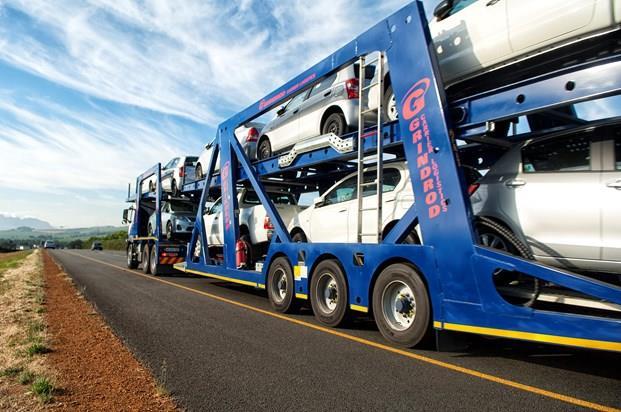
Freight logistics provider Grindrod has started work on a 270,000 sq.m finished vehicle processing centre in the South African town of Camperdown, 60km northwest of Durban. The R105m ($7.2m) Umlass Road Autoport will provide a range of services including for plug-in hybrid and fully electric vehicles (EVs).

Grindrod said that the facility, which is expected to be operational by the second quarter of this year, would feature a fully equipped workshop and fitment centre able to carry out smart repairs, as well as support clearing and forwarding activities, and bonded and duty paid storage for all types of vehicles.

The company plans two phases of development at the site. Phase one will see the completion of undercover storage for 2,400 vehicles by the second quarter of this year, with a further 2,300 vehicles accommodated by the second half of 2020. Grindrod said it was also planning options to increase the capacity at the site further in line with demand, with scope to accommodate a further 12,000 vehicles.

As part of its Vision 2025 strategy, Grindrod itends to make the processing centre sustainable with the use of solar panels and rainwater harvesting, along with the reuse of water used to wash the vehicles and the recycling of plastic covers.

“Plastic wrappings removed from vehicles will be transformed into bricks and plastic roof sheeting and used in commercial applications,” explained the company in a statement.

The Camperdown facility is adjacent to the Natcor rail link between Durban and Johannesburg, and Transnet Freight Rail is reported to be making good progress on integrating the centre into the network.

“This investment in key infrastructure supports our strategic focus of unlocking trade corridors,” said Grindrod’s CEO Andrew Waller. “Our management team has worked tirelessly and in collaboration with business partners to ensure that the design specifications provide our customers a unique competitive advantage and contribute to delivering a sustainable, cost effective and efficient hub for strategic growth along this corridor.”

In its most recently published results Grindrod said its freight services business was focused on “unlocking sub-Saharan African trade corridors” and aligning its businesses along key corridors, to connect and extend supply chains”.

Along with finished vehicle services inland and at the port of Maputo, Grindrod provides logistics services for containers, liquid bulk and dry cargo.

Building An Automotive Industry In Africa


The automotive manufacturing industry is a key component of modern manufacturing in an economy. However, it is not located in all economies and is not often associated with African economies – something that is about to change.

Automotive production does and has taken place in Africa. The industry is nearly 100 years old in South Africa. In the 1980s and 1990s, Nigeria achieved significant production and production occurs in Egypt and more recently Morocco. Smaller production activities take place in Kenya and some decades ago in Zimbabwe. However, currently significant modern assembly is largely located in South Africa.

The automotive industry is dynamic with many competitive pressures and continuous innovation in design and production methods. The history of the auto industry is a complex one and what worked as a policy in one period will not necessarily work in another. Outside of the pioneers of the industry, the development of automotive production is invariably associated with some form of industrial policy intervention by the state – state intervention changed a Japanese textile equipment manufacturer in the 1930s into the present day global giant called Toyota.

Any state intervention needs to have clarity of purpose, be consistent and sustained over many decades. An absence of policy consistency can cause the collapse of the assembly industry as has happened in Nigeria, Argentina and Australia over the last decades. However, there are other critical ingredients required to build a sustainable auto industry. These relate to energy, communications and logistics infrastructure, advanced manufacturing capacity and access to markets. Attempting auto production in a small economy with a limited market will raise costs, reduce choice and constrict the nature of assembly. The assembly industry is associated with larger, industrializing economies.

The modern automotive industry has evolved into one of the great global industries. Whilst it supplies all economies, the production is highly integrated across a limited number of economies. The high fixed capital costs for auto production mean that economies of scale are key in reducing costs and maintaining competitiveness. This means that it makes sense to reduce the variety of models that go through a plant in order to reduce tooling costs. It is more cost effective to reduce the number of models produced in one plant but increase the number of plants in different locations.

A possible future scenario in Africa is a configuration where an OEM plant in South Africa produces models for the South African, Nigerian, African and world markets thereby gaining longer production runs for those models and increasing competitiveness. Then a plant from the same OEM in Nigeria could produce other models in its range for the Nigerian, South African, African and world markets. This lowers overall costs of production, lowering prices and increasing product choice in all economies. As other significant African production sites emerged they could likewise fit into a similar configuration. Not all vehicles and their components in the African market would be sourced from African production locations; many would be sourced from other economies. However, it is possible for Africa to become balance of payments neutral and add a large sector to its economy that is very productive and creates high quality employment.

Longer production runs make it easier for component manufacturers to invest, thereby leveraging additional investment into the economy. This globally integrated system can only work with very modern and efficient communications and logistics systems that themselves depend on economies of scale to be cost effective. The scale of the supportive infrastructure required for such complex production provides an impetus toward the auto industry clustering in areas where these basic operational and infrastructure needs can be best provided.

The overall effect of these characteristics of the automotive industry is that it is dominated by large global original equipment manufacturers (OEM) that operate on many production sites spread across strategically located economies. This strategy of the OEM also makes sense for the host economies as from a macroeconomic point of view, they can achieve a degree of balance of payments neutrality exporting and importing within the automotive sector – this can be in the form of Fully Built-up Units (FBU), semi-knocked-down kits (SKD), completely-knocked-down kits (CKD) or componentry for both the OEM and the aftermarket. For large highly populated economies such as Nigeria, such a macro objective of a degree of balance of payments neutrality within the automotive sector is an important one as to import all its transportation equipment needs would have a massive balance of payments effect.

Clearly in such large populous economies such as the US, EU, China, India, Russia, Brazil and Nigeria, considerable economies of scale can be achieved within the domestic market. However, attempts to be self-sufficient will either reduce the product range or raise the costs of production and price levels for the more varied range. In practice therefore, the global industry has evolved into a highly integrated industry even in regard to the very large and populous economies.

African economies, outside of South Africa and more recently Morocco, have suffered from a lack of the supportive infrastructure for the industry and a lack of policy consistency. Consistent policy must be developed but the weaknesses of infrastructure means that the industry has to be developed in stages – as has been the case in other developing economies. This is usually done by developing from the assembly of imported SKD and then progressing to CKD assembly where componentry is sourced on a growing scale from localsuppliers. SKD assembly is a stepping-stone to a more sustainable industry and policy has to be well designed to attract investments that will move toward CKD production and beyond.

Badly designed policy can have two perverse effects. If it allows long-term production of SKD, it will have a cost raising effect on vehicles, reduce product variety and minimize the important componentry and employment multiplier effects. This in turn will increase the attractiveness of cheaper second hand vehicles that are spewed out of the developed economies making it even more difficult to attract CKD investment.

On the other hand, attempts to move too quickly from SKD to CKD without the necessary preparation will only serve to delay and divert investment as CKD is not feasible in the early stages as it requires major investments in plants and supportive infrastructure. The key is to define a realistic programme that will incentivize investment that moves from SKD to CKD and ultimately to what are referred to as Integrated Manufacturing Facilities. The latter are fully integrated into the global supply chains and model distribution patterns. With persistence, wisdom and good administration, an economy like Nigeria will be able to move down this path significantly faster than South Africa was able to as a result of the larger market developing in Nigeria.

This progression in the development of automotive production has historically encouraged transnational partnerships. Examples are programmes such as the North American Auto Pact that linked the USA and Canada in 1965; the role that Japan’s industry played in South East Asia and the agreements between Mexico and Brazil, being some.

In the last decade, Morocco has shown how intelligent government policy and wisely using its close proximity to the European market can lead to an assembly industry. There have also been three recent developments in sub-Saharan Africa, which are starting to change the scenario for the African automotive industry.

The first is two recent reforms in the decades-old South African programme. The first – the Motor Industry Development Plan – moved the industry toward longer production runs and export competitiveness in FBU and componentry. The exports of the automotive sector grew significantly. The recent APDP further increased emphasis on production runs and component investment. The strategic intention is to move the industry toward more sustainable Integrated Manufacturing Facilities and greater integration into the global supply chains of FBU and componentry.

The second is the recent adoption by Nigeria of the Nigerian Automotive Industry Development Plan (NAIDP) as part of a wider Industrial Revolution Plan. The population and potential size of the Nigerian economy make it a very attractive market in its own right but its membership of ECOWAS with 340 million people makes it a strategic economy for the global automotive industry. The NAIDP is already attracting SKD investment and OEM such as Nissan, Hyundai and Volkswagen have joined Peugeot’s ongoing operations in reviving automotive assembly. If wisely managed and sustained, the NAIDP holds out great hope for Nigeria’s industrialization.

The third is that economic growth and the growing middle class in Africa is causing other governments to turn their attention to this key sector of any economy. As this happens, there are key lessons to bear in mind. These are:

  • The automotive industry is capital intensive and requires long term programmes to make it viable and sustainable.
  • Economies of scale are central to the operation of the industry. It is a highly integrated industry and is easier to develop in larger rather than small economies.
  • At some point in their development, large and populous economies have little choice but to introduce automotive production to alleviate balance of payments pressures.
  • The challenges of developing such a complex industry mean that in practice it is always going to be an intelligent partnership between governments, national investors and the global OEM.
  • To obtain the full economic benefits of this industry, systematic and sustained programmes have to be introduced to encourage industry supportive procurement systems in government, component manufacture, high quality aftermarket services and dealerships and affordable vehicle finance – all of these being necessary to grow the market.
  • Operating and safety standards are essential. African economies need to develop these but they also need to develop a coherent policy to stop the flow of second hand vehicles out of the developed economies. This dumping into Africa undermines our standards, safety and cost effectiveness. It restricts Africa’s industrialization and shifts environmental clean up costs from the wealthy to developing economies. Producing affordable vehicles and allowing a more reliable second hand market to evolve from the new is a far sounder policy.
  • Finally and importantly, the development of the industry depends on cost effective, reliable and efficient logistics, communications and electricity infrastructure and operating systems.

This is complex industrial policy requiring a battery of policy, regulatory and institutional reforms along with efficient customs administration. It would be economically unsound to try to develop the industry in each African economy. The experience of the European Union suggests that increased economic integration will lead to the concentration of vehicle assembly in a few economies. However, trade between such producer countries will increase dramatically in the auto sector and its supply chain. In addition, there are major opportunities for the smaller adjacent economies to attract investment in componentry to supply new assembly activity.

Experience has shown that the total supply chain for the automotive industry can be located across many economies. This is even more the case in economic blocs such as the EU where barriers to trade are reduced and logistics systems improved. As Africa starts in earnest a similar process of reducing trade barriers and improving logistics, the opportunities for smaller economies in blocks such as ECOWAS, SADC and the EAC to participate in the automotive industry supply chain, will grow. To the extent that the African industry is configured strategically, the greater will be the opportunities for all economies in Africa. Such configuration will start step-by-step and economy-by-economy, but Nigeria and South Africa – the two largest economies – provide a good start.

Success will depend on intelligently designed partnerships between and among governments, national investors and the global OEM – both assembly and componentry. Such a vision is already informing important initiatives to facilitate such an African partnership. A degree of coordination is needed and there needs to be coherence of approach. However, the process has to be pragmatic and accept that it is the competitive economics of this vast, technologically advanced industry and its leading OEM that shape the reality for sustained and intelligent state interventions through industrial policy partnerships.

Force Motors unveils next gen shared mobility platform


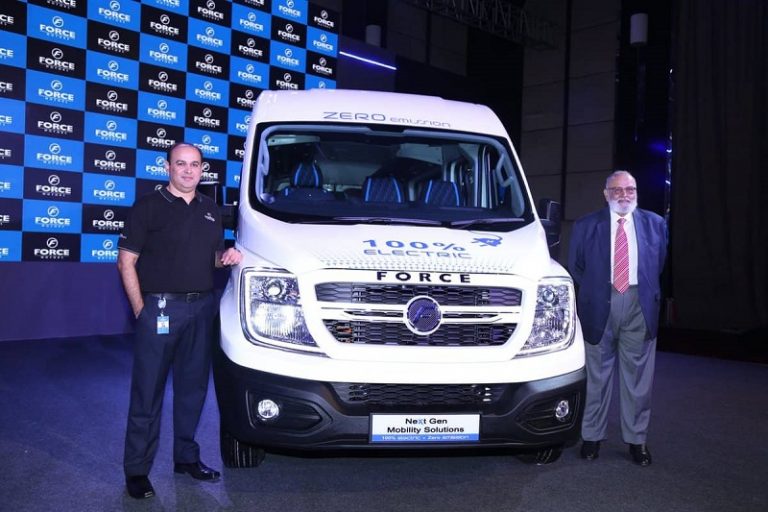
Pune-based automaker Force Motors has revealed next generation shared mobility platform codenamed T1N.

The company claims that it country’s first next generation shared mobility platform that has been simultaneously designed and developed for both Internal Combustion engines and 100% electric drive.

The project T1N was triggered about four years ago with the objective to develop a truly world class shared mobility platform that would be way ahead of current offerings and raise the bar in terms of passenger comfort, convenience and safety to International standards, Force Motors said in a release.

T1N is powered by a new and more powerful BS6 compliant, Common Rail Diesel engine, offering peak torque of 350Nm. The platform will also offer BS-VI CNG variant as also a class leading full electric version.

“The T1N is the first vehicle in this category in the country offering crash and rollover compliance with air bags for driver and co-driver even though current Indian legislation does not mandate them. In addition, T1N comes with large ventilated disk brakes on all four wheels with ABS, EBD, EDTC and ESP offering unmatched safety for its passengers,” the company said in a statement.

For this new platform, the company has selected team of about 100 young specialist engineers and senior managers, who were experts in their respective domains.

“Force Motors T1N development team then consulted with leading technology specialists, domain experts across the globe, in Italy, Spain, UK, Germany, Japan, USA to improve, refine and validate the platform to match international performance expectations,” the statement added.

Speaking on the introduction of new platform Prasan Firodia, Managing Director, Force Motors said, “As segment leaders, we considered it our duty to offer our customers not just what they need but what they aspire for, and hence we set about developing this truly world class next generation platform packaging leading edge technologies in every aspect. We are confident our customers will welcome it.”

At present this new platform is underdoing final validation and homologation processes. A new state of the art facility, with body shop with robotic and laser welding facilities is being set up at the Pithampur works. These vehicles would be showcased at the forthcoming Delhi Auto Expo 2020. It is expected to be available for sale by the end of the year.


Hero Electric launches Flash e-scooter


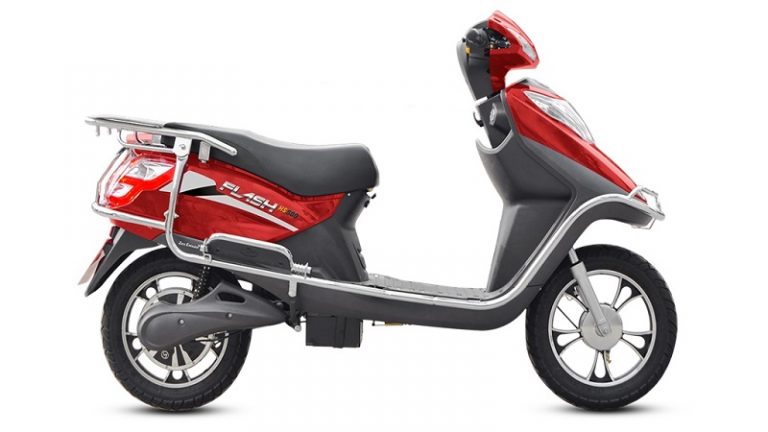
Hero Electric has launched its electric scooter Flash in India, at a starting price of Rs 29,990 (ex-showroom, Pan India). The scooter is priced at Rs 32,710 in North East India and it is available in 615 touchpoints across the company.

The scooter comes with a limited time discount offer of Rs 7,090, claims the EV maker. Also, the company is offering Paytm benefits of up to Rs 10,500 on the Flash lead-acid and entire lithium-ion range.

The electric scooter gets LED headlights, mobile charging facility and regenerative braking system. IT weighs 69 kg, which makes the scooter easy to manoeuvre, claims Hero Electric.

The scooter is powered by a 48V battery that enables it to run around 50 km on a single charge. The scooter’s battery requires 8 hours to be fully charged.

Meanwhile, the company is aiming to showcase new generation electric vehicles at the upcoming Auto Expo 2020. Speaking to the ETAuto, Naveen Munjal, MD of Hero Electric a few days ago said, “Continuing our electric mobility narrative we will showcase the next-gen products at the Auto Expo.”

Maruti Suzuki launches BS-VI Celerio


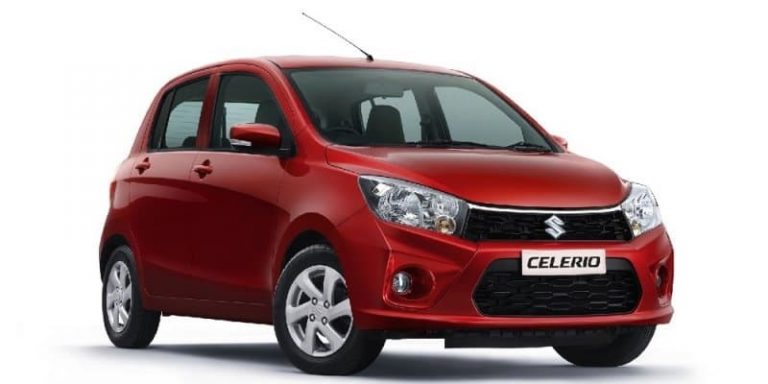
Maruti Suzuki has launched the BS-VI complying Celerio hatchback, at a starting price of Rs Rs 4,41,200 (ex-showroom, Delhi). Price of the hatchback goes up to Rs 5,67,300 (ex-showroom, Delhi), depending on variants.

All the BS-VI emission norms compliant variants of the hatchback are petrol-powered, informs the homegrown automaker in a release.

The Maruti Suzuki Celerio has produced 5,958 units in December 2019, down from 9,595 units in December 2018. In terms of domestic sales, the automaker sold 5,429 units of the hatchback last month, down from 9,000 units sold in the same month in 2018.

Cumulatively, the hatchback sold 46,275 units in the domestic market between April-December of current fiscal.

The Maruti Suzuki Celerio is powered by a 1.0-litre K10B all-aluminium petrol engine. This three-cylinder engine churns out 67 PS of peak power at 6,000 rpm and 90 Nm of torque at 3,500 rpm. Available with a 5-speed manual gearbox, the engine churns out 23.10 kmpl of mileage.

Mahindra targets 30% of small commercial vehicle market


Home-grown automaker, Mahindra & Mahindra (M&M) is narrowing its focus on the fast-growing small commercial vehicle (SCV) business, as it eyes 30% market share in the segment over the next 12 to 18 months.

The rise of e-commerce and hub-n-spoke model post-GST is fuelling super-charged growth in the SCV segment, making it one of the fastest emerging in the domestic market. According to the industry data, the segment grew 43.62% in the last two years, despite the headwinds of slowing economic growth, surplus capacity, financial crunch, and the tardy infrastructure growth pulling all segments down.

Moreover, in medium-term, the SCV demand is likely to be braced by structural positives of last-mile transportation needs and pent-up requirements coming from municipalities/ULBs under the ‘Swachh Bharat’ and Smart City initiatives, according to ICRA.

The segment sold a total of 4.47 lakh units in FY17 compared to 6.42 lakh units in FY19, according to the industry data.

“Currently we have about a 20 – 23 per cent market share in the SCV segment. We are currently number two, but there is not a significant gap between the number one and number two. Our objective is to have healthy profitable growth and we want to increase this market share to 30 per cent in the next twelve to eighteen months.” said Veejay Nakra Chief of Sales & Marketing Mahindra & Mahindra, Automotive.

He further added,“In the last three years, the SCV segment has grown significantly. And hence, we thought that there is a good potential for us to create a dedicated vertical for dedicated focus in this area for this.”

In medium-term, the SCV demand is likely to be braced by structural positives of last-mile transportation needs and pent-up requirements coming from municipalities/ULBs under the ‘Swachh Bharat’ and Smart City initiatives.

To achieve the 30% targeted market share, M&M has lined-up a slew of new product launches and variants in FY’21. Also, it plans to take its channel network to 225 SCV outlets in the ongoing fiscal year from the current 170.

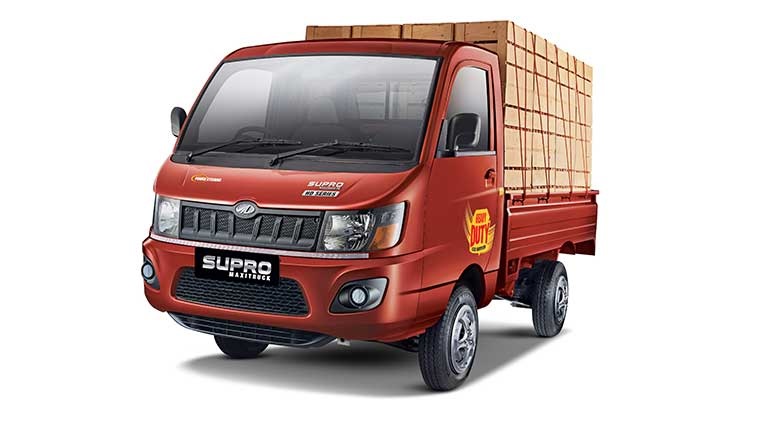
Mahindra & Mahindra sells e-supro, e-Alfa Mini, Jeeto, Jeeto Minivan, Supro MaxiTruk and Supro Mini Truck under its small commercial vehicle division.

“We are ready with the BS-VI line-up and will launch new products in the segment going forward. Also, we will expand the network rapidly in tier-I and tier-II cities” Nakra added.

Mahindra & Mahindra in FY18 created a separate vertical of small commercial vehicles business under which the brand sells three-wheelers, passenger carriers and load carriers below 2.5 ton and electric three-wheelers. With a team of 120 people, the vertical is headed by Satinder Singh Bajwa who is currently Vice President at Mahindra and Mahindra.

Industry experts believe Mahindra created a separate division for small commercial vehicles because the target customers for this segment are very different from the medium and large commercial vehicle buyers and the passenger vehicle customers.

Moreover, the competition is also getting aggressive with Maruti Suzuki expanding rapidly with its Super Carry, its light commercial vehicle offering. On the other hand, players like Bajaj Piaggio and TVS Motor are also planning to tap this segment with the segment leader Tata Motors also planning to consolidate the market with its next generations of ACE, Venture and Magic Express.

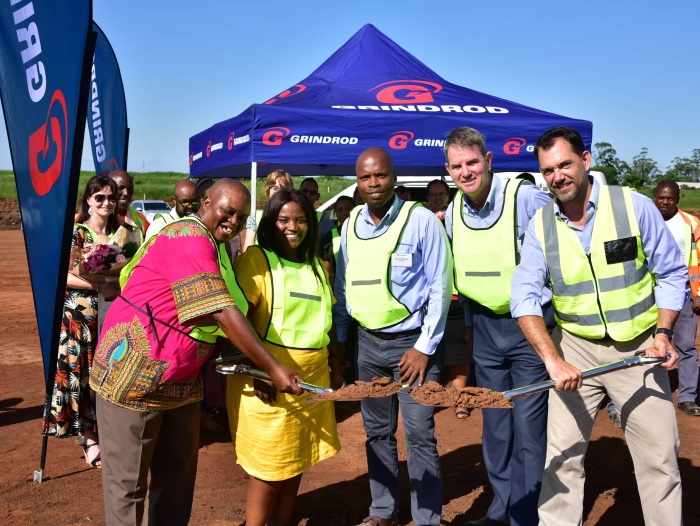
Grindrod breaks ground at the R 105 million Umlaas Road AutoPort Project


Grindrod Limited (Grindrod), the JSE listed freight logistics company, has commenced construction of a state-of-the-art AutoPort, just off the N3 in Camperdown. The 270 000sqm property is ideally situated between Pinetown and Pietermaritzburg. The Natcor rail link between Durban and Johannesburg runs adjacent to the property and provides for rail siding opportunities – for rail options both to and from the AutoPort. Transnet Freight Rail is making good progress on the integration works.

This first of a kind facility for finished vehicle logistics in South Africa includes reticulation for plug-in hybrid electric vehicles (EL/PHEV), metal roofing to mitigate fire and hail, fully equipped workshop and fitment centre, smart repairs facility, clearing and forwarding activities, bonded and duty paid storage, storage for trucks, light motor vehicles, and other rubber-tired vehicular equipment. Emphasis has been applied in respect of the ergonomic design of the facility to ensure efficient and effective vehicle flows.

Phase 1 of the development will accommodate the undercover storage of 2 400 vehicles and will be completed in the second quarter of 2020. Phase 2 will commence in the second half of 2020 and accommodate the storage of a further 2 300 vehicles.

Options to increase the capacity beyond the first two phases are in place and will be developed in line with market demand. These options will increase the capacity of the facility to accommodate a further 12 000 vehicles.

Grindrod understands the importance of moving towards a circular economy and has planned features such as solar panels, rainwater harvesting, wash water recycling and plastic recycling systems as part of its Vision 2025. Plastic wrappings removed from vehicles will be transformed into bricks and plastic roof sheeting and used in commercial applications.

Mayor Eric Ngcongo of the Mkhambathini Local Municipality said: “We are very pleased with this exciting development which will contribute to growth in the community. Thank you to the church leaders, members of the business forum and my esteemed colleagues for your support in this development and to our hosts from Grindrod for celebrating this milestone with us.”

Said Andrew Waller, CEO Grindrod Limited: “We are very grateful to Mayor Ngcongo and his municipality for enabling us to build this facility which will bring revenue and employment to the community. This investment in key infrastructure supports our strategic focus of ‘unlocking trade corridors’. Our management team has worked tirelessly and in collaboration with business partners to ensure that the design specifications provide our customers a unique competitive advantage and contribute to delivering a sustainable, cost-effective and efficient hub for strategic growth along this corridor.”

Tata Altroz scores 5 stars at global NCAP crash tests

0

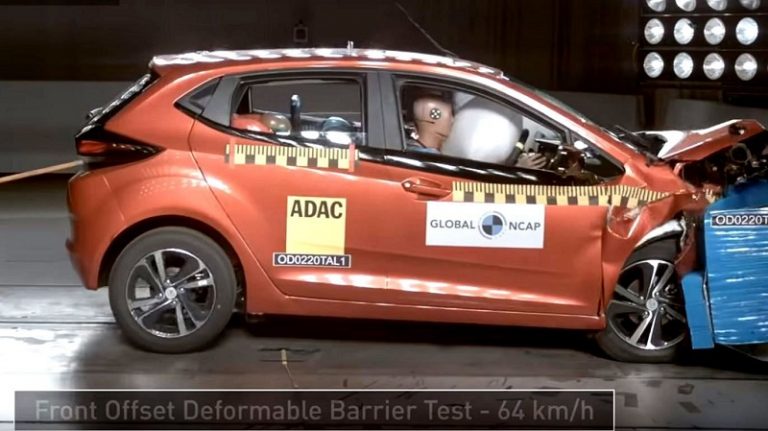
Tata Motors debut product in the premium hatchback segment, the Altroz bagged a 5-star rating at the Global New Car Assessment Programme (Global NCAP) crash tests in adult occupancy protection.

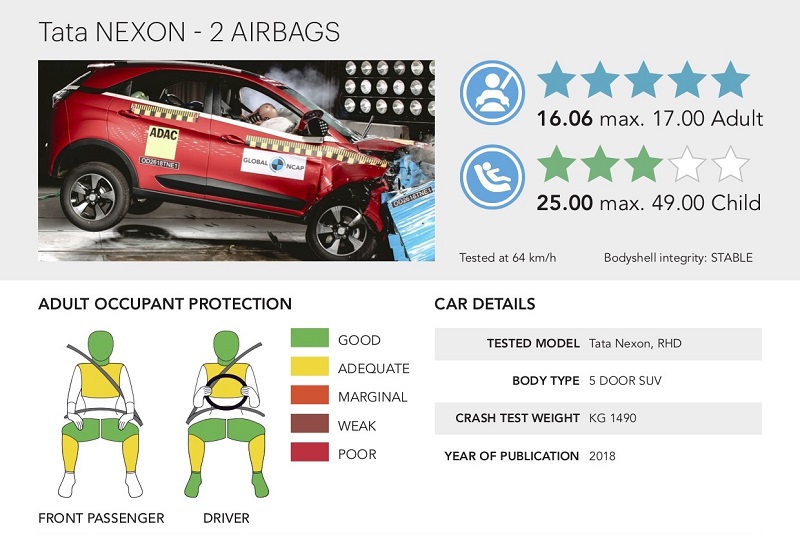
The car is only the second made-in India car to achieve the feat after the Tata Nexon. The Altroz scored solid 5 stars with 16.13 points out of 17 in adult occupant protection while in child occupant protection it got three stars with 29 points out of 49.

Also Read: Tata Motors commences deliveries of the Ace EV

Adult Occupants Protection

It comes with two standard frontal airbags, and testers rated its structure and footwell area as stable. Head and neck protection for adult occupants was good. Chest protection for both adults was adequate, as per the latest results of the new round of #SaferCarsForIndia crash test.

Child Occupant Protection

Child occupant protection showed good protection for the 18-month-old dummy while the three-year-old dummy, the backrest of the seat unlatched during the crash due to the load of the top tether which was a reason for a score reduction.

Also Read: Car Safety: Where Do We Stand with the Technology Evolution?

The three-star rating for child occupant protection also results from the head contact of the 3-year-old dummy with the car’s interior, the absence of three-point belts in all seating positions, and the inability to disconnect the passenger airbag.

Authorities introduced rigid requirements for full-frontal impact, offset-frontal impact, and side-impact for all newly launched passenger vehicle models after October 2017. The same requirements became applicable for all new cars on sale in India from October 2019.

Also Read: Tata focus on trucks manufacturing for Africa

He further added, “The Indian government’s minimum crash test standards are clearly eliminating any new zero-star cars from the market. We will continue working with them to ensure regulatory requirements push progress, while consumer awareness pulls demand for ever-higher levels of safety.”

Delivering Mobility Solutions

Expressing himself on the assessment result, Mr. Rajendra Petkar, President and Chief Technology Officer, Tata Motors, said, “Being an industry first in the hatchback segment in the country, this is in lockstep with our objective to deliver mobility solutions that possess advanced technological features alongside providing robust protection for the occupants. This achievement reflects our philosophy that vehicle safety should be accessible to all.”

Also Read: Tata Motors partners with Valvoline for passenger vehicle lubricants

“The engineering team, supported by the project function, the entire organization, and our supplier partners, worked relentlessly to earn the GNCAP 5-star rating for the Altroz. Together they delivered an excellent package consisting of outstanding structural integrity while using a “digital-first” strategy”, noted Petkar.

Bearings manufacturer NEI acquires European Kinex bearings


Indian bearings manufacturer and exporter, National Engineering Industries (NEI), a part of the CK Birla Group, has announced the acquisition of international bearings producer Kinex bearings through its wholly-owned European subsidiary.

The acquisition includes two production plants of international bearings manufacturer headquartered in Slovakia (Bytca and Kysucke Nove Mesto).

As per the release, the deal is in line with NEI’s strategy to augment its product portfolio, expand its geographic footprint as well as serve its existing customers better and acquire new customers.

Speaking on this development, CK Birla, Chairman of the CK Birla Group, said, “This is a proud moment for us as the Group continues to expand its presence in the global market. The Kinex acquisition equips NEI to enhance its scale and further diversify its portfolio with a much stronger position to provide the best in class products to both new and existing customers.”

Rohit Saboo, President & CEO, National Engineering Industries Ltd, said, “This acquisition is a significant step forward in NEI’s vision and global ambitions. We are excited to have the complementary product portfolio, skills and capabilities of Kinex and we firmly believe that we can leverage the synergies between both companies to chart an exciting path ahead for growth and engineering excellence. This deal positions NEI on the global map with an international manufacturing footprint and the advantages of a more efficient supply chain to serve our global customers.”

- Advertisement -