Monday, June 1, 2026
Home Blog Page 50

Vehicles above four years in Kenya set for mandatory inspections

0

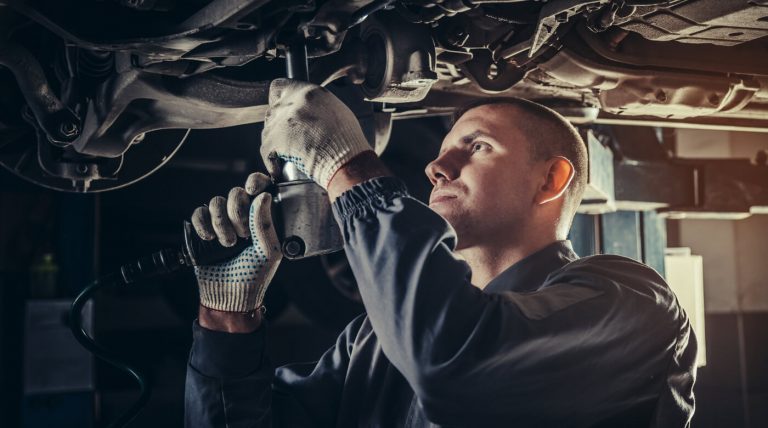
Motorists will have their vehicles subjected to mandatory inspection at a time to be determined by the transportation sector regulator, four years from the manufacture date if MPs pass proposed changes to the law.

The Traffic (Amendment) Bill seeks to empower the National Transport Safety Authority (NTSA) to determine the intervals within which cars exceeding four years from the date of manufacture will be inspected.

Currently, the law provides that every car more than four years old from the recorded date of manufacture shall be subjected to inspection by the Motor Vehicle Inspection Unit.

“Every vehicle that has been operated for a period exceeding four years from the recorded date of manufacture shall be subjected to inspection at intervals to be determined by the authority (NTSA),” the Bill states.

The NTSA inspects a motorcycle at Sh1,300, three-wheelers and vehicles up to 3,000cc (Sh2,600) while vehicles more than 3000cc cost Sh3,900.

Trucks of up to five tonnes cost Sh2,000 while those of more than five tonnes and heavy commercial vehicles pay Sh4,600 for inspections.

Private car owners pay between Sh2,000-Sh3,500 for the check-up, depending on the vehicle engine capacity.

Previously, the vehicle inspection fee was capped at Sh1,000 for all categories of vehicles, irrespective of type, size, and class.

The proposed law further gives the NTSA the power to hire private entities to conduct motor vehicle inspections on its behalf.

“An inspection under subsection…shall be conducted by the authority or persons authorised in writing by the authority,” states the Bill sponsored by Tiaty MP William Kamket.

There are only 17 Motor Vehicle Inspection Units in Kenya and the changes in the Traffic Act will see the NTSA designate persons or firms to conduct inspections on its behalf.

Last May, the NTSA said it would commence inspecting vehicles that are more than four years old from the date of manufacture on Kenyan roads.

The agency was to inspect all vehicles regardless of ownership in line with Section 16 (2) of the Traffic Act.

In 2019, NTSA issued tough rules on the motor vehicle inspection regulations to tame road carnage.

Tesla inks deal to get key battery component outside China


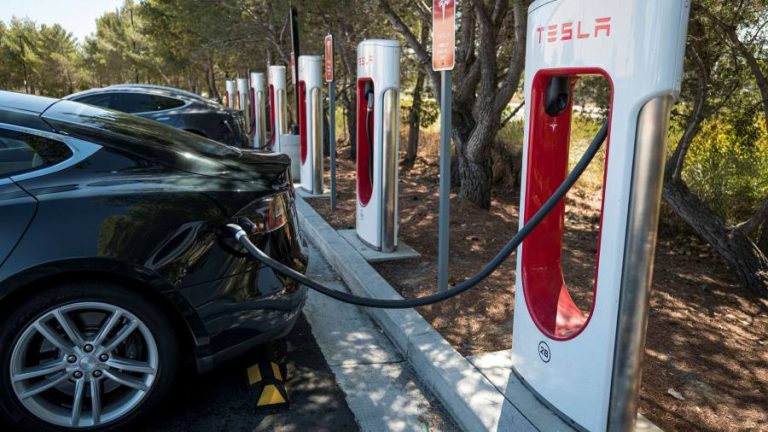
Tesla is turning to Mozambique for a key component in its electric car batteries in what analysts believe is a first-of-its-kind deal designed to reduce its dependence on China for graphite.

Elon Musk’s company signed an agreement last month with Australia’s Syrah Resources, which operates one of the world’s largest graphite mines in the southern African country. It’s a unique partnership between an electric vehicle manufacturer and a producer of the mineral that is crucial for lithium-ion batteries. The value of the deal hasn’t been released.

Tesla will buy the material from the company’s processing plant in Vidalia, La., which sources graphite from its mine in Balama, Mozambique. The Austin, Texas, electric vehicle maker plans to buy up to 80% of what the plant produces — 8,000 tons of graphite per year — starting in 2025, according to the agreement. Syrah must prove the material meets Tesla’s standards.

The deal is part of Tesla’s plan to ramp up its capacity to make its own batteries so it can reduce its dependence on China, which dominates global graphite markets, said Simon Moores of Benchmark Mineral Intelligence, a United Kingdom battery materials data and intelligence provider.

“It starts at the top with geopolitics,” Moores said. “The U.S. wants to build enough capacity domestically to be able to build (lithium-ion batteries) within the USA. And this deal will permit Tesla to source graphite independent from China.”

Moores said producing the batteries in the U.S. will reduce some of the questions Tesla is facing about its ties to China, where there are environmental concerns at some mines. The automaker also has set up a showroom in the region of Xinjiang, where Chinese officials are accused of forced labor and other human rights abuses against mostly Muslim ethnic minorities.

A message was left seeking comment from Tesla, which has disbanded its media relations department.

The battery industry has been confronted with a short supply of graphite in recent months, Moores said. Graphite stores lithium inside a battery until it’s needed to generate electricity by splitting into charged ions and electrons.

It comes as every major automaker is racing to get into electric vehicles amid concerns about climate change.

Tesla is making almost 1 million electric cars a year, and sourcing enough batteries is its biggest constraint, he said.

“They’ve upped their own battery manufacturing capacity,” Moores said, but still “they can’t get enough batteries.”

A new battery factory that the company is building in its new hometown of Austin will enable it to get closer to self-sufficiency, but Moores said it is still buying batteries from other manufacturers, “and that won’t change this decade.”

For instance, Tesla has a deal with Panasonic to make battery cells at the automaker’s battery factory near Reno.

The deal with Syrah is part of a broader effort by automakers to secure relatively scarce raw materials for batteries as demand for electric vehicles is expected to grow, said Sam Abuelsamid, principal e-mobility analyst for Guidehouse Insights.

The deal also brings the graphite processed in Louisiana much closer to Tesla’s U.S. factories.

“The pandemic pointed out to us that we’ve got these long, long, long supply chains, and it doesn’t take much to disrupt a supply chain,” said Donald Sadoway, a professor of materials chemistry at MIT. “Somebody could all of the sudden say, ‘We’re going to jack up the prices,’ or ‘We’re going to refuse to ship it.’”

It’s unlikely that the Tesla deal with Syrah will rankle the Chinese government because China has plenty of markets for its graphite, including increased domestic electric vehicle production, Abuelsamid said.

China, though, is Tesla’s biggest global market. It has a giant factory near Shanghai and sells about 450,000 vehicles a year there, compared with about 350,000 in the U.S., Abuelsamid said.

For the Australian mining company, the deal is crucial because it has a non-Chinese purchaser for its graphite product, Moores said.

Syrah’s graphite mine in Mozambique’s northernmost province, Cabo Delgado, is one of the world’s largest, with an ability to produce 350,000 tons of flake graphite a year.

Cabo Delgado has faced violence in recent years by Islamic extremists, an insurgency that has recently extended inland from coastal areas toward the neighboring Niassa province.

The mine is on the main road connecting the Cabo Delgado and Niassa provinces, a thoroughfare that has been recently upgraded by a Chinese contractor. At a ceremony to reopen the road in December, President Filipe Nyusi called for vigilance so the road isn’t used by insurgents.

IVECO BUS renews its partnership with SOTRA in the Ivory Coast, highlighting its commitment to sustainable mobility in Africa


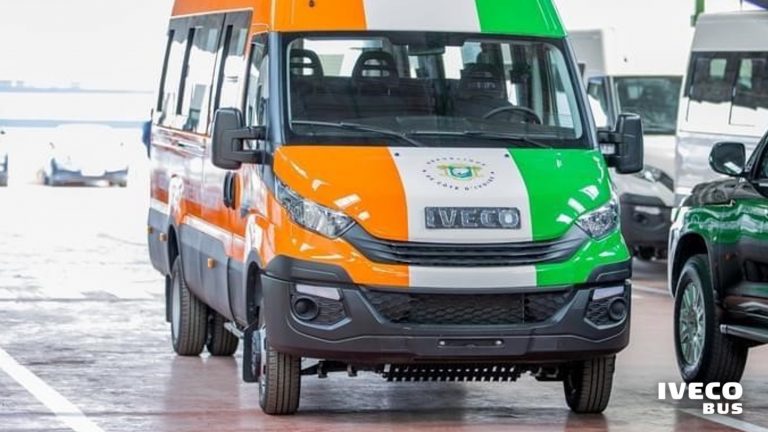
A Daily minibus assembly line at the SOTRA INDUSTRIE plant in Koumassi, near Abidjan, started production early this year, making the Ivory Coast the first country in Africa to have a minibus assembly line. The project, which began in 2018, is the most recent outcome of a collaboration between IVECO BUS, an Iveco Group brand and leading manufacturer of buses and coaches, and SOTRA (Société des Transports Abidjanais), the public transit provider for Abidjan and its suburbs, that started nearly 40 years ago.

The inauguration ceremony took place on Monday 10th January and was attended by the Prime Minister of Ivory Coast, his Excellence Patrick Achi, senior representatives of the Ivorian Government, as well as the Italian Ambassador, Arturo Luzzi, and Stéphane Espinasse, Head of Sales & Products, IVECO BUS.

The new plant ‒ which has an annual production capacity of 1,000 units and employs 500 people ‒ will manufacture the Daily Minibus, specially renamed “Daily Ivoire”, which can have from 16 to 26 seats. The first 60 Daily Ivoire minibuses have already rolled off the production line, powered by natural gas engines from FPT Industrial, another Iveco Group brand and a renowned leader in propulsion technologies. The minibuses are destined for the Ivory Coast market and for export to other African countries, starting with Western and Central Africa.

This contributes to the Ivorian Government’s extensive programme for modernising the transport supply and diversifying the national economy through industrialisation. The new minibuses, which will use alternative, environmentally friendly propulsion, also highlight our continued commitment to sustainable mobility in Africa, a core region for IVECO BUS.

PPG expands automotive OEM coatings production in Germany

0

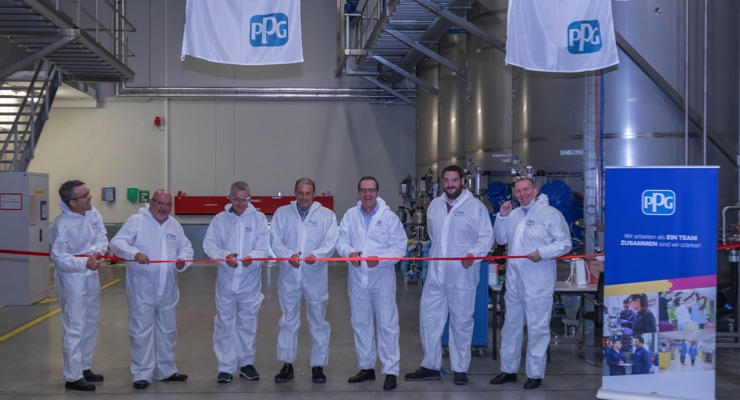
PPG has announced that it will invest more than USD 10 million (EUR 9 million) to expand production of automotive original equipment manufacturer (OEM) coatings at its site in Weingarten, Germany.

Expected to be complete in the second quarter 2022, PPG is constructing a 10,000 square foot addition to its existing facility with a capacity to produce more than 5,000 metric tons of waterborne basecoats per year.

Waterborne technology replaces the solvents found in traditional basecoats with distilled water. This project is part of a series of investments PPG is making in its automotive OEM coatings production in Europe, including expanding basecoat production at its site in Valladolid, Spain, and the recently announced expansion of its clearcoat production in Erlenbach, Germany. According to the company, these investments will help PPG lower its operational carbon footprint in total by more than 1,000 metric tons of CO2 equivalent per year.

“Particularly strategic site”

“This is an important investment to strengthen our production capabilities in Europe and to ensure that we are leveraging our industry-leading waterborne technology to drive downstream sustainability, helping our customers meet their sustainability goals,” said Roald Johannsen, PPG vice president, automotive OEM coatings, Europe, Middle East and Africa. “Weingarten is a particularly strategic site due to its proximity to several of our key German OEM customers.”

Tech firm CEO predicts automotive lidar technology is about to go mainstream

0

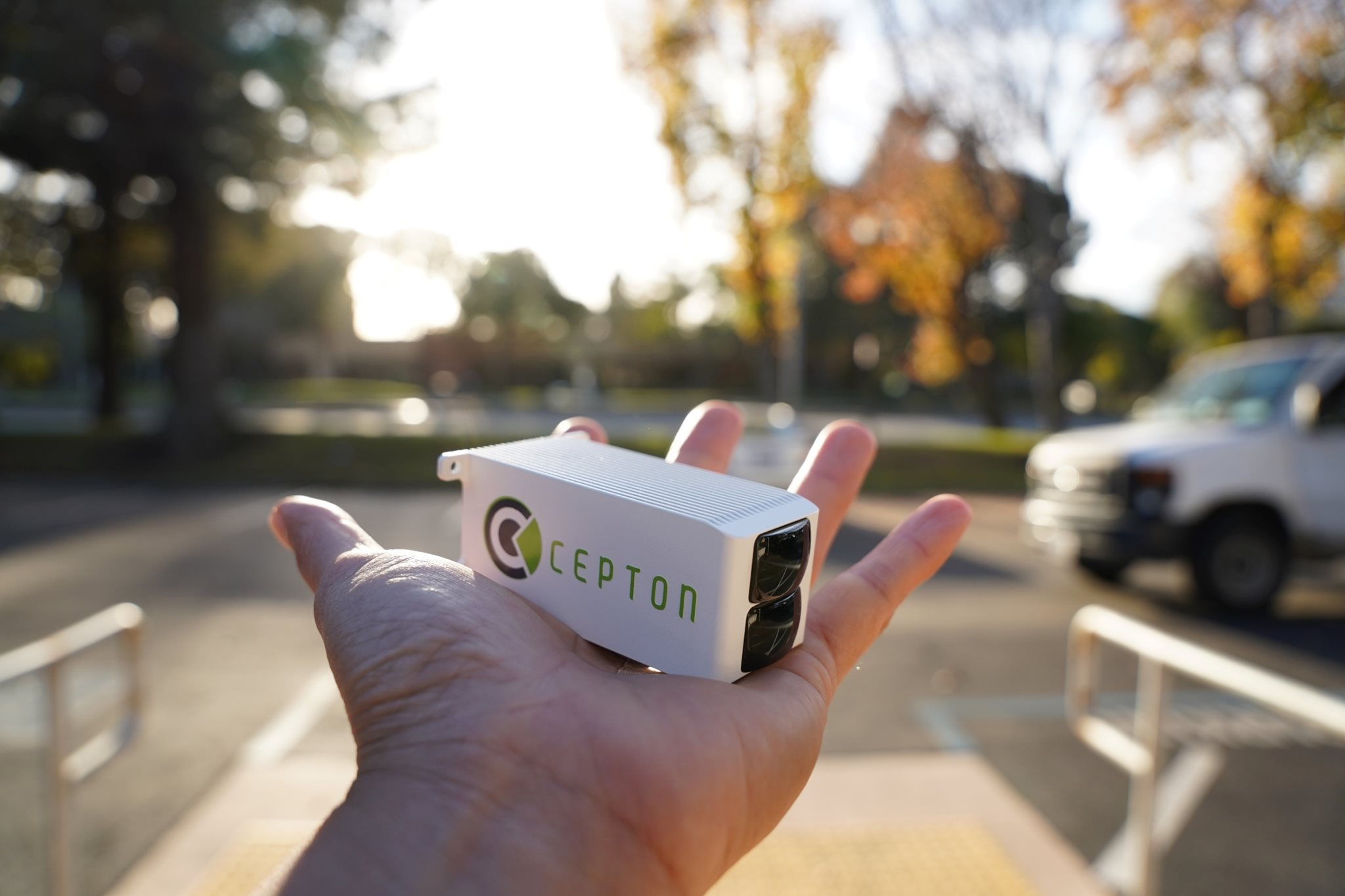
For a variety of reasons, automotive use of lidar has been limited to a handful of premium vehicles. General Motors’ Ultra Cruise, an advanced driver assistance system (ADAS) technology that will debut on select production models in 2023, will represent lidar’s breakthrough into the mainstream, according to the CEO and co-founder of the California-based tech firm picked by GM to supply the units.

Jun Pei, CEO of Cepton

Jun Pei said the sole-source agreement between his company, Cepton, and GM calls for the use of lidar in four models initially, and then an additional four in 2023-24. “These models will cover certainly luxury sectors, as well as the main classes” of vehicles, Pei said in an interview with Repairer Driven News.

Beyond the upcoming Cadillac Celestiq, a flagship EV, GM has not yet identified which of its models will be available with lidar. To date, only EV startup Lucid has offered lidar-equipped vehicles to North American buyers. European and Asian automakers, including Audi, Mercedes-Benz, Volvo and Honda, have incorporated the technology into a few high-priced vehicles.

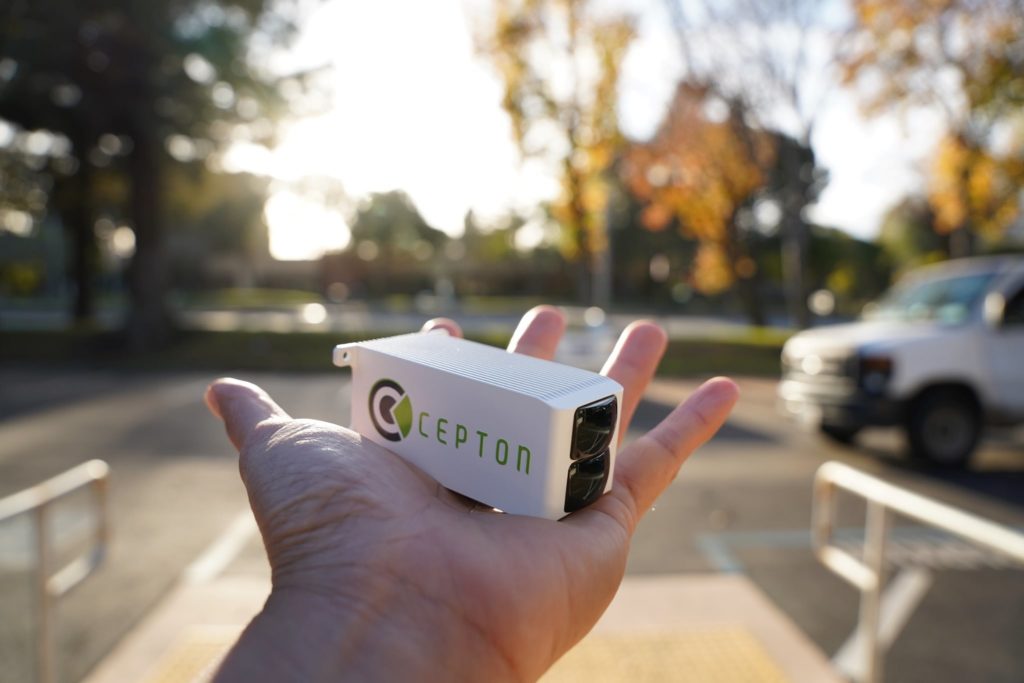
Cepton, founded in 2016, has partnered with Japanese lighting manufacturer Koito to bring its units to market. Cepton is providing its technology and certain components to the Tier 1 manufacturer, which is supplying the sensors to GM.

While GM has touted the semi-autonomous driving capabilities of Ultra Cruise, made possible by the use of lidar, Pei noted that the primary function of lidar is to provide added safety.

“The first point of doing that is not to have the collision and repair. And that’s trying to avoid the accident, reduce the number of accidents. That’s where lidar comes in,” he said.
GM has said that Ultra Cruise will ultimately make hands-free travel across most of the U.S. and Canada possible. It will launch covering more than 2 million miles of paved roads, the OEM said in a November announcement.

Ultra Cruise, like Tesla’s Autopilot, provides Level 2 autonomy. Though the car is capable of driving itself in many cases, the motorist must keep their eyes on the road and be ready to take over.

ADAS systems on vehicles offered for sale in North America use radar, cameras or some combination of the two to provide a vehicle’s computer with information about what’s going on around the vehicle.

Both have their shortcomings, which is why they’re often used to complement one another. Radar works in poor weather, and is highly capable of relaying the exact position of objects in a vehicle’s path, but it has low resolution. Cameras can provide excellent optical resolution, but don’t have the ability to determine how far away an object might be, and don’t operate well in bad weather or at night.

Lidar, which stands for “light detection and ranging,” works by firing a beam of laser light at an object, and then capturing the reflection of that beam. Its strengths — excellent performance in bad weather, an ability to detect objects and precisely measure their distance from the vehicle — make it a desirable addition to cameras and radar.

“They work in concert,” Pei said. “A camera can have a very high definition — you can tell the difference between a pig and a dog. All of those details can be seen. But it doesn’t tell you if it’s a big dog far away, or a small dog very close to you.

“But lidar cannot tell you red from green, so it doesn’t know the traffic light color,” he added. “So these are complementary features.”

“I’m a true believer in the fusion of lidar, radar and cameras,” Pei said. “They will all exist in the future of cars.”

What makes widespread lidar adoption possible at this moment, Pei said, are a number of factors specific to Cepton’s products. One major factor is that the units are the first engineered to work mounted behind a windshield, a position that makes the technology easy to incorporate into a variety of vehicles.

Some OEMs have chosen to mount their lidar units in a vehicle’s grille, where they’ve vulnerable to collision damage. That has the potential to increase the severity of a crash. “Lidar is not a cheap device to replace and repair, not to mention about the calibration, the alignment and all of those things. It’s not simple, it’s a very sophisticated optical instrument.”

GM’s lineup of passenger cars, trucks, crossovers and SUVs “can be very different in terms of aesthetic design — the styling would be very different from one car to another. If you design your sensor into the bumper or the front grille, every car design has to be different in that you have to accommodate these differences,” he said.

“But if you could put it behind the windshield, it turned out that many cars, many more car models share exactly the same windshield, or very similar windshields. So that gives the portability of this technology, or portability of Ultra Cruise — makes it so much easier. That makes the technology adoption of going from luxury sectors all the way down to the middle classes a very easy path.”

Pei said developing a lidar unit that can work behind glass was no simple task. “This was actually one of the huge factors,” he said. “Cepton was the only lidar company that could resolve all of the technical difficulties behind implementing behind the windshield.”

Part of the development work, conducted by Cepton, Koito and GM, was the development of special glass that would allow the lidar unit to “see.” “It’s a three-way investment into this effort before we came up with something that can be proliferated practically to all the platforms in the GM ecosystem,” Pei said.

The specialized design of the windshield, which includes the use of coatings, means that it will be vital for the correct glass to be used when a windshield has to be replaced.

Lidar units are becoming less expensive to make, and that’s another factor contributing to the technology’s adoption. “Cepton’s long-range lidars are currently in the low $1,000s range and, over the next five to six years, Cepton expects that these prices could drop to the $500-600 range,” the company said in a filing with the Securites and Exchange Commission. “For near-range lidars, Cepton expects high volume ADAS target pricing to be in the $100 range within a few years.”

Cepton filed with the SEC because the privately held company is planning to trade publicly, with an initial public offering (IPO) this January or February, Pei said. The plan involves a SPAC merger with Growth Capital Acquisition Corp.

Cepton’s units employ Micro-Motion Technology, which it calls “a rotation-free, mirrorless and frictionless technology that balances outstanding performance, high reliability and low cost, which are the three key factors integral to delivering mass-market ADAS lidar.”

“A few hundred [dollars] is actually a nice entry point for this adoption into the masses,” Pei said. While the questions of price points and which specific vehicles will be given the technology are for the OEM to answer, GM does not intend to restrict lidar to its more expensive vehicles, he said.

The good news for collision repairers who may be seeing many more lidar-equipped vehicles rolling through their doors in the coming years is that Cepton and GM have not forgotten about their needs.

“Even from the very beginning, when this new optical instrument was being designed into a vehicle, the repair and recalibration process was being considered extensively,” Pei said. The lidar “strikes the balance between performance, cost and reliability, and the same thing goes with the repair…. That was certainly very well considered early in the process.”

Pei said said the technical details of how the units will be calibrated is “shrouded in the confidentiality [agreement]” with GM. But he did offer a vision of a self-calibrating unit, technology that he said is “within reach.”

He drew a parallel with camera calibration, which has relied on the “old-fashioned” method of placing a specially designed target at a certain distance from the vehicle. With the development of artificial intelligence and machine learning, he said, it becomes possible for a sensor to calibrate itself, given 10 miles or so of driving.

“So the only thing that the computer cannot do is to mount the sensor on the windshield, which involves a person,” Pei said.

Besides GM, there may be many more OEMs using Cepton’s technology in the relatively near future. In its SEC filing, the company said it is engaged in discussions with all of the 10 largest OEMs in the world, as well as with four new EV OEMs.

Ford Motor Co. has also been working with Cepton, evaluating the company’s lidar sensors for its ADAS research and development, possibly for a semi-autonomous successor to Ford’s BlueCruise ADAS system that could compete with Ultra Cruise.

Ford has also partnered with Cepton on its “smart cities” program. Sensor pods using Cepton lidar units are being tested with the Argo AI automated vehicle fleet in Miami.

Credit: DRIVEN COMMUNICATIONS Inc.

Arizona Automotive Institute launches New Construction & Trades Management Program


A recent ECMC Group national survey of high school students shows that 22% are more likely to attend a career and technical college because of the pandemic, up 10 points from May 2020. To help meet this growing need, the Arizona Automotive Institute (AAI) has launched a new Associate’s degree program in Construction & Trades Management to provide students with relevant training to develop the skills to become a professional in the field of construction project management.

The survey also found that more than half of those students believe a skills-based education is more applicable in the current environment, partly due to lower institutional costs and a shorter timeline to enter the workforce. As part of the 18-month AAI program, students learn how to plan and direct projects, meet with owners, examine a work breakdown structure (WBS), supervise crews and negotiate with subcontractors.

“Our Construction & Trades Management Program gives students other avenues of interest to explore, ” said Bill Myers, National Program Director for Trades Programs at Ancora Education. “It’s an excellent path for them to develop project management skills in a safe classroom setting with passionate instructors who can help shape our future leaders. By gaining training at AAI, students are able to walk into real-world situations with confidence.”

AAI is working with NCCER, a leading accreditation agency for the construction industry, so students graduate with industry-recognized credentials that can help in job searches. AAI’s program integrates NCCER‘s Project Management and Project Supervision curricula and topics with AAI instructors leading the course work.

Arizona Automotive Institute does not guarantee third-party certification. Certification requirements for taking and passing certification examinations are not controlled by AAI but by outside agencies and are subject to change by the agencies without notice to AAI. Therefore, AAI cannot guarantee that graduates will be eligible to take certification examinations, regardless of their eligibility status upon enrollment.

About Arizona Automotive Institute
Arizona Automotive Institute (AAI) offers training programs in Automotive Services, Large Equipment and Vehicles, HVAC and Basic Refrigeration, and Welding, plus a Construction & Trades Management Associate’s degree program. Graduates have access to Career Assistance which includes guidance from our Career Services team, resume updates, workshops and more. Financial aid is available for those who qualify. Learn more at www.aai.edu.

About National Center for Construction Education
NCCER is a not-for-profit 501(c)(3) education foundation created by the construction industry to develop standardized curriculum and assessments with portable credentials and certifications for skilled craft professionals. NCCER provides a comprehensive workforce development system that includes accreditation, training, assessment, certification and career development solutions for the construction and maintenance industries. For more information, visit www.nccer.org or contact NCCER customer service at 888.622.3720.

Nissan unveils Nissan Intelligent Factory

0

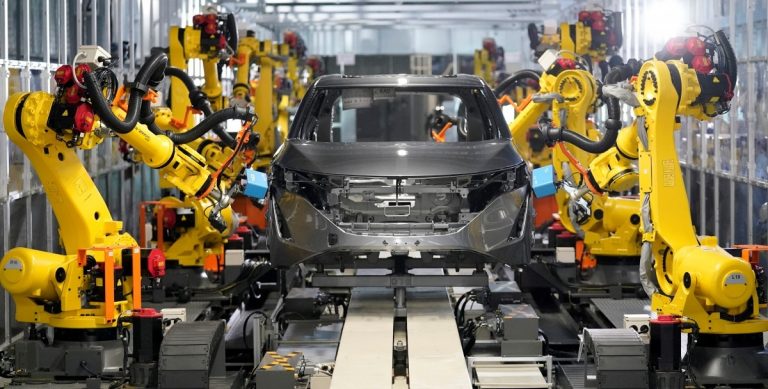
Nissan unveiled a production line at its Tochigi Plant featuring the Nissan Intelligent Factory initiative. This unique initiative supports the manufacture of next-generation vehicles using innovative technologies and contributes to the realization of carbon neutrality. Nissan also announced a roadmap to achieve carbon neutrality by 2050 at its production plants around the world.

Hideyuki Sakamoto, Nissan’s executive vice president for manufacturing and supply chain management, said, “The automotive industry is in a period of great change, and solving the global challenge of climate change is urgent. We see this as an opportunity to build the strength of monozukuri (manufacturing), a part of our DNA, to develop and apply innovative technologies to overcome the challenges we face.”

Nissan Intelligent Factory
Since its foundation, Nissan has honed its ability to manufacture vehicles through high quality and highly efficient production processes and the superb skills of the company’s takumi (master technicians). However, the business environment surrounding manufacturing is undergoing major changes. In Japan, there is a need to break away from conventional labor-intensive manufacturing to cope with an aging society and serious labor shortage. Unforeseen situations, such as climate change and pandemics, also need to be managed. At the same time, industry trends in electrification, vehicle intelligence and connected technologies are making vehicle structure and functionality more advanced and complex.

Nissan introduced the Nissan Intelligent Factory initiative at its Tochigi Plant to respond to these needs and trends. Nissan Intelligent Factory enables Nissan to:

  1. Use robots that have inherited the skills of takumito manufacture next-generation vehicles; of the highest quality,
  2. Create an improved environment where a wide range of people can work comfortably, and;
  3. Realize a zero-emission production system, thereby accelerating efforts to achieve a decarbonized society.

Tochigi Plant is scheduled to start production of the all-new Nissan Ariya crossover electric vehicle this fiscal year.

Achieving carbon neutrality
Nissan aims to achieve carbon neutrality across its operations and the life cycle of its products by 2050 1. The company aims to realize carbon neutrality in manufacturing by promoting innovations to support higher productivity in vehicle assembly, starting with the Nissan Intelligent Factory initiative, and by improving energy and materials efficiencies at plants. Plant equipment is to be fully electrified by 2050 by introducing innovative production technologies and by reducing energy use. To achieve carbon neutrality at production plants, all electricity used will be generated from renewable energy sources and or generated with onsite fuel cells that use alternative fuels.

“By rolling out the Nissan Intelligent Factory initiative globally, starting at the Tochigi Plant, we will more flexibly, efficiently and effectively manufacture next-generation vehicles for a decarbonized society. We will also continue to drive innovation in manufacturing to enrich people’s lives and to support Nissan’s future growth,” said Sakamoto.

1. “Life cycle” includes raw material extraction, manufacturing, use, and the recycling or reuse of end-of-life vehicles.

Nissan celebrates #BuiltOfMore Navara’s launch into Africa


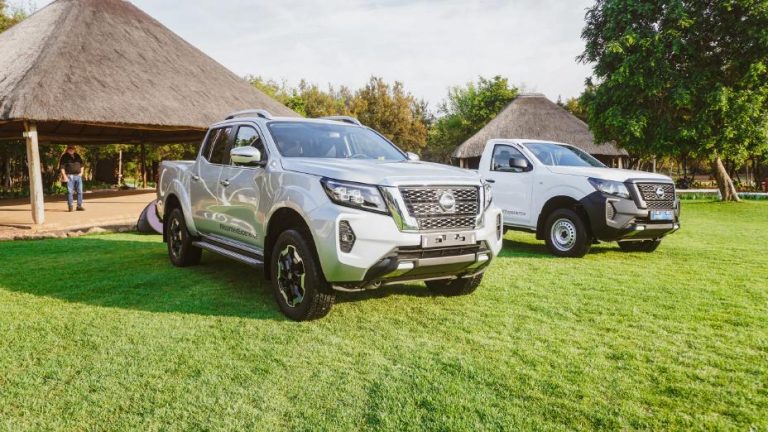
Nissan’s all new Navara has been shipped into Africa, completing the latest milestone in a journey that began earlier this year with the start of production for the vehicle in the company’s Africa’s LCV manufacturing hub in Rosslyn, outside Pretoria, in South Africa.

The vehicle, which is the toughest vehicle that Nissan has ever made, is packed with Nissan Intelligent Motoring features yet built to withstand severity level 56, an in-house metric which describes the most extreme driving conditions in the world – a standard which applies to many countries in the continent.

Addressing selected senior South African and Pan African journalists at a function in Hartbeespoort in South Africa’s North West province this week to show off the Nissan Navara family range and its capabilities, Nissan Africa managing director Mike Whitfield, said the company was committed to building on its 60-year heritage on the continent by bringing a vehicle made in Africa for Africa to Africa while working with governments who wanted to create their own sustainable automotive industries.

“Africa is the last automotive frontier,” he said, “with a motorisation rate of 42 vehicles per 1 000 people, against the global average of 182. India with a similar population and GDP per capita sold 4.4-million vehicles in 2018, as against Africa’s 1.3-million.

“An African automotive industry could sell 5-million vehicles a year by 2050, but most of all could be the greatest catalyst for the implementation of the African Continental Free Trade Agreement, signed in January this year, which will create the largest trading bloc in the world.”

Nissan’s sales director for Sub Saharan Africa Hide Kuwayama agreed, saying Nissan Africa was very excited about the progress of Ghana’s first ever Nissan assembly plant which will be the most modern and most advanced in West Africa when it goes into production early next year.

“Sub Saharan Africa has four of the fastest growing economies in the world this year. The greatest challenge is the grey market, where 80% of the fleet of vehicles on the continent are imported second hand and are not designed for African conditions.

“Our all new Nissan Navara, the best we have ever made, is literally built of more: it hasn’t just been tropicalised, it has a reinforced chassis, the suspension is different and the roll over angle is the best in the market.

Nissan marketing director Stefan Haasbroek said the design of the all new Navara had focused on four pillars: rugged and tough, utterly capable; value for money with high levels of safety across all models; Nissan’s legendary smart technology; and, exceptional drive comfort.

“We recognised that the Navara will be bought both by fleets and by individuals so this is a vehicle that is as useful working on the road during the week as it is for relaxing at the weekend. It was designed to appeal as much to the man on the building site as it is for the high-flying corporate mom doing the sports run with her kids and living her best life. It literally is built of more.”

Nissan Motor Company invested R3-billion to upgrade the Rosslyn plant to become the home of the all new Navara, said Nissan South Africa managing director Kabelo Rabotho, creating jobs, extending the life of the plant and meeting an ambitious 40% local content at the start of production with higher levels in future.

Nissan has the unique distinction of all OEMs on the continent of having an assembly plant in South Africa and one in Egypt. It was the first mover in West Africa, when it began assembling in Nigeria in 2013, with Ghana now due to begin production early next year.

“With three regional general managers to focus on East, West and Central Africa, the company is well placed to create mobility solutions for Africa, by Africans in Africa,” said Whitfield, “developing local talent and creating jobs and wealth and make the 21st Century, the African Century.”

Next-generation Toyota Aygo to be reintroduced as a small crossover


The next-generation Toyota Aygo is due for a release now that the current generation model is nearing the end of its seven-year life-cycle. While not all too successful in South Africa, the Aygo has been massively popular in the European market. Within its segment, the micro Japanese hatch is the third best-selling competitor.

According to Automotive News Europe, the Japanese brand may want to capitalise on this success by making the next-generation Toyota Aygo a small crossover. Although this is akin to the Fiat Panda and Suzuki Ignis, European regional CEO Matthew Harrison describes this as a “new A segment vehicle.”

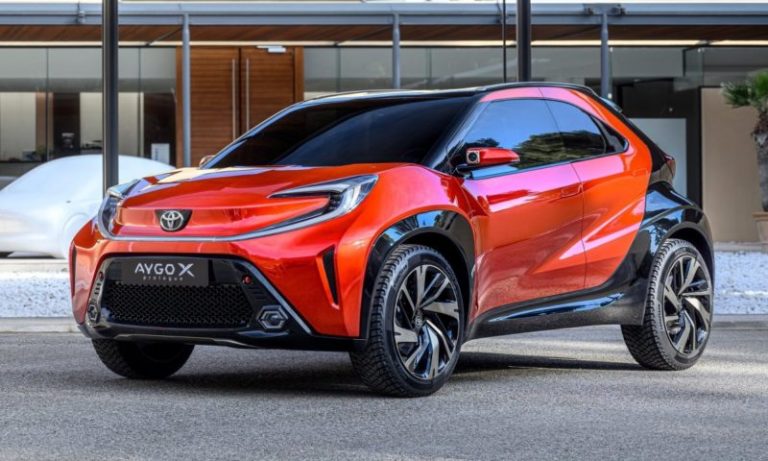
What we can expect to see for the next-generation Toyota Aygo is a product that falls in line with the Aygo X Prologue concept that was revealed in March this year. This design study proposed a higher ground clearance than the current product but it would still be lower than the two aforementioned competitors.

Like the current Toyota Yaris and Yaris Cross, the next-generation Toyota Aygo will be based off the GA-B flatplan of the TNGA platform. We can expect to see a production ready example within the coming months.

Production will start by the end of this year in Kolin, Harrison added. The Kolin plant is also going to start assembling the Yaris, which is currently built at Valenciennes, northern France.

“This is probably the most important six months in the history of our local production in Europe,” he said.

Furthermore, PSA will be withdrawing its Citroen C1 and Peugeot 108 from the joint venture as it has no plans to replace these models. These products were also assembled at Toyota’s factory in Kolin, Czech Republic. This marks the end of a 16 year relationship between the Japanese and French manufacturers.

In South Africa, the Toyota Aygo was replaced with its Pacific Asian-built sibling, the Agya, as a more affordable alternative.

EV startups hunt for low-cost roads to mass production


Electric car and van startups racing to become the next Tesla Inc all want to avoid Elon Musk’s journey through “manufacturing hell.” But electric vehicle firms such as UK van company Arrival SA and Fisker Inc are taking very different roads to overcome the challenges of profitable mass production that almost broke Tesla.

A few have found investors willing to hand over billions to fund their journey. Rivian has raised around $10.5 billion from Amazon.com Inc, Ford Motor Co and others as it ramps up production to build electric vans, pickups and SUVs.

Startups lacking Rivian’s wads of cash need cheaper paths to mass production or risk failing in the EV arms race – a danger Musk highlighted repeatedly on Tesla’s July 26 earnings call.

“The thing that’s remarkable is that Tesla didn’t go bankrupt in reaching volume production,” Musk said.

During 2017 and 2018, Tesla struggled to ramp up volume production of the Model 3 sedan, with the then loss-making automaker burning through cash as it contended with an over-reliance on automation, battery issues and other bottlenecks.

It even built a new line in just two weeks in a huge tent outside its Fremont, California, factory to meet its production targets.

The traditional approach taken by many automakers over the years has been to spend above $2 billion on a factory big enough to build 240,000 vehicles or more annually.

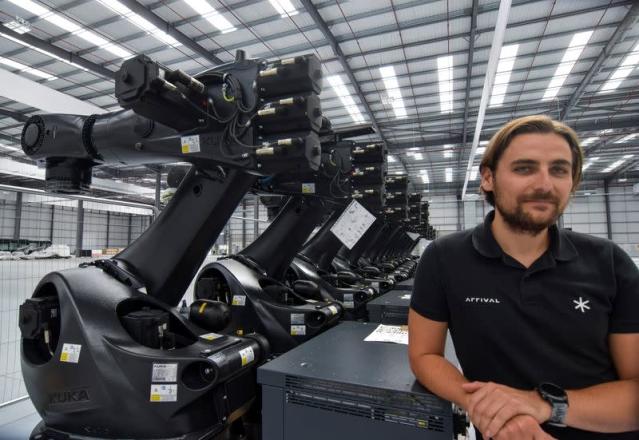
Arrival has opted instead to build electric van and bus “microfactories” – small plants costing $50 million that are light on expensive equipment. Arrival does not need paint shops – which can cost hundreds of millions of dollars – because its vans are made of lightweight coloured plastic composite.

Arrival plans microfactories close to major customers around the world, cutting shipping costs and hiring local workers.

“You have to raise so much money to do this the traditional way that it keeps startups from coming forward with new ideas,” said North American head Mike Abelson – a former General Motors Co executive.

Arrival raised about $660 million from its March public offering and is building two US plants: one in North Carolina making vans for United Parcel Service Inc, its largest customer to date, plus another in South Carolina that will make buses.

In addition, it is building a factory in Spain. Abelson said Arrival will announce more plants later this year.

Arrival’s first microfactory in Bicester, England, will serve as the blueprint for other plants. The lack of a paint shop is just one of the ways in which the company will steer clear of big-ticket items that traditionally have defined automotive production.

The startup’s engineers have built moulds for plastic body panels costing thousands of dollars versus the millions of dollars needed for a traditional metal die. Arrival’s engineers have also designed their own moulding machines.

Abelson said Arrival needs around 70 robots per microfactory and the startup is buying only commonly used, generic robots from long-time auto industry suppliers Kuka AG and Italy’s Comau – eschewing expensive made-to-order robots. Comau is owned by automaker Stellantis NV.

Robots are programmed to do double or triple duty. In a large traditional car plant, if you need to apply adhesive at different points during assembly you add more adhesive stations along the line to churn out a vehicle per minute.

But in Arrival’s microfactory there will be one adhesive station and autonomous wheeled robots, designed in-house, will carry a chassis back and forth throughout the assembly process.

Going small means that Arrival can commit to 10,000 vans annually per plant rather than 100,000, Abelson says. Each microfactory will create around 250 jobs, nowhere near the many thousands created by a large auto plant in the past.

“That means if a plant doesn’t work out, it’s not a disaster for a local economy,” Abelson said. “A major car plant closing is a big hole to fill.”

Electric vehicle maker Canoo Inc has adopted a similar strategy to Arrival’s. But CEO Tony Aquila said Canoo will build a “mega-microfactory” to serve as a hub for smaller future factories.

Electric Last Mile Solutions plans to launch a small electric van in the United States later this year and at first will reassemble prefinished vehicles made in China at a former GM plant in Mishawaka, Indiana, adding new seatbelts and other safety features to meet US regulations.

CEO James Taylor said this will initially save hundreds of millions of dollars on stamping dies and body shop welding equipment. As revenue grows it will incorporate more American parts over time.

“We’ll work our way backwards, adding more and more local content as we go,” Taylor said.

Other startups are outsourcing manufacturing to cut costs.

Tel Aviv-based REE Automotive Holding Inc is leaning in to agreements with American Axle and Mitsubishi Motors Corp to help build its electric platforms for delivery vehicles and people movers at scale.

“The biggest challenge for new players like us is at the end of the day you need to manufacture at automotive grade and automotive scale,” said REE Automotive CEO Daniel Barel. “With us, everything already comes at automotive scale because it’s American Axle or Mitsubishi.”

REE and Fisker also have both teamed up with Canadian auto supplier Magna International Inc to build their EVs, while Fisker has a similar agreement with Taiwan’s Foxconn Technology Co Ltd.

Contract manufacturing deals reduce upfront costs, in return for Magna or Foxconn taking a cut of revenue and potential profits. Henrik Fisker, chief executive of the EV startup that bears his name, said the alliances should also help secure equipment and parts at a time when supply chains are snarled.

“Foxconn and Magna, they will get all the equipment they need,” said Fisker. “They have the capital. They have the reputation. We are not here to set up our own factory in the desert.”

Credit: The Daily Star

- Advertisement -