

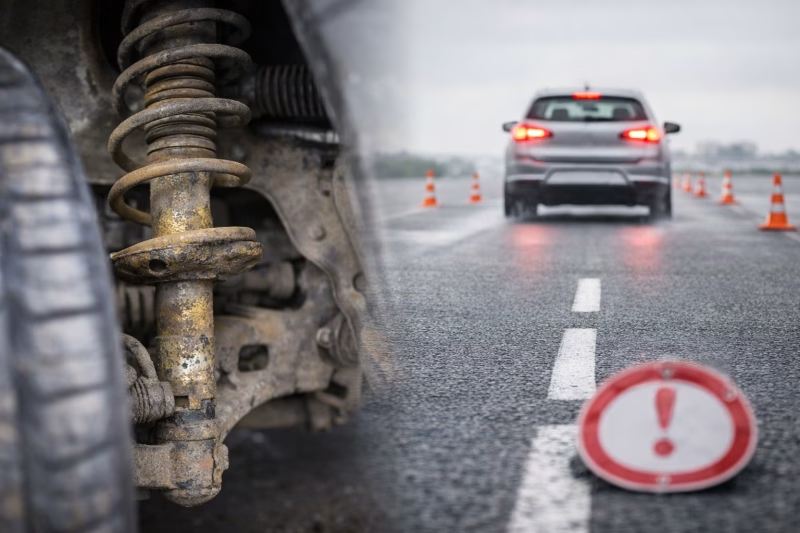
Most drivers associate braking performance with tyres, brake pads, or discs. Yet worn shock absorbers can increase braking distance by up to 20%. On busy highways, wet roads, or emergency situations, that extra distance can be the difference between a near miss and a serious crash. In each scenario, worn shock absorbers significantly affect stopping ability.
Why Shock Absorbers Matter During Braking
Shock absorbers play a critical role in braking safety. They control how a vehicle’s weight shifts when the driver hits the brakes. When shocks work properly, they keep the tyres pressed firmly against the road. This contact allows the braking system to operate at full efficiency. When shocks wear out, that control weakens. Importantly, the presence of worn shock absorbers directly undermines braking safety.
Weight Transfer and Loss of Tyre Contact
During braking, a vehicle’s weight transfers forward. Healthy shock absorbers manage this movement smoothly. Worn shocks allow excessive nose-diving and wheel bounce. As a result, tyres lose consistent contact with the road surface. Even brief loss of contact reduces grip. If the car has worn shock absorbers, stopping distance increases.
Rough Roads Make the Risk Worse
The problem becomes worse on uneven or rough roads. Potholes, corrugated surfaces, speed bumps, and gravel cause tyres to skip and rebound when shock absorbers cannot dampen movement effectively. In these moments, braking force becomes inconsistent. The driver presses the brake pedal, but the tyres cannot fully transmit that force to the road. That is why drivers should pay attention to worn shock absorbers on rough roads.
Impact on ABS and Stability Control Systems
Modern vehicles rely heavily on electronic safety systems such as ABS and stability control. These systems depend on predictable tyre contact. Worn shock absorbers interfere with their performance. ABS may activate more often. Stability systems may struggle to correct vehicle movement. The driver experiences longer stops and reduced confidence. The symptoms of worn shock absorbers can compromise ABS and overall vehicle stability.
Why Worn Shocks Often Go Unnoticed
Many drivers fail to notice worn shocks because the decline happens gradually. The vehicle still moves. The engine still runs. Brakes still respond. However, safety margins shrink quietly. By the time symptoms become obvious, braking performance has already deteriorated. For this reason, worn shock absorbers can go undetected for some time.
Warning Signs Drivers Should Never Ignore
Common warning signs include excessive bouncing after bumps, nose-diving under braking, uneven tyre wear, and poor stability on rough roads. Ignoring these signs increases risk, especially in emergency braking situations. In short, worn shock absorbers lead to those warning signs.
The Hidden Cost for Fleets and Commercial Vehicles
The impact on safety extends beyond private vehicles. Commercial fleets face higher accident exposure when suspension components wear out. Longer braking distances increase collision risk. Repair costs rise. Downtime increases. Insurance claims follow. For fleet operators, ignoring worn shock absorbers can mean higher costs.
Inspection and Maintenance Save Lives
Regular inspection of shock absorbers is essential. Experts recommend checking suspension components every 20,000 kilometers or sooner under harsh driving conditions. Replacing worn shocks restores tyre contact, improves braking consistency, and enhances overall vehicle control. Early detection and replacement of worn shock absorbers is vital for safety.
Shock absorbers do more than improve comfort. They protect lives, support braking systems, and maintain grip when it matters most. Brakes stop the wheels. Shock absorbers keep those wheels on the road. Without both working together, safety suffers. Remember, worn shock absorbers compromise all these functions.
Read More:
Backed by KYB Engineering: Why Suspension Quality Determines Vehicle Safety on Africa’s Tough Roads
Automotive Suspensions – Understanding the basics of Automotive Suspension

